

Metals like iron, copper, and manganese can enter your pool water from corroded pipes, fittings, or environmental sources, leading to staining, discoloration, and equipment damage. Iron often causes reddish-brown stains, while copper results in bluish-green marks. Manganese can cause blackish or brownish stains if levels get high. Keeping your water properly balanced and monitoring metal levels regularly helps prevent these issues. If you want to learn how to effectively manage these metals, keep exploring further.
Key Takeaways
- Iron, copper, and manganese enter pools through corroded pipes, fixtures, or natural water sources.
- Metals cause staining, discoloration, and damage to pool surfaces and equipment.
- Maintaining proper pH and alkalinity levels helps prevent metal corrosion and buildup.
- Metal test kits and analyzers enable early detection of elevated metal levels.
- Metal sequestrants and effective filtration remove metals, improving water clarity and preventing staining.

Have you ever wondered what lurks beneath the surface of your pool water? Metals like iron, copper, and manganese can quietly find their way into your pool, causing discoloration, staining, and even damage if left unchecked. Understanding how these metals enter your water and how to detect and prevent them is essential for maintaining a pristine swimming environment.
Corrosion prevention plays a crucial role in managing metals in your pool. When metals are exposed to water—especially if the water’s pH isn’t balanced—they tend to corrode, releasing unwanted metal ions into the water. Iron, for example, often enters through corroded pipes or fittings, while copper can leach from certain pool fixtures or algae control products. To prevent corrosion, you need to keep your water chemistry in check, maintaining proper pH and alkalinity levels. Using corrosion-resistant materials for pool components also helps, reducing the chance of metal leaching into the water. Regularly testing your water chemistry is vital, as imbalances can accelerate corrosion and metal buildup.
Proper water chemistry and corrosion-resistant materials prevent metal leaching into your pool.
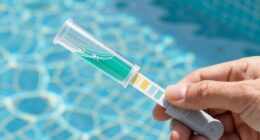
Detecting these metals early is key to preventing staining and damage. Metal detection techniques, such as using test kits or specialized electronic meters, enable you to identify the presence of iron, copper, and manganese before they cause visible problems. Test kits are accessible and can be used routinely; they measure metal concentrations, giving you a clear indication of whether you need to take action. Electronic meters or metal analyzers offer more precise readings, especially useful if you suspect high metal levels. By routinely monitoring your pool water, you can catch metal presence early, saving yourself costly repairs and extensive cleaning later on.
Once you detect metals in your pool water, treatment options become straightforward. Metal sequestrants or chelating agents can bind to the metals, preventing them from precipitating out and staining the pool surfaces. These treatments also help stabilize metals in solution, making them easier to remove during filtration. Additionally, employing water clarifiers can improve overall water quality, helping your filtration system work more effectively in removing metal particles. Regularly cleaning your pool filters and ensuring your circulation system is functioning properly assist in removing metal contaminants efficiently. Implementing proper filtration techniques further enhances your ability to keep metals at bay.
In short, being proactive about corrosion prevention and utilizing effective metal detection techniques puts you in control of your pool’s water quality. By maintaining proper chemistry, monitoring metal levels consistently, and applying appropriate treatments, you keep your pool inviting, safe, and free from unsightly stains. Staying vigilant ensures your pool remains a refreshing oasis rather than a battleground against hidden metals.
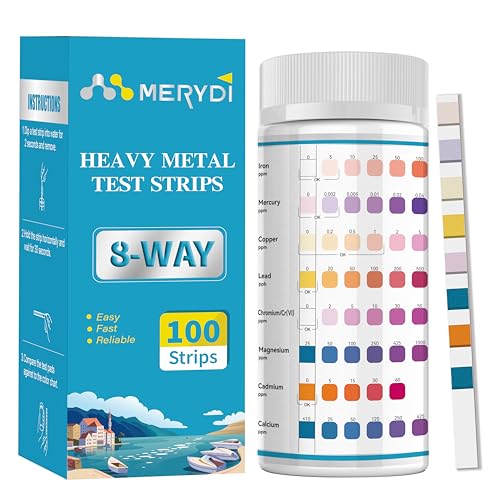
Heavy Metals Water Test Strips (8 Tests) – 100ct Home Water Testing Kit for Iron, Mercury, Copper, Lead, Chromium, Magnesium, Cadmium, Calcium-Well Home Tap City Drinking Water Testing Kit
100 WATER TEST STRIPS:Each pack contains 100 strips, offering ample tests for continuous monitoring and added peace of…
As an affiliate, we earn on qualifying purchases.
As an affiliate, we earn on qualifying purchases.
Frequently Asked Questions
How Do Metals Affect Pool Water Ph Levels?
Metals in your pool water can affect pH balance by causing metal precipitation, which often lowers the pH levels. When metals like iron, copper, or manganese oxidize, they form insoluble compounds that can make the water more acidic. This imbalance can lead to cloudy water and staining. To maintain proper pH levels, regularly test your water and use pH adjusters or metal sequestrants to prevent metal buildup and keep your pool balanced.
Can Metals Cause Health Issues With Prolonged Exposure?
Imagine the shimmering surface of your pool turning murky—prolonged exposure to metals like iron, copper, and manganese can pose health risks. Over time, these metals may cause skin irritation, respiratory issues, or gastrointestinal discomfort. The risk increases with longer exposure duration, especially if metal levels are high. To protect yourself, regularly test your water and maintain proper chemical balance, minimizing potential health hazards from metal contamination.
What Are Eco-Friendly Methods to Remove Metals From Pool Water?
You can remove metals from your pool water with eco-friendly methods like natural filtration, which uses biofilters or sand filters to trap metals. Additionally, eco-friendly chelating agents bind to metals, making them easier to filter out without harmful chemicals. Regular maintenance, combined with these natural and eco-conscious techniques, helps guarantee your pool stays clean and safe while protecting the environment.
Do Metals React With Common Pool Chemicals?
Yes, metals react with common pool chemicals through chemical reactions, leading to metal precipitation. When you add chlorines or pH adjusters, they can cause metals like iron, copper, and manganese to form insoluble compounds, which then settle out of the water. This process helps remove metals naturally, but it’s important to monitor chemical levels regularly to prevent staining, discoloration, or corrosion caused by these reactions.
How Often Should Metal Levels Be Tested in Pool Water?
You should test your metal levels at least once a month as part of your pool maintenance schedule. Regular metal testing helps you catch any increases early, preventing staining and corrosion. If you notice discoloration or cloudiness, increase testing frequency to every two weeks. Consistent monitoring guarantees your pool stays balanced and safe, saving you time and money on repairs caused by unchecked metal buildup.

Pool Mate 1-Quart Concentrated Metal Out Stain and Mineral Inhibitor, Pool Metal Remover, Stain Remover, Made in USA
1 quart per 10,000 gallons of water
As an affiliate, we earn on qualifying purchases.
As an affiliate, we earn on qualifying purchases.
Conclusion
While iron, copper, and manganese add a splash of color and character to your pool, they can also cause unexpected problems. You might think a little metal in the water isn’t a big deal, but it can lead to staining, discoloration, and maintenance headaches. Ironically, what seems like a minor detail can turn into a major hassle, reminding you that sometimes, the smallest elements in your pool water make the biggest impact. Stay vigilant, and keep your pool pristine.

AIPER HydroComm Smart Pool Monitor, 24/7 Automatic Water Testing for Pools, Hot Tubs & Spas, 5-in-1 Accurate Digital Tester, App Control, Customized Optimization Tips, White
Automatic Hourly Monitoring: Automatically tests your pool water every hour for continuous day-and-night monitoring. Generates clear water quality…
As an affiliate, we earn on qualifying purchases.
As an affiliate, we earn on qualifying purchases.
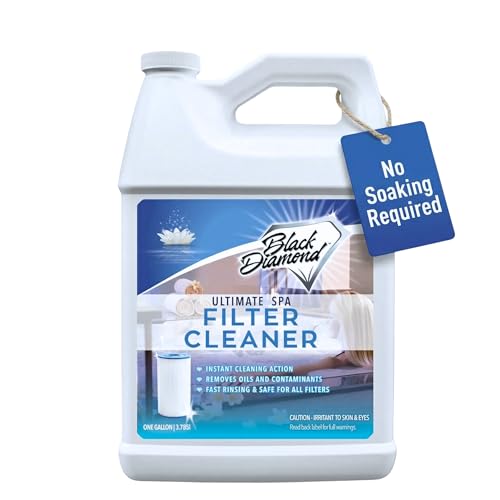
Ultimate Spa Filter Cleaner Fast-Acting Spray. Instant clean for Hot Tub & Pool Filters leaving behind no sticky residue. Prolongs filter life and pool equipment. No soaking. (1-Gallon)
Fast & Effective Cleaning: Skip the overnight soaking! Ultimate Spa Filter Cleaner works in just 5 minutes, saving…
As an affiliate, we earn on qualifying purchases.
As an affiliate, we earn on qualifying purchases.