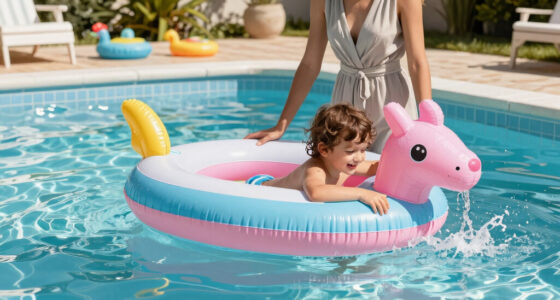

To make pool safety feel more natural for kids, turn learning into an engaging experience. Use colorful charts and playful analogies to explain rules in relatable terms. Create fun activities like a water safety scavenger hunt to reinforce key concepts. Role-playing scenarios can help kids practice safety responses in a memorable way. Plus, set a good example by following rules yourself. When kids see safety in action, they’ll be more likely to embrace it—stay tuned for more tips!

Get pool and patio gear delivered free with Prime
- Fast, free delivery on millions of items
- Prime Video, Amazon Music and more included
- Member-only deals all year
Key Takeaways
- Use colorful visuals and playful analogies to make pool safety rules relatable and memorable for kids.
- Incorporate games like scavenger hunts to engage children in learning about safety in a fun way.
- Role-play safety scenarios to practice responses, making safety feel more natural and intuitive.
- Lead by example by consistently following safety rules, demonstrating their importance through your actions.
- Praise children for their safety awareness and adherence to rules, reinforcing positive behaviors and attitudes.
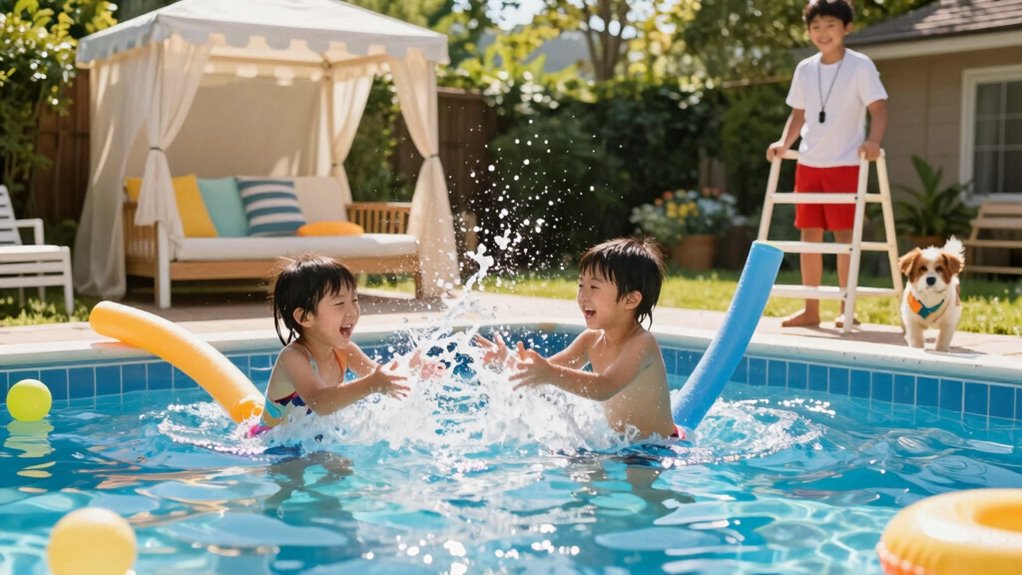
When summer rolls around and kids are enthusiastic to plunge into the pool, it’s essential to keep safety at the forefront. Teaching your little ones about pool safety doesn’t have to feel like a chore. You can make it engaging and fun, helping them develop a sense of water awareness that’ll stay with them for life. By incorporating safety games and playful activities, you can turn learning into a memorable experience.
Start by explaining the basics of pool rules in a way that feels relatable. Kids respond well to visuals, so consider using colorful charts or drawings that illustrate safe behaviors—like walking, not running, around the pool. This visualization makes it easier for them to remember the rules. You might say, “If you’re at the pool, treat it like a treasure hunt! Each rule is a clue to keep you safe.” This playful approach can spark their imagination and help them internalize safety measures.
Start pool safety conversations with relatable visuals and playful analogies, turning rules into a treasure hunt for kids.
Water awareness is another key aspect of pool safety. You can introduce this concept through fun games. For instance, you could create a “water safety scavenger hunt.” Hide items around the pool area that represent different safety rules—like a life preserver, goggles, or even a whistle. As they find each item, explain its importance. This hands-on activity makes them more invested in learning while reinforcing the idea that safety is everywhere.
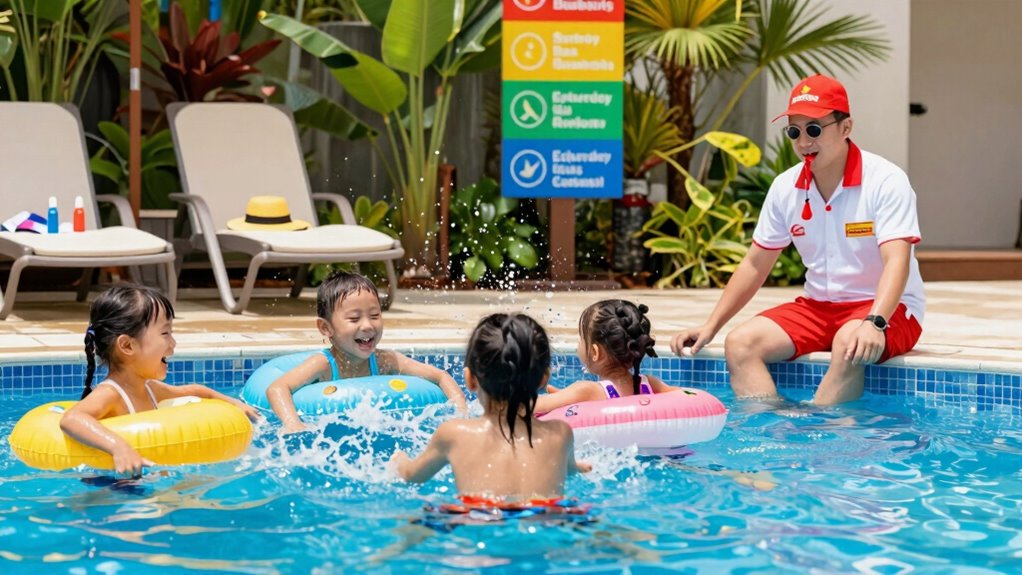
Incorporating role-playing scenarios can also work wonders. Pretend to be lifeguards, or even “pool pirates,” and act out different situations that require them to decide what to do. Ask questions like, “What happens if someone needs help?” or “How do we stay safe while having fun?” This interactive method allows kids to practice their responses, making safety feel more natural.
Don’t forget to lead by example. When you’re in the pool, show them how to follow the rules and stay aware. Kids learn a lot from watching you. If they see you practicing safety, it reinforces the idea that it’s a priority. Praise their efforts when they follow the rules or show good water awareness; positive reinforcement goes a long way. Additionally, understanding pool safety equipment can help ensure your child’s safety, as knowing how to use items like life jackets and safety covers can make a significant difference.
As an affiliate, we earn on qualifying purchases.
Frequently Asked Questions
What Age Should Kids Start Swimming Lessons?
Kids can start swimming lessons as early as age 4, but swimming readiness varies. Look for signs like comfort in water and interest in swimming. Starting lessons early offers benefits, like building confidence and developing essential skills. You’ll see how swimming can boost their safety awareness and make water activities more enjoyable. Remember, the key is to guarantee they’re ready, both physically and emotionally, to make the most of their lessons.
How Can I Encourage My Child to Wear a Life Jacket?
Encourage your child to wear a life jacket by highlighting its benefits, like safety and fun. You can show them how it keeps them buoyant while they play, making swimming even more enjoyable. Use positive reinforcement—praise their efforts and reward them with small treats or extra playtime when they wear it. By framing the life jacket as an essential part of their swimming adventure, you’ll help them embrace it with excitement and confidence.
What Games Promote Water Safety Awareness for Kids?
You can boost water safety awareness with fun games like water safety charades and a pool safety scavenger hunt. In charades, kids act out different safety rules while others guess, making it engaging and memorable. For the scavenger hunt, create a list of safety items to find around the pool area. This hands-on approach keeps them active while learning important safety lessons, ensuring they understand the rules without feeling overwhelmed.
How Do I Talk to Kids About Pool Rules?
Talk to kids about pool rules by making it fun and engaging. Start with a quick chat about pool etiquette, like taking turns and being respectful of others’ space. Use safety reminders that highlight the importance of watching their surroundings and staying within designated areas. Incorporate games or role-plays to reinforce these rules. Kids are more likely to remember if they’re involved, so keep it light and interactive!
Are There Specific Swim Aids Recommended for Beginners?
Yes, there are specific swim aids recommended for beginners. You should consider using flotation devices like puddle jumpers or swim vests, which provide extra support while they learn. These aids help build confidence in the water. Pair them with swim lessons to guarantee your child understands basic skills and safety. Remember, while flotation devices are helpful, they shouldn’t replace adult supervision. Always keep an eye on your child during swim time!
Conclusion
By creating a fun, relaxed atmosphere around pool safety, you’re helping kids feel at ease while learning essential skills. Think of it like teaching them to ride a bike—balancing excitement with caution makes all the difference. Encourage them to practice, celebrate their progress, and remind them that safety isn’t just a rule; it’s a way to enjoy every splash. So, let them jump in with confidence, knowing you’ve got their back every step of the way!
Halloween Picks
halloween
As an affiliate, we earn on qualifying purchases.