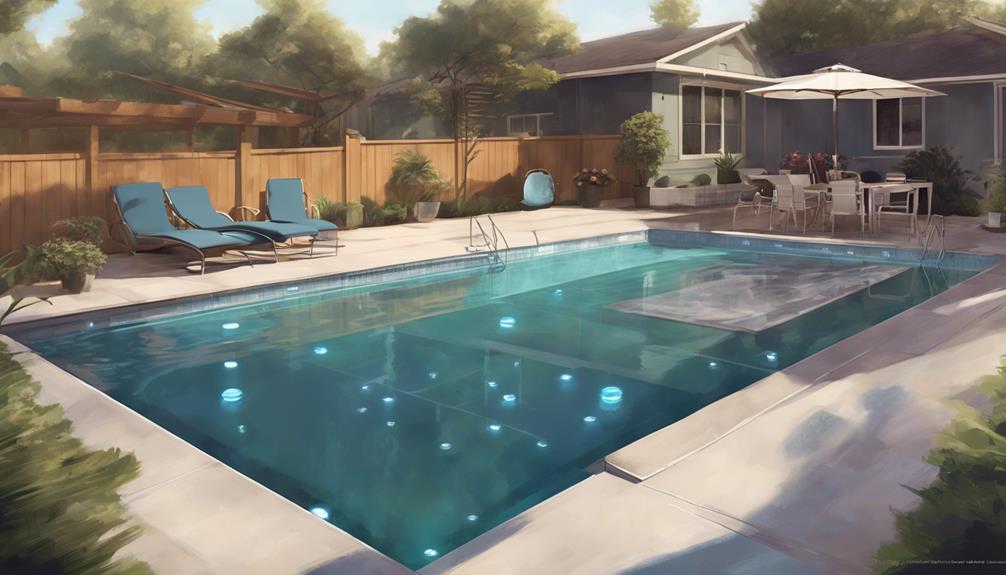
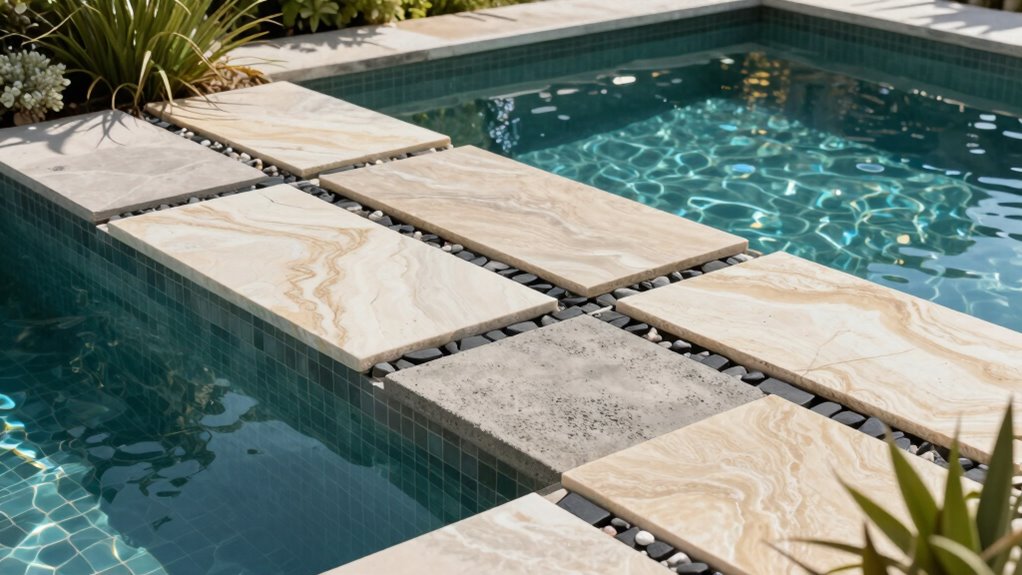
When choosing pool coping materials and finishes, you’re looking at several great options. Natural granite and slate offer durability and timeless beauty, while tile choices provide vibrant colors. Concrete finishes can mimic other materials at a lower cost, and brick styles offer a classic look. If you prefer modern aesthetics, composite materials combine wood and plastic for easy maintenance. Each option has its strengths, and exploring these will help you find the perfect fit for your pool.
Key Takeaways
- Material Variety: Explore options like natural stone, tile, concrete, brick, and composite materials to find the best fit for your pool area.
- Safety Considerations: Choose slip-resistant finishes, such as granite or textured concrete, to enhance safety around the pool.
- Aesthetic Appeal: Select materials that complement your home’s architecture, from classic brick to vibrant ceramic tiles for a stylish look.
- Maintenance Requirements: Be aware that materials like granite and concrete need regular sealing, while composites require less upkeep.
- Durability Factors: Consider weather resistance; options like brick and composite are robust, ensuring longevity under harsh conditions.
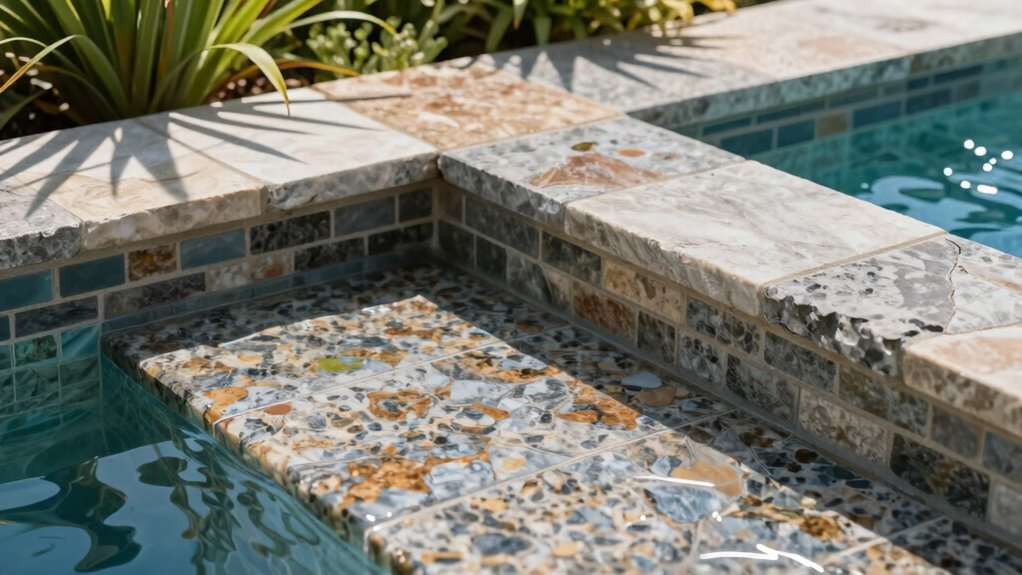
When it comes to enhancing your pool area, the right coping materials and finishes can make all the difference. Choosing the ideal coping not only impacts the overall aesthetic but also affects safety and maintenance. You have several options when it comes to materials, each with its unique set of characteristics. Let’s explore some popular stone options, tile choices, concrete finishes, brick styles, and composite materials to help you make an informed decision.
Stone options like natural granite or slate bring a timeless appeal to your pool. These materials are durable and slip-resistant, making them a smart choice for safety. However, keep in mind that they can be more expensive and may require sealing to maintain their appearance. If you want something more colorful or patterned, tile choices might suit your style. Ceramic and glass tiles can add a vibrant aesthetic to your pool area, but you’ll need to verify they’re specifically designed for outdoor use to withstand the elements.
Concrete finishes are another versatile option. You can choose stamped concrete for a textured look or a smooth finish for a sleek appearance. Concrete’s adaptability allows you to mimic other materials without the high price tag. Maintenance tips for concrete typically include regular sealing to protect against staining and cracking, so be prepared for that commitment. Additionally, understanding concrete surface treatments can help you select the best finish for durability and appearance.
Brick styles offer a classic look that can complement various architectural designs. They’re robust and can withstand harsh weather, but they might require occasional re-pointing to maintain their integrity. If you’re looking for a more contemporary option, composite materials could be the right fit. These materials often combine wood fibers and plastic, offering a modern aesthetic with lower maintenance needs.
When considering installation methods, think about whether you want to go the DIY route or hire a professional. DIY projects can save you money, but confirm you have the skills and tools for a job well done. On the other hand, hiring a pro can guarantee high-quality work and lasting results. Additionally, understanding the types of pool coping materials available can help you select the best option for your specific needs.
Ultimately, your choice will depend on your aesthetic considerations, budget, and how much maintenance you’re willing to handle. By weighing these factors, you can select the perfect coping materials and finishes to elevate your pool area, making it a beautiful and functional space for relaxation and enjoyment.

ATIE Pool Pumice Stone with EZ-Clip Handle to Reomve Erase Rust Stain Spot in Concrete Plaster Pool Spa and Calcium Deposit on Pool Tile (3 Pack)
Pumice stone with easy-clip handle for using with 1-1/4" pool telescopic pole
As an affiliate, we earn on qualifying purchases.
As an affiliate, we earn on qualifying purchases.
Frequently Asked Questions
How Do I Choose the Right Coping Style for My Pool?
To choose the right coping style for your pool, start by considering your style preferences—do you lean towards modern or traditional looks? Next, assess your budget; different materials can vary considerably in cost. Think about durability and maintenance too. Once you’ve narrowed down your options, visualize how each style complements your overall pool design. Ultimately, it should reflect your taste while staying within your financial limits.
Can I Install Pool Coping Myself or Hire a Professional?
You can definitely install pool coping yourself, but it’s like trying to paint a masterpiece without the right brushes. If you’re handy and enjoy DIY projects, go for it! Just keep in mind the cost factors—materials can add up quickly. However, if you’re unsure about your skills, hiring a pro might save you time and headaches. Weigh your DIY considerations against the potential costs, and choose what feels right for you.
What Maintenance Is Required for Different Coping Materials?
Different coping materials require varying maintenance. For stone durability, regularly check for cracks and seal every few years. When it comes to cleaning methods, use mild soap and water; avoid harsh chemicals. If you installed it yourself, verify proper installation techniques to prevent issues. Regarding cost comparison, natural stones may need more upkeep, while concrete requires less but can crack. Stay on top of maintenance to keep your pool area looking great!
How Does Climate Affect the Choice of Pool Coping?
Climate greatly affects your choice of pool coping. In regions with temperature extremes, you’ll want materials that resist cracking. High moisture levels might require coping that’s mold-resistant, while areas with intense UV exposure demand UV-stable options to prevent fading. If you live in a freeze-thaw zone, consider coping that can withstand these cycles without damage. Choosing the right material based on these factors will guarantee longevity and maintain your pool’s aesthetic appeal.
Are There Color Options Available for Pool Coping Materials?
When it comes to pool coping, you’ve got plenty of color options to choose from! Keeping up with color trends, you can find shades that complement your pool area beautifully. Whether you prefer classic neutrals or vibrant hues, each material’s durability plays a role in how colors appear over time. So, pick a color that speaks to you, and don’t forget to reflect on how it’ll stand up against the elements!

20 PCS Porcelain Swimming Pool Waterline Tile, 6" x 6" Blue Glazed Tile for Pool Floor Kitchen Backsplash Bathroom (5 Sq.Ft)
Square/Exact Size: 5.7" x 5.7" – Thickness: 0.3"
As an affiliate, we earn on qualifying purchases.
As an affiliate, we earn on qualifying purchases.
Conclusion
In choosing the right pool coping materials and finishes, you’re not just enhancing your pool’s look, but also its safety and functionality. Did you know that over 70% of pool accidents occur near the coping area? Opting for textured surfaces can greatly reduce slips and falls. So, as you explore your options, remember that the right choice can create a stunning visual while keeping your loved ones safe. Make your pool the ultimate summer retreat!

Polyurethane stamp "POOL", mold for decorative finishing on concrete, cement and plaster | Mat Stamp 19.69 x 19.69 x 0.35 Inches
💠 Our polyurethane mat stamps are crafted from high-quality elastomeric polyurethane, renowned for its superior tensile strength, elongation…
As an affiliate, we earn on qualifying purchases.
As an affiliate, we earn on qualifying purchases.

Coping Strips for Overlap Above Ground Pool Liners, Plastic Coping Clips for Overlap Pool Liner Replacement – for 24' Round Pools – Qty 38
Coping Strips for Overlap Above Ground Pool Liners
As an affiliate, we earn on qualifying purchases.
As an affiliate, we earn on qualifying purchases.