Your pool’s orientation greatly impacts its water temperature more than you might realize. A south-facing pool captures maximum sunlight, keeping the water warmer and more enjoyable. On the flip side, a northern orientation can lead to cooler temperatures, affecting your entire swimming experience. Wind and geographical factors also play a role, with windbreaks helping maintain warmth. Understanding these elements can help optimize your pool’s conditions. Stick around to discover even more tips for creating the perfect swimming environment.

Get pool and patio gear delivered free with Prime
- Fast, free delivery on millions of items
- Prime Video, Amazon Music and more included
- Member-only deals all year
Key Takeaways
- South-facing pools maximize sunlight exposure, significantly warming the water throughout the day.
- Northern orientation leads to cooler water temperatures due to reduced sun exposure.
- Nearby structures and trees can create windbreaks, helping to stabilize water temperature.
- Deeper pools retain heat better, benefiting from greater water volume and reducing evaporation.
- Heat-retaining materials, like dark tiles, further enhance temperature management based on orientation.
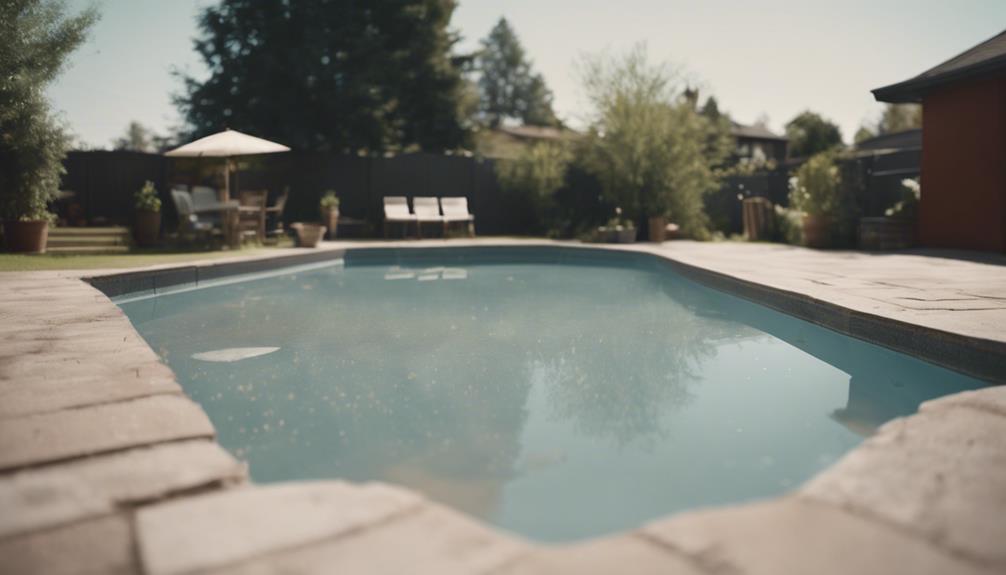
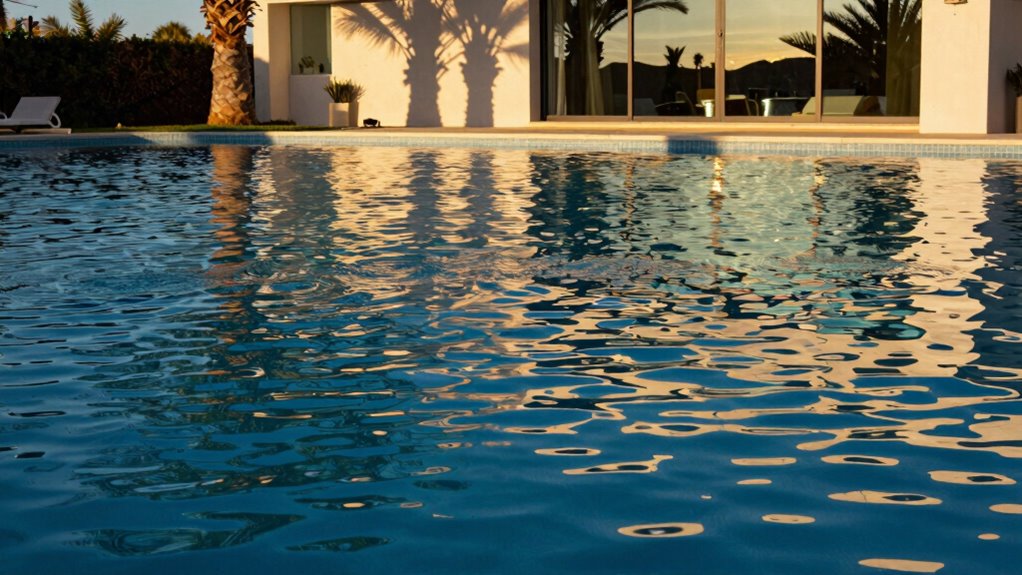
When you think about creating the perfect pool environment, pool orientation and water temperature play vital roles. The angle and direction of your pool can greatly affect how much sun exposure it gets throughout the day. More sun means warmer water, while shade coverage can keep it cooler. If your pool faces south, it’s likely to soak up the sun for most of the day. In contrast, a northern orientation might lead to cooler temperatures, which can impact your swimming experience.
Pool orientation significantly affects sun exposure and water temperature, making it crucial for your ideal swimming experience.
Wind effects also come into play. If your pool is positioned where it’s exposed to strong winds, you might find that evaporation rates increase. This means not only cooler water temperatures but also more frequent refills. When choosing your pool’s location, reflect on how nearby structures or trees can provide natural windbreaks. These can help maintain a more stable temperature by reducing airflow over the surface.
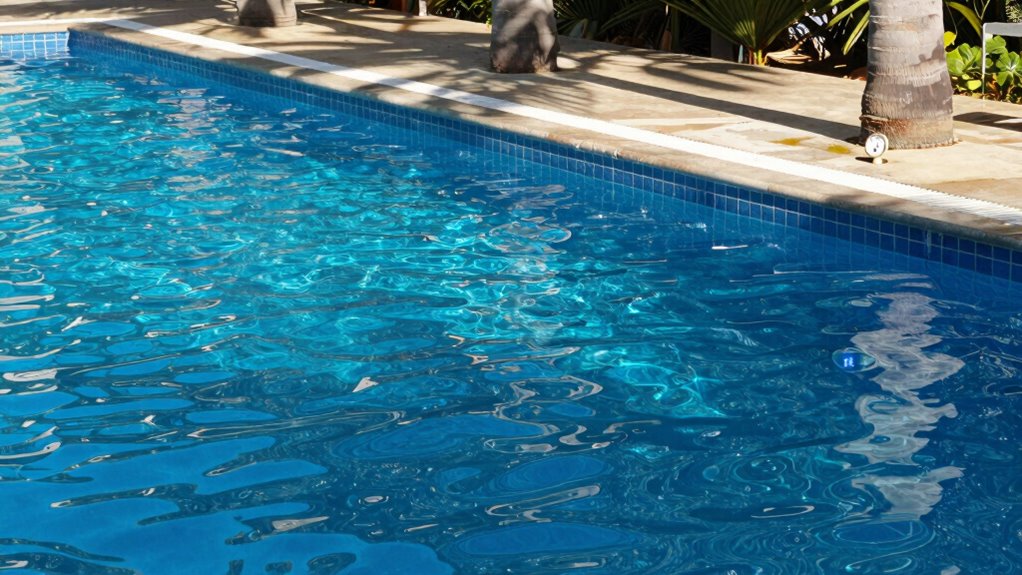
Geographical impact is another factor to take into account. Depending on where you live, the climate can vary widely. In warmer regions, maximizing sun exposure can help maintain comfortable water temperatures year-round. Conversely, in cooler areas, you might want to contemplate how to optimize heat retention. Utilizing construction materials that absorb and retain heat, such as dark tiles or concrete, can make a considerable difference. These materials can store warmth during the day and release it at night, helping to keep your pool inviting.
Pool depth also influences temperature. A deeper pool tends to retain heat better than a shallow one, as there’s more water volume to warm up. However, if evaporation rates are high due to wind or sun exposure, that heat can dissipate quickly. So, balancing depth with proper orientation is key to achieving the ideal temperature. Additionally, considering air quality and how it interacts with outdoor environments can influence evaporation and heat retention, especially in areas prone to pollution or dust.
Finally, understanding water chemistry can help optimize temperature and overall pool health, as proper chemical balance reduces algae growth and maintains water clarity. Regular maintenance plays an essential role. Keeping your pool clean and balanced reduces the likelihood of algae growth, which can affect temperature and comfort. A well-maintained pool will not only look inviting but will also encourage you to take a dip more often.
solar pool cover for heat retention
As an affiliate, we earn on qualifying purchases.
As an affiliate, we earn on qualifying purchases.
Frequently Asked Questions
How Does Pool Orientation Affect Energy Costs?
Pool orientation directly affects your energy costs by influencing sun exposure and wind direction. If your pool gets more sun, it warms up naturally, reducing heating system usage. Conversely, a poorly oriented pool may face cold winds, increasing heating needs and costs. Additionally, your maintenance schedule can be impacted; a well-positioned pool requires less upkeep, saving you time and money. Overall, thoughtful orientation can lead to significant energy savings.
Can Landscaping Influence Pool Water Temperature?
Yes, landscaping can influence pool water temperature considerably. By strategically using landscape shading, you can reduce direct sun exposure, helping keep your pool cooler during hot days. Choosing the right plant selection can also enhance this effect, as some plants provide better shade than others. Additionally, ensuring proper water circulation will help distribute temperature evenly, further moderating your pool’s warmth. Overall, thoughtful landscaping can make a noticeable difference in your pool’s temperature.
What Materials Are Best for Cooler Pool Surfaces?
For cooler pool surfaces, you’ll want to contemplate using cooling materials like ceramic tiles or natural stone, which absorb less heat. Reflective surfaces, such as light-colored concrete or specialized coatings, also help keep temperatures down by reflecting sunlight. These choices not only keep your pool comfortable but also enhance its aesthetic appeal. By selecting the right materials, you can enjoy a revitalizing swim even on the hottest days.
How Often Should I Check Water Temperature?
Think of your pool as a cozy blanket. You wouldn’t wear it without checking the weather first, right? Similarly, you should check your pool’s water temperature at least once a week. During the changing seasons, temperature monitoring becomes essential. Make seasonal adjustments to guarantee your pool remains inviting. If you notice fluctuations, adjust your heating or shading accordingly. Keeping an eye on the temperature helps create that perfect swimming environment you love.
Do Pool Covers Impact Temperature Based on Orientation?
Yes, pool covers do impact temperature based on orientation. When positioned correctly, they enhance cover efficiency by maximizing solar gain. A cover that aligns with the sun’s path can absorb more heat, keeping your pool warmer. Conversely, if it’s poorly oriented, you might miss out on valuable sunlight, resulting in cooler water. Regularly checking your cover’s position can help you optimize temperature and enjoy a more comfortable swimming experience.
Conclusion
In the game of pool, orientation can really tip the scales on water temperature more than you might realize. By placing your pool in the right position, you can harness sunlight and wind to keep the water warm and inviting. Remember, “the early bird catches the worm” — so don’t wait to make those adjustments! A little effort in orientation can lead to a lot more enjoyable swims. Plunge in and enjoy the benefits!
Columbus Day / Indigenous Peoples' Day Picks
long weekend sales
As an affiliate, we earn on qualifying purchases.