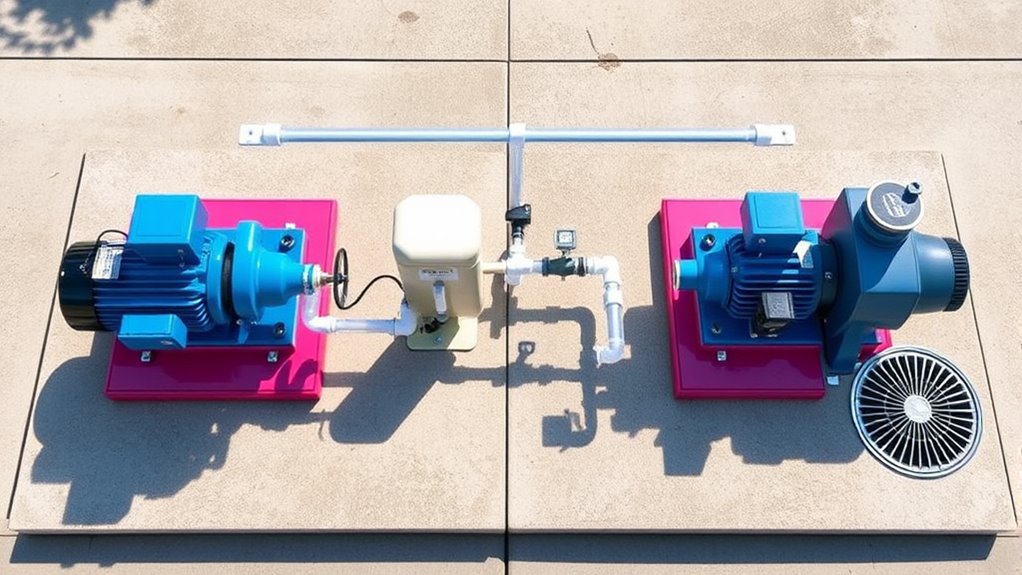

To create an effective pool equipment pad, position your pump on a stable, level surface away from the pool to prevent splash damage. Organize electrical wiring in weatherproof conduits, following safety codes and ensuring easy access for maintenance. Place the filter and heater close together to minimize pipe runs, and elevate or secure equipment to reduce noise and vibration. Proper layout boosts safety and efficiency—continue exploring these best practices to optimize your setup.
Key Takeaways
- Position pumps on stable, level surfaces away from splash zones for easy maintenance.
- Organize electrical wiring in weatherproof conduits with GFCI protection, keeping wiring neat and protected.
- Place filters and heaters close to pumps to minimize pipe length and streamline system flow.
- Ensure proper grounding, insulation, and protective coverings for all electrical components for safety.
- Design the layout for good ventilation, accessible electrical boxes, and future upgrade compatibility.
Designing your pool equipment pad with best practices guarantees safety, efficiency, and ease of maintenance. When planning the layout, one of your top priorities should be pump placement. Position your pump on a stable, level surface close to the pool, but avoid placing it directly next to the pool itself—this helps prevent water splash from causing electrical issues or corrosion. Ensure there’s enough space around the pump for routine maintenance, such as filter cleaning or part replacement. Proper pump placement also means keeping it slightly elevated or on a concrete pad to prevent flooding or groundwater issues, which could damage the equipment over time. Additionally, situate the pump with easy access to the filter and other components, reducing the need to dismantle other parts of the system during repairs.
Electrical wiring is another critical element in creating a safe and functional pool equipment pad. You need to plan your wiring carefully, following local electrical codes and safety standards. Use weatherproof, GFCI-protected outlets and disconnect switches to prevent electrical hazards. Keep electrical wiring neatly organized and secured in conduits, avoiding loose cables that could be damaged or pose tripping hazards. When running wiring from your power source to the equipment, make sure it’s buried at the correct depth to prevent accidental damage or exposure to the elements. It’s also essential to keep wiring away from water sources—never run electrical cables across wet surfaces or near the pool’s edge. Proper grounding of all electrical components is crucial and must be verified during installation to reduce the risk of shocks or shorts. Incorporating appropriate insulation and protective covering for wiring further enhances safety and durability.
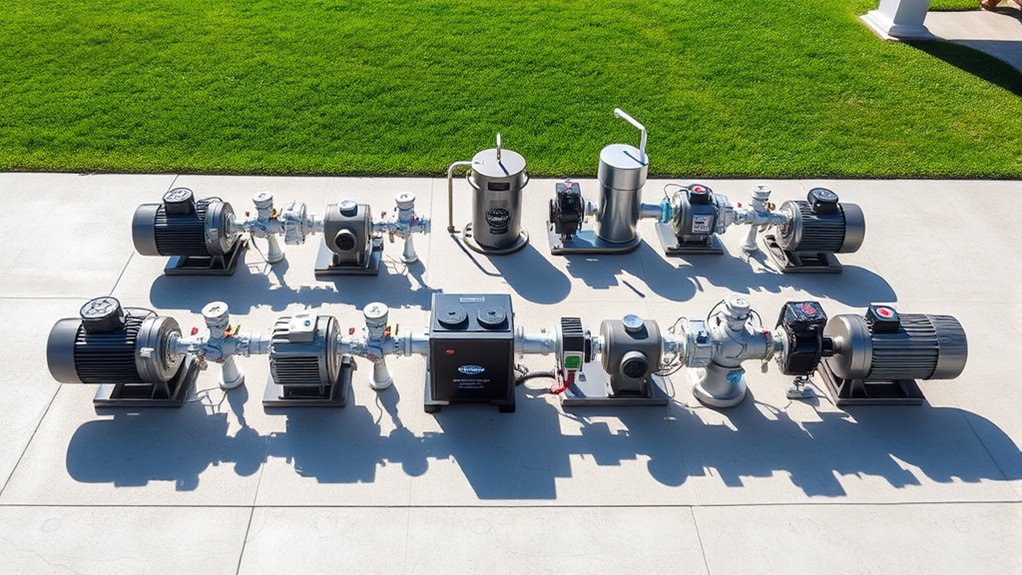
Furthermore, consider the overall layout to maximize safety and efficiency. Place your filter and heater in close proximity to the pump for minimal pipe runs, which reduces pressure loss and improves circulation. Elevate or secure equipment to avoid vibration and noise transfer, and ensure there’s adequate ventilation for the motor and electrical components. Incorporate a dedicated, protected electrical box that’s easily accessible for inspections and repairs. Label all wiring clearly to facilitate troubleshooting and future upgrades. Remember, a well-planned layout minimizes potential hazards and operational issues, making your pool system more reliable and easier to maintain.
Frequently Asked Questions
What Safety Measures Should Be Considered for Pool Equipment Pads?
You should guarantee proper electrical grounding to prevent electrical hazards and reduce the risk of shocks. Keep the area clear of flammable materials to enhance fire safety, and install a dedicated disconnect switch for emergency shutdowns. Regularly inspect the equipment for signs of wear or corrosion, and follow local codes for safe installation. These measures protect you and others from electrical accidents and fire-related dangers around your pool equipment pad.
How Do Weather Conditions Affect Equipment Pad Placement?
Weather conditions substantially influence your equipment pad placement. You should consider climate considerations like extreme heat, cold, or humidity, which can affect equipment longevity. Seasonal protection, such as shelter or shade, helps prevent weather-related damage and corrosion. Position your pad in a well-drained, accessible area that shields equipment from harsh elements, ensuring proper ventilation and easy maintenance, ultimately extending the lifespan of your pool equipment.
Can Equipment Pads Be Installed Indoors or Only Outdoors?
Yes, you can install equipment pads indoors, offering unparalleled equipment protection from weather and debris. Imagine your pool equipment shielded in a fortress of safety, free from rain, snow, and UV rays. Indoor installation keeps everything pristine and quiet, reducing maintenance and extending equipment life. Just guarantee proper ventilation and accessibility, so your equipment stays cool and easy to service, making indoor setups a smart, secure choice for your pool system.
What Are the Cost Implications of Different Layout Options?
You’ll find that layout options impact your overall cost analysis markedly. An efficient layout reduces installation and maintenance expenses, saving you money in the long run. For example, compact, well-organized setups minimize piping and electrical work, lowering labor costs. Conversely, a poorly planned layout might increase material needs and accessibility issues, raising costs. By prioritizing layout efficiency, you optimize your budget and ensure smoother operation and easier future upgrades.
How Often Should Pool Equipment Pads Be Inspected or Maintained?
You should inspect and maintain your pool equipment pad at least once every three to six months to make certain equipment longevity. Regular maintenance scheduling helps prevent issues like leaks, corrosion, or equipment failure. During inspections, check for signs of wear, debris buildup, and proper functioning of pumps and filters. Staying consistent with these checks keeps your system running efficiently, reducing costly repairs and extending the lifespan of your equipment pad.
Conclusion
By following these pool equipment pad layout best practices, you’ll turn a chaotic jumble into a perfectly organized oasis. Think of your setup as the beating heart of your backyard paradise—every component in its place, working in harmony like a symphony. With careful planning, you’ll enjoy hassle-free maintenance and peace of mind, knowing your pool runs smoother than a well-oiled machine. Transform your space today and make your backyard the envy of everyone around!