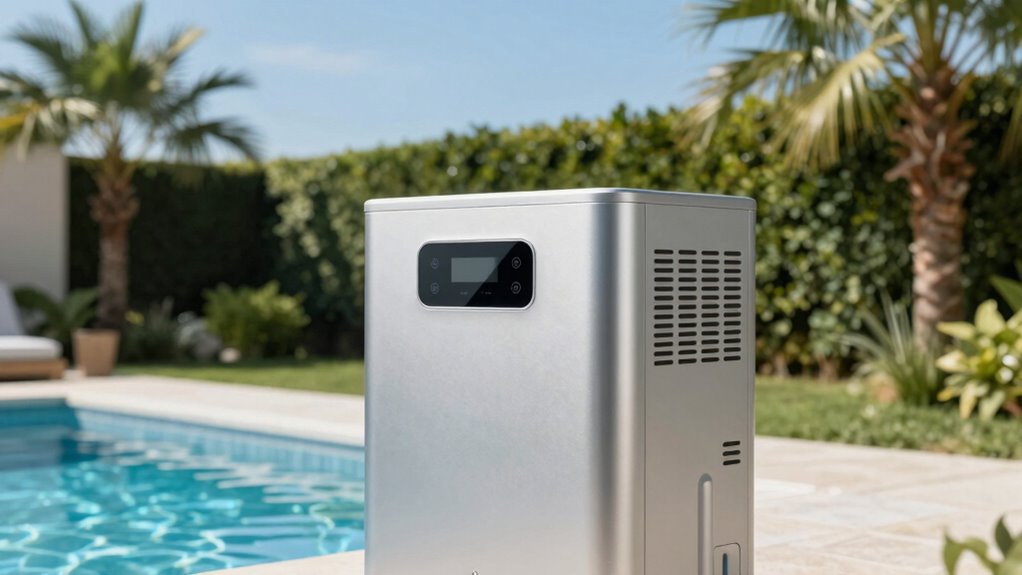
A pool heat pump is a simple, energy-efficient way to keep your pool warm. It works by capturing heat from the outside air and transferring it to your pool water, using less power than traditional heaters. It’s quiet, safe, and can operate well even in cooler weather. While it costs more upfront, it saves you money on energy bills over time. Keep exploring to discover how these smart devices can fit your needs better.
Key Takeaways
- Pool heat pumps use outside air to warm your pool, saving energy and lowering costs.
- They operate quietly and safely, with no exhaust fumes or fuel burning.
- They are energy-efficient, reducing monthly bills compared to traditional heaters.
- Modern models include smart controls to easily maintain the perfect water temperature.
- Properly selecting a heat pump based on climate ensures reliable, cost-effective pool heating.
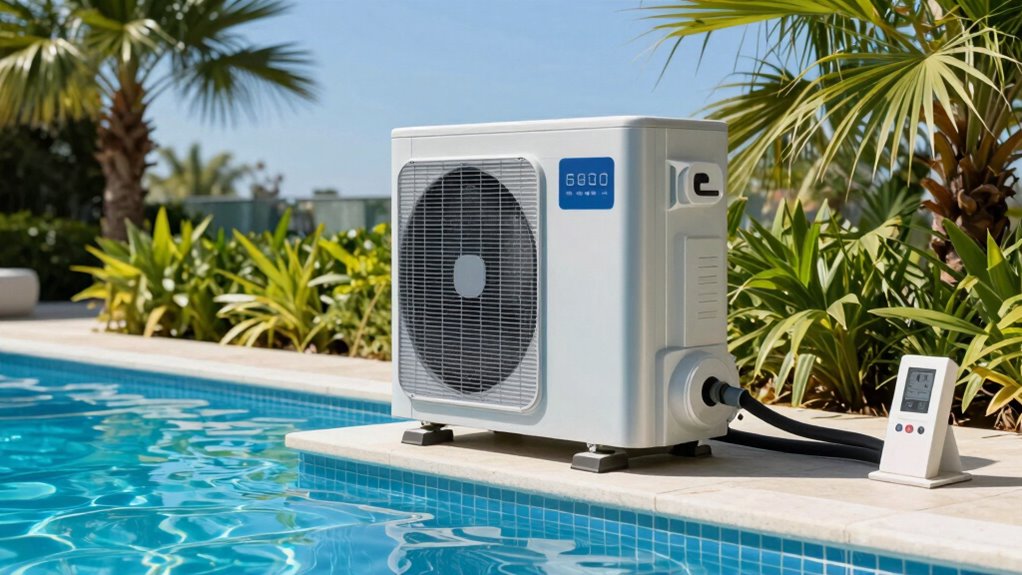
If you want to extend your swimming season without breaking the bank, pool heat pumps are an excellent solution. They help keep your pool comfortably warm without wasting energy or draining your wallet. One of the biggest advantages of using a heat pump is its energy efficiency. Unlike traditional heating methods that burn fuel or use electric resistance, heat pumps transfer heat from the air outside to your pool water. This process uses far less electricity, making it a more sustainable choice. Because they rely on ambient air, they can operate efficiently even in cooler weather, giving you more flexibility to swim longer into the season.
Pool heat pumps extend swimming seasons with energy-efficient, eco-friendly warmth, even in cooler weather.
When you compare costs, heat pumps often come out ahead over time. Although the upfront price can be higher than other heaters, the savings on energy bills add up. Traditional gas or electric resistance heaters can quickly become expensive to run, especially if you heat your pool frequently or for long periods. A heat pump, on the other hand, uses less power to do the same job, which means lower monthly utility bills. Over the lifespan of the unit, the reduced energy costs can offset the initial investment, making it a smarter financial choice in the long run.
Another benefit is that heat pumps tend to be quieter than gas heaters, so you won’t be disturbed by loud noises while enjoying your pool. They also tend to last longer because they have fewer parts that wear out. Maintenance is usually straightforward, and most models come with simple filters and routine checkups to keep things running smoothly. Plus, since they don’t burn fuel, they don’t emit fumes or produce dangerous exhaust gases, making them safer for your family and the environment. Additionally, understanding how projector technology impacts image quality can help you choose a model that performs well in your specific setup.
It’s also worth noting that modern heat pumps incorporate advanced controls that allow for better temperature regulation and energy management, further enhancing their efficiency. It’s important to evaluate the climate in your area when choosing a heat pump. They perform best regarding moderate temperatures and may need auxiliary heating during very cold weather. Still, modern models are quite capable of maintaining your desired water temperature throughout the swimming season. Regularly checking the energy efficiency ratings of different units can help you select the most cost-effective option in the long run. Considering climate factors can help ensure you pick a model that suits your local conditions best. Investing in a high-quality heat pump can provide reliable, cost-effective heating that allows you to enjoy your pool more often, without the stress of high energy bills or complicated maintenance routines.

AQUASTRONG Inverter Swimming Pool Heat Pump,Pool Heater for Above Ground and Inground Pool Heating and Cooling Pool Heater, Smart WiFi Control Pools Up to, 21000 Gallons
Extend Your Swim Season: The pool heat pump features a dual-mode heating and cooling system that maintains optimal…
As an affiliate, we earn on qualifying purchases.
As an affiliate, we earn on qualifying purchases.
Frequently Asked Questions
How Long Does It Take to Heat a Pool With a Heat Pump?
It typically takes about 24 to 72 hours to heat your pool with a heat pump, depending on pool size and desired temperature. Larger pools need more time, while smaller ones heat faster. Proper pool sizing is vital for efficient heating. Once set, the heat pump offers excellent temperature control, maintaining your preferred water temperature consistently without excessive energy use. Patience guarantees your pool reaches the perfect warmth comfortably.
Are Pool Heat Pumps Energy-Efficient Compared to Traditional Heaters?
Think of a pool heat pump as a gentle breeze transforming your pool into a warm haven. They’re more energy-efficient than traditional heaters because they harness renewable energy from the air, saving you money in the long run. With lower operating costs, heat pumps offer significant cost savings and eco-friendly benefits, making your pool season more sustainable and wallet-friendly. You get warmth and savings, all without sacrificing comfort.
What Is the Typical Lifespan of a Pool Heat Pump?
A pool heat pump typically lasts 10 to 15 years with proper pool maintenance. To extend its lifespan, you should regularly clean and service it, especially after installation, which can involve significant installation costs. Proper maintenance not only protects your investment but also keeps the heat pump running efficiently. Keep an eye on performance signs like reduced heating or unusual noises to address issues early and maximize your equipment’s longevity.
Can a Pool Heat Pump Work in Very Cold Weather?
Yes, a pool heat pump can work in very cold weather, but its efficiency drops as temperatures fall. Water circulation and temperature sensors play key roles; they help the pump monitor water temperature and adjust operation accordingly. In colder conditions, the pump may run longer or struggle to maintain desired warmth. To maximize performance, guarantee proper circulation and consider a cover to reduce heat loss.
Is It Necessary to Winterize a Pool Heat Pump?
Think of your pool heat pump as a delicate flower needing protection in winter’s chill. Yes, it’s necessary to winterize your heat pump to prevent freezing damage. Before the first frost, install a pool cover and drain the system, reducing the freezing risk. This winter ritual safeguards your investment, ensuring your heat pump stays cozy and ready to warm up your pool again when spring arrives.
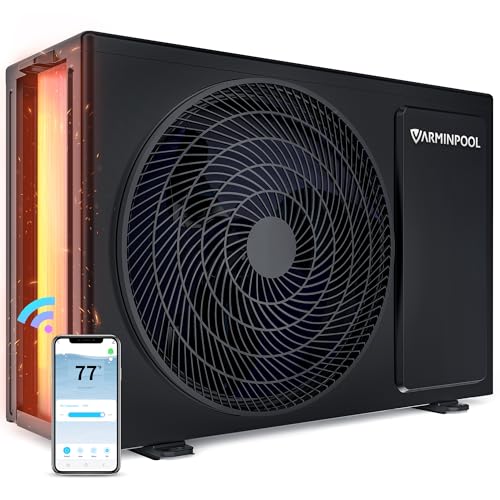
VARMINPOOL Electric Pool Heat Pump for 6000 Gallons In and Above Ground Swimming Pool, 27000 BTU Pool Heater, Titanium Heat Exchanger, 120V, Energy Efficient- V7
27,000 BTU Pool Heat Pump for 6,000Gallon Pools (110–120V): For any installation or use questions, please reach out…
As an affiliate, we earn on qualifying purchases.
As an affiliate, we earn on qualifying purchases.
Conclusion
Think of pool heat pumps as your backyard’s gentle gardener, quietly nurturing your pool’s warmth and comfort. They’re efficient, eco-friendly, and easy to use, turning chilly dips into warm, inviting escapes. With a little understanding, you can keep your pool as cozy as a sunlit oasis all season long. So, embrace this clever technology, and let your pool be the sparkling centerpiece of endless summer memories—your personal paradise waiting just beneath the surface.
AQUASTRONG Inverter Swimming Pool Heat Pump,Pool Heater for Above Ground and Inground Pool Heating and Cooling Pool Heater, Smart WiFi Control Pools Up to, 9000 Gallons
Extend Your Swim Season: The pool heat pump features a dual-mode heating and cooling system that maintains optimal…
As an affiliate, we earn on qualifying purchases.
As an affiliate, we earn on qualifying purchases.
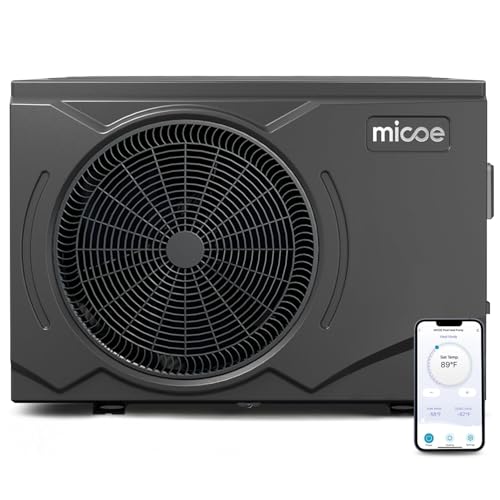
MICOE 58,000 BTU Smart Swimming Pool Heat Pump, Electric Pool Heater for 18,000 Gallons Above Ground & Inground Pools, App-Controlled Heating & Cooling, 220–240V
High-Capacity & Saltwater Ready Heating: 58,000 BTU high-efficiency heating system designed for 8–30 ft above-ground or in-ground pools…
As an affiliate, we earn on qualifying purchases.
As an affiliate, we earn on qualifying purchases.