


When choosing a pool heating method, you can consider a heat pump for energy efficiency, a gas heater for quick, reliable warmth, or solar options to save costs and reduce environmental impact. Heat pumps work well in moderate climates, while gas heaters provide faster heat but cost more to operate. Solar heaters are eco-friendly but depend on sunshine, making them best in sunny regions. Keep exploring to find the perfect fit for your needs and budget.
Key Takeaways
- Heat pumps are energy-efficient, cost-effective, and suitable for moderate climates, using ambient air to heat the pool.
- Gas heaters provide quick, reliable warmth but have higher operational costs and require venting and safety measures.
- Solar heaters utilize free sunlight, offering high energy efficiency, but depend on weather and have higher initial installation costs.
- Installation costs vary: solar and gas heaters have lower upfront costs, while heat pumps involve moderate initial investment.
- Long-term savings and environmental impact favor solar and heat pumps, especially in sunny or moderate climates.
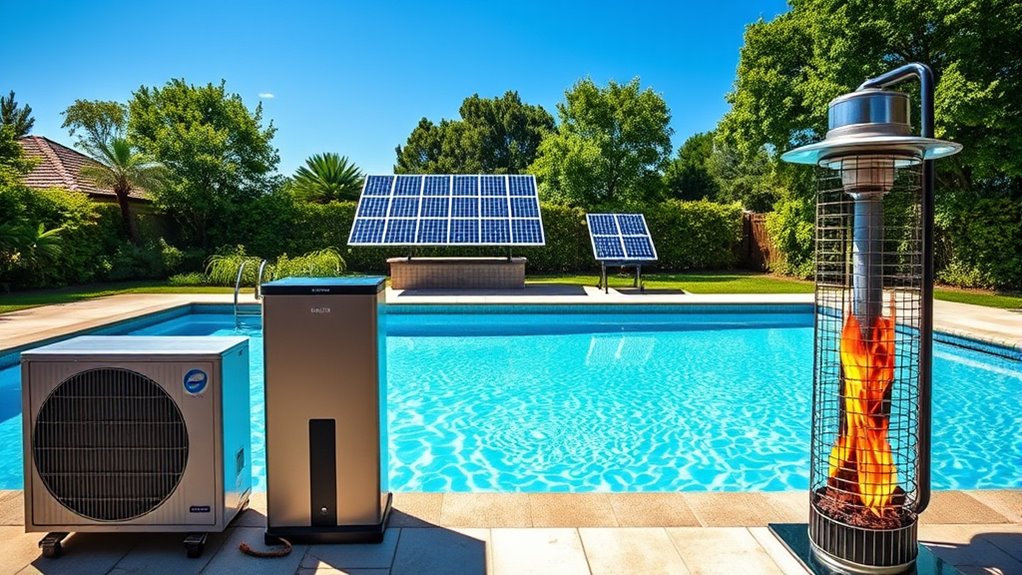
Are you wondering how to keep your pool warm year-round? Choosing the right heating option can make a big difference in comfort, energy costs, and maintenance. When evaluating your options, consider the energy efficiency of each system and the installation costs involved, as these factors will influence your long-term satisfaction and budget.
Heat pumps are a popular choice because they use ambient air to heat your pool, making them relatively energy-efficient and cost-effective over time. They work by extracting heat from the air and transferring it to the water, which means they consume less electricity compared to gas heaters. This energy efficiency translates into lower operational costs, especially if you plan to keep your pool warm for extended periods. However, initial installation costs for heat pumps tend to be moderate, though they can vary based on the size of your pool and the complexity of setup. Installation is generally straightforward, but you should factor in the cost of professional setup to ensure ideal performance.
Heat pumps are energy-efficient, cost-effective, and easy to install for keeping your pool warm year-round.
Gas heaters, on the other hand, provide quick and reliable heating, making them ideal if you want to warm up your pool rapidly or only use it occasionally. They burn natural gas or propane, which means you’ll see higher energy consumption and elevated ongoing costs—especially if gas prices rise. While gas heaters often have lower upfront installation costs, they tend to be less energy-efficient over the long run, leading to higher utility bills. Plus, they require venting and proper safety measures, which can add to installation expenses. If you need fast heating and don’t mind the ongoing fuel costs, gas heaters could be a good fit, but keep in mind the impact on your energy bills and environmental footprint.
Solar pool heaters are the most environmentally friendly option, using free energy from the sun to heat your water. They have the highest initial installation costs because of the need for solar collectors and the potential for structural modifications. However, solar heating is incredibly energy-efficient since it relies on renewable energy, drastically reducing your ongoing operational costs. Over time, solar systems can pay for themselves through significant savings on energy bills, especially in sunny climates. The main downside is that solar heaters depend heavily on weather conditions; they’re most effective when it’s sunny and warm outside. If you’re committed to sustainability and want to minimize your energy expenses long-term, solar heating can be an excellent investment, despite the higher upfront costs.

AQUASTRONG Swimming Pool Heat Pump,Electric Pool Heater for Above Ground and Inground Pool,Heating and Cooling Pool Heater Pools Up to, 5000 Gallons
All-Season Pool Comfort: Featuring innovative dual-mode temperature control, this heat pump precisely heats water between 59–104°F or within…
As an affiliate, we earn on qualifying purchases.
As an affiliate, we earn on qualifying purchases.
Frequently Asked Questions
Which Pool Heating Method Is Most Cost-Effective Long-Term?
You’ll find that solar heating is the most cost-effective long-term option because it has the lowest operational costs after initial installation. While solar systems may have higher installation costs upfront, they save you money on energy bills over time. Heat pumps are more affordable initially but can have higher running costs, and gas heaters, though quick, tend to be the most expensive to operate. So, consider both installation costs and ongoing expenses when choosing.
How Does Climate Affect the Efficiency of Solar Pool Heaters?
Climate impact substantially affects the efficiency of solar pool heaters. In sunnier, warmer climates, solar panels work more effectively, capturing ample sunlight to heat your pool efficiently. Conversely, in colder or cloudier regions, reduced sunlight diminishes the solar panel’s ability to generate heat, making solar pool heaters less efficient. You should consider your local climate when choosing a solar pool heater, ensuring it meets your heating needs year-round.
What Maintenance Is Required for Each Heating Option?
You need to keep up with pool maintenance and equipment servicing to guarantee your heater works efficiently. For heat pumps, clean filters regularly and check refrigerant levels. Gas heaters require annual inspections of burners and venting systems. Solar heaters need periodic cleaning of panels and inspecting for leaks or blockages. Staying proactive with maintenance minimizes breakdowns, extends equipment lifespan, and keeps your pool comfortably heated all season long.
Are There Any Safety Concerns With Gas Pool Heaters?
Gas pool heaters do pose safety concerns you should be aware of. Gas safety is vital, as leaks can lead to fire hazards or carbon monoxide poisoning. Always guarantee proper ventilation, regularly inspect for leaks, and have a professional service the heater annually. Keep the area clear of combustible materials, and install carbon monoxide detectors nearby. Following these precautions minimizes heater hazards and keeps your pool area safe for everyone.
Can Multiple Heating Methods Be Combined for Better Efficiency?
Yes, you can combine multiple heating methods for better efficiency. Hybrid systems, which blend options like heat pumps and solar, optimize energy use by switching between sources based on conditions. This approach reduces costs, minimizes environmental impact, and maximizes comfort. By integrating these methods, you harness the strengths of each, ensuring your pool heats efficiently and sustainably. Combining systems offers a smarter, more adaptable way to maintain your pool temperature.

Hayward W3H150FDN Universal H-Series 150,000 BTU Natural Gas Pool and Spa Heater for Inground Pool Heating
The Hayward Universal H-Series 150,000 BTU Natural Gas Heater delivers premium heating performance for years of reliable, long-lasting…
As an affiliate, we earn on qualifying purchases.
As an affiliate, we earn on qualifying purchases.
Conclusion
Choosing the right pool heating option is like finding the perfect key to open a summer of endless swimming. Whether you opt for the energy-efficient heat pump, the dependable gas heater, or the eco-friendly solar panels, each has its own advantages. Consider your budget, climate, and long-term goals. With the right choice, you’ll keep your pool inviting and warm, turning your backyard into a personal oasis where every splash feels like a revitalizing breeze.

Highest Performing Design – DIY Solar Pool Heater Kit – 15-20 Year Life Expectancy (4-4×10 / 1.5" I.D. Header)
HIGH-HEAT PERFORMANCE – SwimEasy solar pool heaters capture more heat from the sun with superior absorber technology. They…
As an affiliate, we earn on qualifying purchases.
As an affiliate, we earn on qualifying purchases.

FAFCO Super Solar Bear Above Ground Pool Heating System with Installation Kit 10061
Solar pool heater for above ground pools
As an affiliate, we earn on qualifying purchases.
As an affiliate, we earn on qualifying purchases.