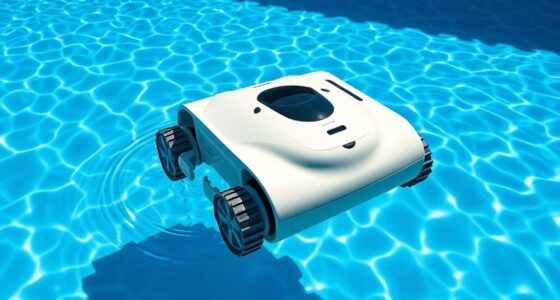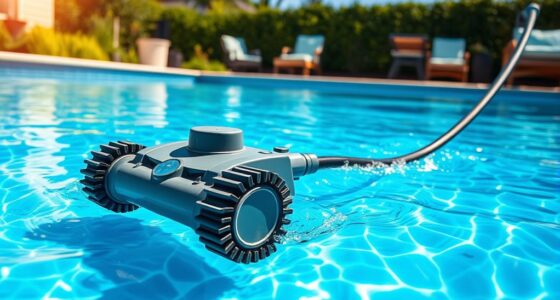
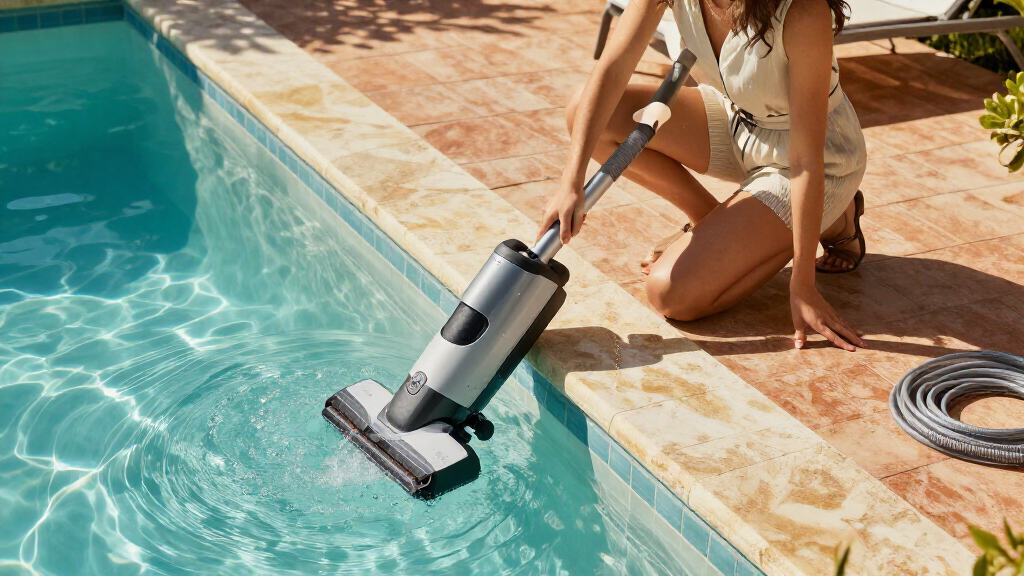

Choosing an automatic pool vacuum is mainly a choice between paying for independent cleaning and keeping the upfront cost down by using equipment you already own. A robotic pool vacuum runs on its own motor and collects debris in an onboard filter; a suction-side pool vacuum connects to the pool’s suction line and sends debris through the pool’s filtration system. Neither category is automatically right for every pool: pool shape, debris, pump schedule and budget all affect the fit.

Get pool and patio gear delivered free with Prime
- Fast, free delivery on millions of items
- Prime Video, Amazon Music and more included
- Member-only deals all year

Zodiac G3 Suction-Side In-Ground Pool Cleaner
- ✔ Cleaner type: Suction-side
- ✔ Pool type: In-ground
- ✔ Pump compatibility: Single-speed, two-speed, and variable-speed
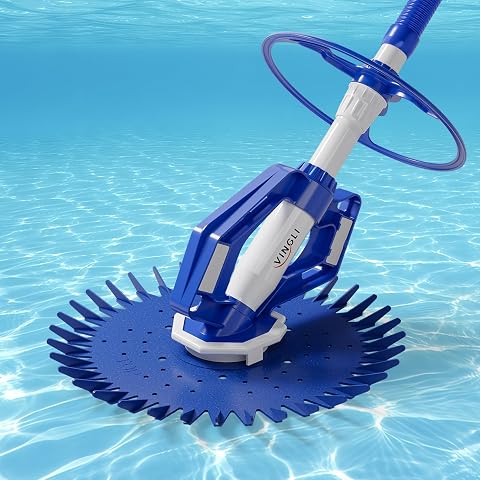
VINGLI Automatic Wall-Climbing Pool Cleaner with 33 ft Hoses
- ✔ Model: Pool Cleaner 277
- ✔ Cleaner type: Suction-powered automatic cleaner
- ✔ Pool type: In-ground

XtremepowerUS Automatic Suction-Side Pool Cleaner with 30-Foot Hose Set
- ✔ Cleaner type: Automatic suction-side (description)
- ✔ Pool type: In-ground
- ✔ Power source: Pool filtration system
Robotics are usually the stronger choice for owners who want scheduled cleaning, less dependence on the pool pump and easier debris removal. Suction-side models make more sense when purchase cost is the priority, the pool pump already runs regularly, and the pool’s filtration setup is compatible. The comparison below focuses on the practical differences that matter most: cleaning coverage, convenience, compatibility, running costs, maintenance and value.
At a Glance
| Criteria | Robotic pool vacuum | Suction-side pool vacuum | Winner |
|---|---|---|---|
| Purchase cost | Usually higher; varies by model and features. | Usually lower; model and pool equipment affect the price. | B |
| Cleaning independence | Runs separately from pool circulation and filtration. | Depends on the pool pump, suction line and filtration system. | A |
| Coverage and navigation | Model-dependent; many clean the floor, while some also cover walls and waterline. | Moves around the pool using suction; coverage and movement vary by model and pool layout. | Depends |
| Debris handling | Collects debris in a removable onboard filter basket or cartridge. | Sends debris to the pool’s existing filter or pump basket. | Depends |
| Energy and pump use | Uses its own motor; pool pump need not run just for vacuuming. | Uses the pool pump, which must run during cleaning; adds work for the circulation system. | A |
| Setup and compatibility | Requires a suitable power supply and safe cable handling; check pool and model requirements. | Needs a compatible suction port or skimmer and sufficient pump suction. | Depends |
| Routine upkeep | Remove and rinse the onboard filter; inspect the unit and cable. | Check hoses, clear the pump basket and clean or backwash the pool filter as needed. | Depends |
Zodiac G3 Suction-Side In-Ground Pool Cleaner
The Zodiac G3 is our best overall pick because it offers the clearest guidance for matching a suction cleaner to different pump setups. Its listed compatibility includes single-speed, two-speed, and variable-speed pumps, and the FlowKeeper valve is designed to support lower-flow operation. That makes it a stronger candidate than VINGLI for owners who are unsure whether a fixed pump requirement will suit their system, though the G3 still needs adequate suction and a skimmer or dedicated suction line.Its 39-foot hose is the longest listed here, giving it more reach than the XtremepowerUS 30-foot set and VINGLI’s 33 feet. The product description also names tile, vinyl, gunite, and fiberglass and says it cleans floors, walls, and steps, which helps buyers compare it against the less detailed surface information for the other two. A 36-fin disc and wheel deflector are intended to maintain grip and move around pool features; they are useful design cues, not a guarantee that every step or obstacle will be handled without interruption.Maintenance is another point of difference. The G3’s one-moving-part diaphragm design is intended to keep operation quiet and simplify service, with a quick-release cassette providing access to the diaphragm. It has a listed five-pound load capacity, however, and it still sends collected debris through the pool filtration system. Buyers seeking a separate debris canister or a cleaner that works without pool suction should look elsewhere. For an in-ground pool with compatible plumbing and a pump setup that benefits from flow flexibility, the G3 makes the broadest case in this group.
Pros:
- Listed for single-speed, two-speed, and variable-speed pump compatibility
- 39-foot hose is the longest listed in this comparison
- Designed for tile, vinyl, gunite, and fiberglass surfaces
- Quick-release cassette provides access to the diaphragm for maintenance
Cons:
- Requires connection to a skimmer or dedicated suction line
- Listed load capacity is five pounds, and debris relies on the pool filtration system
Best for: In-ground pool owners who want broad stated pump and surface compatibility, plus reach for floors, walls, and steps.
Not ideal for: Buyers without a skimmer or dedicated suction line, owners of above-ground pools, or anyone seeking a self-contained robotic cleaner.
Bottom line: Choose the Zodiac G3 for the most clearly specified pump flexibility and pool coverage in this suction-side lineup.
“Choose the Zodiac G3 for the most clearly specified pump flexibility and pool coverage in this suction-side lineup.”
VINGLI Automatic Wall-Climbing Pool Cleaner with 33 ft Hoses
VINGLI stands out for buyers who want 33 feet of hose and a clearly stated pump threshold. Its set contains ten 3.3-foot sections, so the reach can be assembled from multiple pieces; compare your pool layout and connection location before assuming the full length will be useful. The Zodiac G3 provides six additional feet and lists wider pump compatibility, but VINGLI gives a specific minimum of 3/4 HP or 1,600 GPH. That makes the equipment check straightforward: if your pump falls below the stated requirement, this is a poor fit.The cleaner is described as handling both floors and walls, while a wheel deflector is intended to help it navigate tight corners. Its scuff-resistant hoses may also matter where the hose rubs against pool edges. These features give it a more navigation-focused profile than the XtremepowerUS listing, which emphasizes its flexible cleaning disc but does not provide the same stated corner aid or hose construction detail. VINGLI’s quiet-operation description is another consideration for buyers who prefer less audible equipment, though the cleaner remains tied to the pool’s filtration system.There are limits to that appeal. The pump requirement is a firm compatibility checkpoint, and the supplied details specify plastic construction without naming compatible pool surfaces. Its one-year warranty is stated, but owners still need to install the hoses and connect the unit to their suction system. Compared with the G3, VINGLI is less flexible on paper for varying pump types; compared with XtremepowerUS, it brings three more feet of hose and a corner-navigation feature. It is best considered when those specifics match your pool rather than as a universal choice.
Pros:
- Includes ten hose sections totaling 33 feet
- Minimum pump requirement is stated as 3/4 HP or 1,600 GPH
- Wheel deflector is designed to help navigate tight corners
- Scuff-resistant hoses and a one-year warranty are specified
Cons:
- Requires a pump meeting its stated minimum flow or horsepower
- Requires installation on an existing filtration system, and the supplied details do not list compatible surfaces
Best for: In-ground pool owners with a pump meeting the listed minimum who need 33 feet of hose and help navigating corners.
Not ideal for: Owners with a pump below 3/4 HP or 1,600 GPH, or buyers who need a clearly specified surface compatibility list.
Bottom line: Pick VINGLI when its pump threshold fits your equipment and its 33-foot hose and corner deflector suit your pool layout.
“Pick VINGLI when its pump threshold fits your equipment and its 33-foot hose and corner deflector suit your pool layout.”
XtremepowerUS Automatic Suction-Side Pool Cleaner with 30-Foot Hose Set
XtremepowerUS is the more straightforward choice for an in-ground pool that already has a compatible suction connection and where 30 feet of hose is enough. Its ten included hoses connect to a skimmer or suction line, and the cleaner uses the pool’s filtration system to collect dirt, sand, leaves, and small debris. The flexible disc is designed to keep suction contact as it travels across pool surfaces, with the description stating that it can clean floors and climb walls.Against VINGLI, the main compromise is reach: XtremepowerUS provides three fewer feet of hose, and its supplied specifications do not name a minimum pump rating. That omission makes the setup sound simpler, but buyers should still confirm the pool system can provide compatible suction. The Zodiac G3 offers a longer 39-foot hose, a FlowKeeper valve, and a named list of supported surfaces; XtremepowerUS has less detailed pump and surface guidance. Its case is strongest when the pool’s plumbing and filtration equipment are already known to work with a suction cleaner.There is a discrepancy in the supplied specifications: the cleaner is described as suction-side and connected to a skimmer or suction line, while the installation field says pressure side. We would verify the intended connection and compatibility with the seller or product documentation before purchase. It is also limited to in-ground pools and uses the existing filter, so it does not provide independent debris storage. For buyers whose pool setup checks out and whose hose needs are modest, its flexible disc and included 30-foot set cover the essentials without the G3’s more elaborate flow and maintenance details.
Pros:
- Includes ten hoses totaling 30 feet
- Uses the existing pool filtration system without a separate booster pump
- Flexible disc is designed to maintain suction contact across pool surfaces
- Described as cleaning floors and climbing walls
Cons:
- Designed for in-ground pools and requires a compatible suction connection
- Supplied installation detail conflicts with the suction-side description, so connection type should be verified
Best for: In-ground pool owners with a confirmed compatible suction connection who need a basic 30-foot hose setup.
Not ideal for: Buyers needing longer reach, a stated pump compatibility range, or those who cannot verify the product’s suction-versus-pressure connection details.
Bottom line: Consider XtremepowerUS when 30 feet of hose is sufficient and you can confirm the connection type for your pool.
“Consider XtremepowerUS when 30 feet of hose is sufficient and you can confirm the connection type for your pool.”
As an Amazon Associate we earn from qualifying purchases.
Key Differences
The largest practical difference is where debris goes and what powers the cleaning. A robot draws debris into a filter you remove and rinse, and it can operate without running the pool circulation pump solely for vacuuming. A suction-side cleaner relies on the pump and sends debris into the existing filtration path. That keeps the cleaner itself simpler and often less expensive, but the pump has to run while it works, and fine debris may mean more filter cleaning.
Convenience depends on the pool and on the specific model. A robot may offer a cleaner routine because it is not tied to pump suction, but someone still has to place it in the water, retrieve it, clean its filter and manage its cable. A suction-side model can be left connected for a scheduled pump cycle, yet its movement depends on suction, hose reach and pool layout. Its apparent simplicity can be offset by hose management and extra attention to the pool’s filter.
For value, compare the purchase price with the cost and effort of operating the pool system over time. A suction-side cleaner is often the sensible budget purchase where equipment compatibility is clear and the pump already runs long enough. A robot’s higher price can be justified for owners who value independent operation, simpler debris removal or reduced reliance on the main pump during cleaning. Check model-specific pool coverage and operating instructions before buying; the category alone does not guarantee wall, waterline or fine-debris performance.
Detailed Comparison
Purchase cost (Suction-side pool vacuum wins — major)
Suction-side cleaners usually win on purchase price, a moderate-to-major advantage for owners with a tight budget. Their lower entry cost comes with reliance on the pool’s pump and filter, so the sticker price is not the whole cost of ownership. A robot costs more at the outset, but can be worth the premium when independent operation and onboard debris collection save time or pump use.
Cleaning independence (Robotic pool vacuum wins — major)
The robotic cleaner wins by a major margin because it has its own cleaning motor and filter. It can clean without relying on suction from the pool pump, which gives owners more flexibility about when to run it. A suction-side cleaner only works when the pump and connected suction system provide the needed flow, so its schedule is tied to pool circulation.
There is no category-wide winner. A robot’s route and ability to climb walls or clean the waterline depend on the particular model; some are floor-only. A suction-side cleaner also varies by design, and hose reach, suction and pool geometry shape its movement. Compare coverage claims against the pool’s floor, steps, corners and walls before choosing.
Debris handling (moderate difference)
The winner depends on the kind of debris and what the owner would rather maintain. A robot keeps collected debris in an onboard basket or cartridge, which is convenient when the pool filter should not receive extra debris. A suction-side cleaner sends debris through the pool’s existing system, so it may increase basket and filter cleaning. Fine debris performance varies by cleaner and filter configuration.
Energy and pump use (Robotic pool vacuum wins — moderate)
Robots have the advantage when the comparison is whether the pool pump must run for cleaning: it does not have to run solely to power the robot. That is a moderate practical win, though total savings depend on the robot, pump and normal circulation schedule. A suction-side cleaner requires pump operation while cleaning, which may add runtime if the pump otherwise would be off.
Setup and compatibility (moderate difference)
Neither option wins for every pool. Suction-side models require a compatible suction port or skimmer, enough pump suction and suitable hose reach. Robots avoid those suction requirements but need an appropriate power source and safe cable management. Check the specific model’s pool and electrical requirements; compatibility problems can outweigh an attractive price or feature set.
Routine upkeep (minor difference)
This is a minor, pool-dependent tradeoff. A robot’s onboard filter must be emptied and rinsed, and its cable and moving parts need attention. A suction-side model has hoses and the cleaner to inspect, while debris reaches the pump basket and pool filter, which may need more frequent cleaning or backwashing. The easier routine is the one that fits the owner’s existing pool-care habits.
Robotic pool vacuum: Pros and Cons
Pros:
- Cleans independently of pool-pump suction.
- Collects debris in an onboard filter that can be removed and rinsed.
- May reduce pump runtime when cleaning would otherwise require extra circulation.
Cons:
- Usually costs more to buy.
- Requires handling a power cable and removing the unit for filter cleaning.
- Coverage and climbing ability vary by model.
Suction-side pool vacuum: Pros and Cons
Pros:
- Usually costs less upfront.
- Uses the pool’s existing pump and filtration path.
- Can run during a pump schedule already needed for circulation.
Cons:
- Requires the pump to run while it cleans.
- Adds debris to the pump basket and pool filter.
- Performance depends on suction, hose reach and compatible pool plumbing.
Who Should Choose What
Choose Robotic pool vacuum if:
- You want the cleaner to run independently of the pool pump.
- You prefer collecting debris in a removable onboard filter.
- You are willing to pay more for cleaning flexibility and potentially less pump runtime.
Choose Suction-side pool vacuum if:
- Keeping the purchase price low is your main priority.
- Your pool has a compatible suction connection and adequate pump flow.
- Your pump already runs on a schedule that can accommodate cleaning.
Skip both if: Consider a different cleaner type if neither a suction connection nor the robot’s power and cable requirements suit your pool, or if your pool’s shape and debris needs fall outside the models’ stated coverage.
Value for Money
A suction-side cleaner is usually the better value at checkout, particularly when the pool already has compatible plumbing and the pump runs regularly. Its lower price is less compelling if cleaning adds substantial pump time or sends enough debris to the filter to create extra work. A robot costs more, and the premium makes sense for owners who value independent scheduling, onboard debris collection or less reliance on the circulation system. Compare the specific models’ coverage, filter capacity and operating requirements before treating either category as the cheaper long-term choice.
Final Verdict
For most owners who prioritize convenience and flexible cleaning, choose a robotic pool vacuum. Its independent motor and onboard filter make it the stronger all-around fit when you do not want cleaning to depend on pump suction, and the higher purchase price buys a meaningful change in routine. Choose a suction-side cleaner if upfront cost matters most, your pool setup is compatible and the pump already runs enough to support cleaning. The deciding factor is whether independent operation is worth paying extra for; if it is not, suction-side offers the clearer value.
Frequently Asked Questions
Which automatic pool vacuum is cheaper to buy?
A suction-side cleaner is usually cheaper upfront. Compare compatible models, since pool requirements and included parts affect the actual cost.
Does a robotic pool vacuum require the pool pump to run?
A robot has its own cleaning motor and does not need pool-pump suction to collect debris. Follow the model’s power and operating instructions, and keep the pump schedule needed for normal circulation.
Which cleaner is better for fine debris?
There is no universal winner. Results depend on the cleaner’s filtration design and the pool’s existing filter. Check each model’s stated debris capability and whether fine material goes into an onboard filter or the pool filtration system.
Is a robotic pool vacuum worth paying more for?
It can be if independent operation, onboard debris collection and avoiding extra pump runtime matter to you. If your pump already runs during cleaning and a compatible suction cleaner meets your needs, the robot’s added cost may not pay off for your routine.