TL;DR

Get pool and patio gear delivered free with Prime
- Fast, free delivery on millions of items
- Prime Video, Amazon Music and more included
- Member-only deals all year
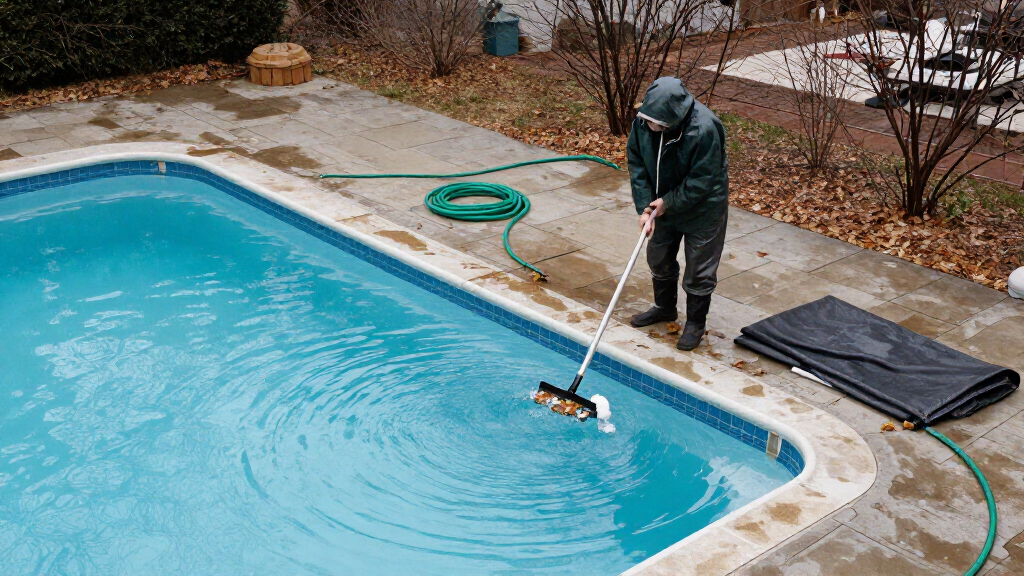
Keeping a backyard pool open for winter swimming can require a suitable heating system, an effective cover, regular maintenance and a plan for power outages. Experts quoted by House Beautiful say costs vary by pool and location, while cold-water immersion can cause immediate physical reactions that raise safety concerns.
Homeowners considering winter swimming need to weigh heating costs, pool size, maintenance and cold-water risks before deciding to keep a backyard pool open, according to experts quoted in a House Beautiful report. The advice matters because winter use may require additional equipment and safety planning, and not every existing pool is well suited to it.
Heating is the biggest winter expense, Jim Eisch Jr., vice president of operations at Pinch A Penny Pool Patio Spa, told House Beautiful. He said routine maintenance generally remains similar year-round, although chemical use may fall when the pool is used less. Heating costs vary with location, pool size, desired water temperature and equipment.
Eisch gave an example for a 10,000-gallon pool in Florida: estimated annual heating costs were $2,467 with a natural-gas heater, $741 with a traditional heat pump and $434 with a heat/cool pump using inverter technology. Those figures are an example, not a universal price estimate; the report does not give a calculation method or costs for other climates and pool configurations.
Pool dimensions and heat retention also shape the decision. Soake Pools cofounder Karen Larson said large pools can be difficult to cover well enough to retain heat, while smaller plunge or cocktail pools may be more practical. She recommended considering an easy-to-use or motorized cover. Larson also advised regular checks of filtration and water chemistry, and planning for outages, including a generator to keep the pump operating.
Costs and Safety Shape Winter Use
Keeping a pool open can turn seasonal swimming into a year-round activity, but the report’s examples show that heating choices can produce substantially different estimated costs for the same sample pool. Actual expenses will depend on local conditions, equipment and how warm owners want the water, so homeowners should seek estimates based on their own pool rather than treat the Florida figures as a forecast.
Cold-water swimming also presents a distinct safety issue. A 2020 review cited by House Beautiful found that immersion can cause an immediate shock response, including involuntary gasping, hyperventilation and a rapid rise in heart rate and blood pressure. Those reactions can make breathing harder to control and increase drowning risk. Cold can also impair muscle strength and nerve function, making it harder to swim safely.
The practical takeaway is that winter use involves more than paying to heat water. It requires an appropriate pool and cover, dependable circulation, safe access and a plan for swimmers’ wellbeing. The report advises gradual acclimation, avoiding prolonged exposure and having another person at home during a plunge. People with underlying conditions such as heart disease should consult a doctor before cold-water swimming.
Products Worth Considering

Solo Stove Pi Prime Portable Propane Pizza Oven

Greenworks 40V 16-Inch Cordless Snow Blower with 5.0Ah Battery and Charger

Traeger Woodridge Pro Wood Pellet Grill and Smoker, 970 sq. in.
As an affiliate, we earn on qualifying purchases.
Interest in Cold-Water Swimming
The report describes winter pool use as part of growing interest in cold-water experiences, including plunges, cryotherapy and cold showers. The American College of Sports Medicine’s 2026 Worldwide Fitness Trends report placed cold therapies 17th, compared with 20th in its 2025 report. That ranking provides context for interest in the practice; it does not establish how many people are swimming in outdoor pools during winter.
Larson said social media and seeing friends or neighbors try winter swims have helped make the idea more familiar. She also described shared swims as a way for friends and family to spend time together. These are her observations, not evidence that every pool can be operated safely or affordably in cold weather.
Research cited in the report offers qualified context on possible benefits. A 2025 systematic review and meta-analysis in PLOS ONE found cold-water immersion was associated with reduced stress for 12 hours afterward, alongside reported improvements in sleep quality and overall quality of life. That finding does not remove the immediate risks described in the 2020 review, and the supplied material does not provide details about the studies or who may benefit.
““Ten years ago, most people didn’t think winter swims were possible, especially in colder climates.””
— Karen Larson, cofounder of Soake Pools
Costs and Risks Vary by Pool
The report does not provide a general winter-running cost, or enough detail to calculate one. Its heating comparison applies to a 10,000-gallon pool in Florida; costs elsewhere may differ with climate, energy prices, pool construction, equipment and target water temperature. It also does not specify how much it costs to install a cover, upgrade a heater or buy a generator.
It is not clear which pool designs, covers or access arrangements are appropriate for every property. The source stresses that not all existing pools are good candidates for winter use, but gives no formal inspection standard. It also does not set a universally safe water temperature or immersion time. The cited research describes possible effects and risks, not a guarantee of benefit or harm for every individual.
Assess the Pool Before Winter
Homeowners interested in keeping a pool open should first ask a qualified local pool professional to assess whether its size, heating system, cover, filtration and site conditions are suited to winter operation. They can request a cost estimate based on local energy prices and expected use, rather than relying on the report’s Florida example.
Before swimming, owners should confirm that the pump can keep running during an outage, maintain water chemistry and circulation, and provide nonslip access, drainage and lighting. Swimmers should acclimate gradually, avoid prolonged exposure and have another person present; anyone with a relevant health condition should speak with a doctor. The supplied report does not identify a new regulation or scheduled policy change: the next steps depend on each homeowner’s pool and local conditions.
Key Questions
What is the biggest expense of keeping a pool open in winter?
Heating is likely to be the biggest winter expense, according to Jim Eisch Jr. The amount depends on location, pool size, desired water temperature and heater type.
How much could heating cost?
For a 10,000-gallon pool in Florida, Eisch estimated annual heating costs of $2,467 with natural gas, $741 with a traditional heat pump and $434 with an inverter heat/cool pump. These are specific estimates, not prices that apply everywhere.
Are smaller pools easier to keep open?
The report says smaller plunge or cocktail pools may be better candidates because large pools can be harder to cover effectively and retain heat. Suitability still depends on the pool and local winter conditions.
What safety precautions does the report recommend?
It advises gradually acclimating to cold water, avoiding prolonged exposure and having someone else at home during a swim. People with conditions such as heart disease should consult a doctor. Cold-water immersion can cause gasping and changes in breathing, heart rate and blood pressure.
Source: housebeautiful.com