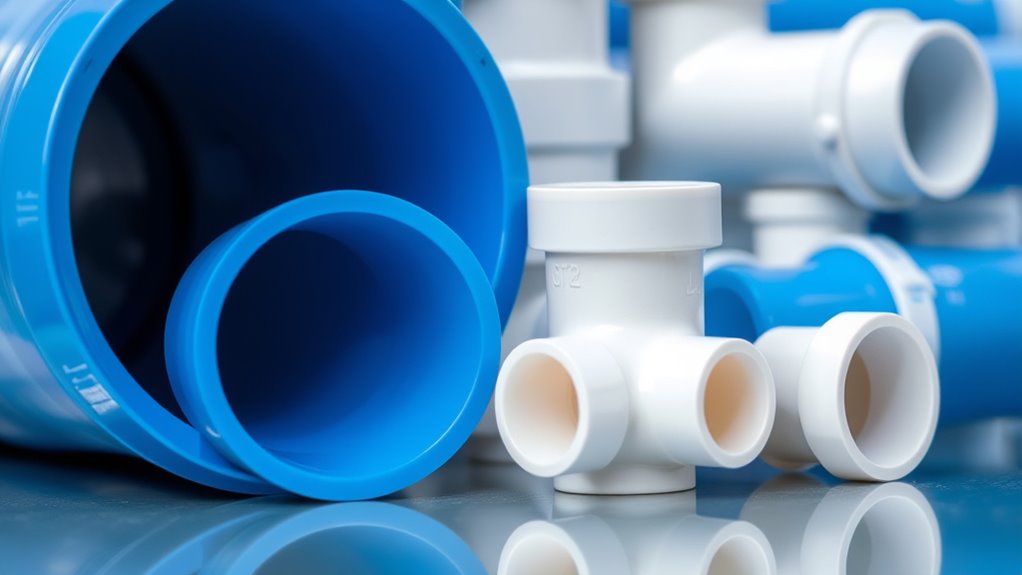

To get your pool system working smoothly, focus on choosing the right pipe sizes to match your flow rates and equipment needs. Larger pipes allow better circulation without causing pressure issues, but oversized pipes can be costly. Proper fittings like elbows and couplings ensure leak-free connections and system durability. Correct plumbing minimizes energy use and keeps equipment running efficiently. Keep exploring these key principles to build a reliable, long-lasting pool system that performs at its best.
Key Takeaways
- Proper pipe sizing ensures adequate water flow, prevents equipment damage, and maintains system efficiency.
- Use appropriately sized fittings like elbows and tees to prevent leaks and flow restrictions.
- Match pipe diameters to manufacturer flow rate recommendations for optimal circulation and performance.
- Correct flow rates are essential for heater efficiency, chemical distribution, and consistent water temperature.
- Proper installation practices facilitate maintenance, improve system longevity, and optimize overall pool operation.
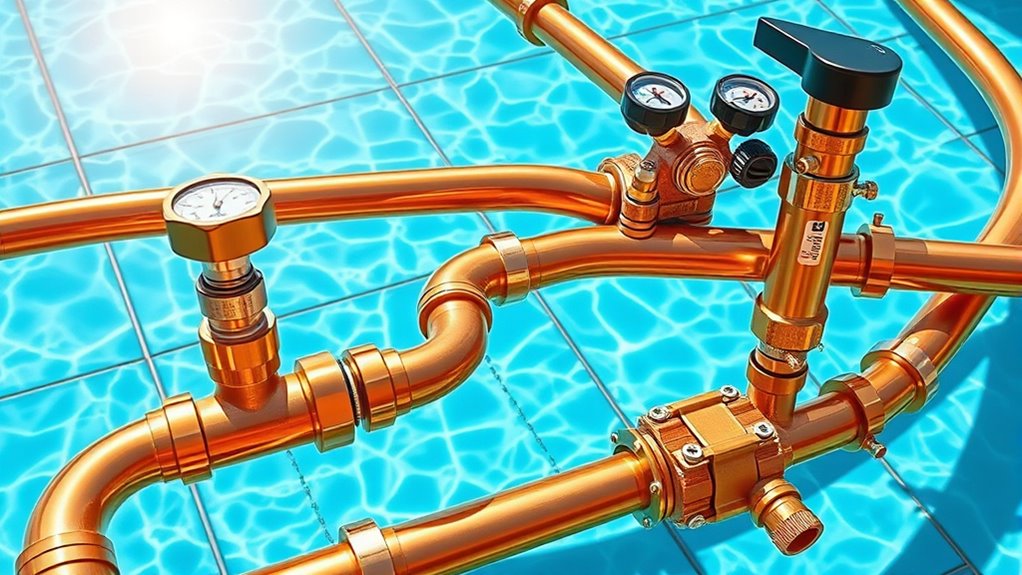
Have you ever wondered how your pool stays clean and functional? The secret lies in well-designed pool plumbing, which involves more than just connecting pipes and fittings. It’s about understanding how pipe sizes, flow rates, and fittings work together to keep your pool in top shape. Whether you’re installing a new pool heater or setting up a chlorinator, knowing these basics helps guarantee everything runs smoothly and efficiently.
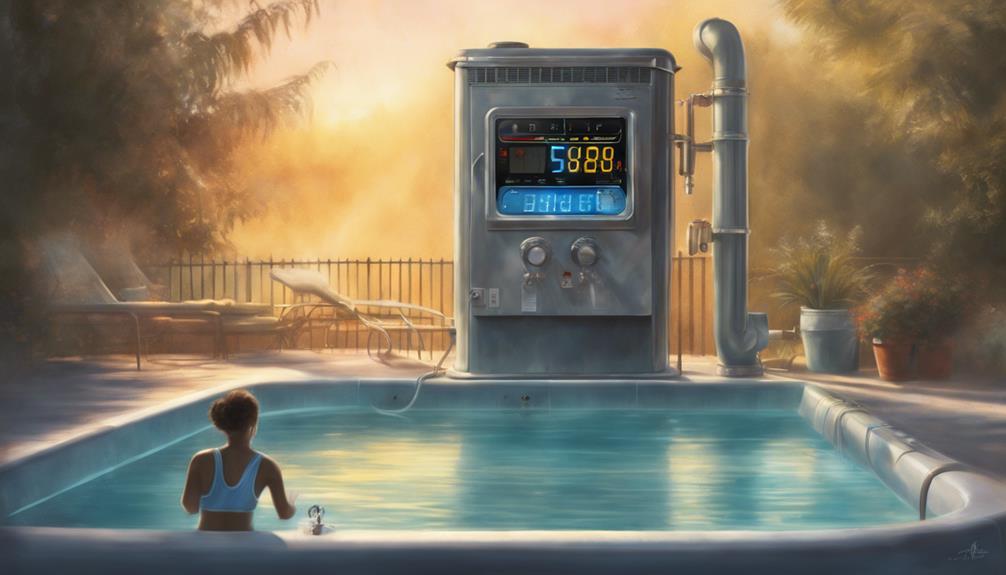
When it comes to pool heaters, proper plumbing is essential. A pool heater needs adequate flow to operate efficiently without causing damage or reducing its lifespan. Typically, a larger pipe size allows for better flow rates, ensuring hot water circulates quickly and evenly. If your pipes are too narrow, you might experience reduced efficiency or even damage to the heater due to restricted flow. Conversely, using pipes that are too large can be unnecessary and costly. It’s important to match the pipe size to the flow rate recommended by the heater’s manufacturer, which usually involves calculations based on your pool’s size and the heater’s specifications. Proper pipe sizing also minimizes pressure drops, ensuring your heater can maintain a consistent temperature and provide comfortable water. Proper pipe sizing is critical for maintaining optimal system performance and energy efficiency.
Proper pipe sizing ensures efficient pool heater operation and prevents damage.
Similarly, chlorinator installation depends heavily on correct plumbing. A chlorinator needs to be integrated seamlessly into the flow of water, so it can evenly distribute sanitizer throughout the pool. If the flow rate is too high or too low, you risk inefficient chlorination or uneven chemical distribution. Correct pipe sizing and fittings ensure the chlorinator functions as intended, maintaining water quality and clarity. When installing a chlorinator, you should also consider the flow rate through the system, which impacts how much chlorine is produced and dispersed. Proper fittings are crucial here; they prevent leaks and reduce pressure loss, keeping the chlorinator working at its best.
Fittings also play an essential role in maintaining a smooth flow and preventing leaks. Using the right type—such as elbows, tees, or couplings—ensures your plumbing system stays durable. Incorrect fittings or improper installation can cause flow restrictions, leaks, or pressure issues, compromising your entire system. Choosing the proper fittings and ensuring tight, secure connections help maintain consistent flow, which is critical when operating equipment like heaters or chlorinators.
pool plumbing fittings
As an affiliate, we earn on qualifying purchases.
As an affiliate, we earn on qualifying purchases.
Frequently Asked Questions
How Often Should Pool Plumbing Be Inspected for Leaks?
You should inspect your pool plumbing for leaks at least twice a year, especially before and after the swimming season. During inspections, check for signs of leaks around pipe insulation and valve maintenance points. Look for wet spots, cracks, or mold. Regularly maintaining valves and inspecting pipe insulation helps prevent potential leaks, saving you money and ensuring your pool stays in top condition. Prompt detection keeps your system running smoothly.
What Are the Signs of Improper Pipe Sizing?
You’ll notice your pool struggles to fill or circulate water smoothly, like a river hitting rocks. Signs of improper pipe sizing include inconsistent flow, loud noises, or reduced pressure, all caused by incorrect pipe diameter or flow restriction. When pipes are too narrow, they choke the water’s journey, leading to inefficiency. Keep an eye out for these clues to prevent costly repairs and make certain your pool stays pristine and inviting.
Can I Upgrade My Pool Plumbing Myself?
You can attempt DIY upgrades, but it’s best to get a professional inspection first. Upgrading pool plumbing involves working with water pressure and fittings, which can be tricky and costly if done wrong. A professional can assess your current setup, recommend the right pipe sizes, and guarantee everything meets safety standards. Rushing into a DIY upgrade without expert guidance might lead to leaks or decreased flow, costing you more in the long run.
How Do Temperature Changes Affect Pipe Flow?
Did you know that pipes can expand by up to 1/8 inch per 100 feet with temperature changes? You’ll notice that thermal expansion causes flow rate variations as warm water increases pipe volume, reducing pressure, while cold water contracts, potentially increasing flow. These fluctuations can lead to leaks or stress on fittings. To prevent issues, consider flexible connections and proper pipe support, especially in outdoor pools exposed to temperature swings.
What Materials Are Best for Long-Term Durability?
You should choose materials like PVC or CPVC for long-term durability, as they resist pipe corrosion and are compatible with pool chemicals. These plastics withstand temperature fluctuations and harsh environments better than metals, reducing leaks and maintenance. Always verify material compatibility with your pool’s chemical balance to guarantee longevity. By selecting the right material, you’ll prevent corrosion issues and enjoy a reliable, durable plumbing system for years to come.
pool pipe size calculator
As an affiliate, we earn on qualifying purchases.
As an affiliate, we earn on qualifying purchases.
Conclusion
Mastering your pool’s plumbing might seem like a delicate dance, but with the right knowledge, you can keep everything flowing smoothly. When you pay attention to pipe sizes, flow rates, and fittings, you’re gently guiding your pool towards effortless operation. Think of it as fine-tuning a symphony—each part working in harmony. With just a little care and understanding, your pool will be ready to offer refreshment and relaxation whenever you desire.
pool flow rate gauge
As an affiliate, we earn on qualifying purchases.
As an affiliate, we earn on qualifying purchases.
pool chlorinator installation kit
As an affiliate, we earn on qualifying purchases.
As an affiliate, we earn on qualifying purchases.