
To shock your pool safely, do it when chlorine levels are low (below 1 ppm) and before sunset to prevent sunlight from breaking down the disinfectant. Always wear protective gear and handle chemicals carefully. Apply the shock evenly, guarantee proper circulation, and wait at least 8-12 hours or follow product instructions before swimming. Monitoring chlorine afterward confirms it’s safe. Keep exploring to learn more about perfecting your shock routine and maintaining clean water.
Key Takeaways
- Shock the pool at night or during low sun exposure for maximum effectiveness.
- Ensure chlorine levels are below 3 ppm before shocking to prevent over-saturation.
- Always wear protective gear and handle chemicals carefully to ensure safety.
- Wait 8-12 hours after shocking before swimming, and test chlorine levels beforehand.
- Regularly monitor water chemistry and shock after heavy use or storms to maintain safe, clean water.
Have you ever wondered how to keep your pool water crystal clear and safe for swimming? One of the most effective ways is by performing pool shock treatments, which help eliminate bacteria, algae, and organic contaminants. But knowing when and how to do it safely is vital to avoid damage to your pool and ensure everyone’s safety. The first step is understanding the significance of maintaining proper chlorine levels. Chlorine is your primary sanitizer, and its levels should stay within the recommended range, usually between 1 and 3 parts per million (ppm). When these levels drop below that, your pool becomes more susceptible to bacteria growth and algae, signaling it’s time to shock the pool. You should always test your water regularly with a reliable kit to monitor chlorine levels and other chemical balances.
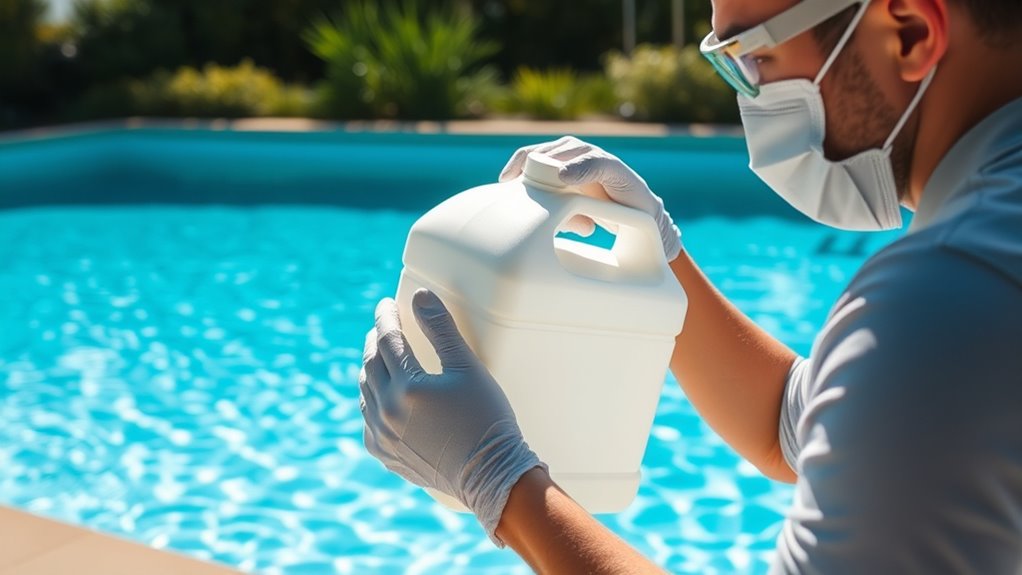
Performing pool shock isn’t something you do on a whim; safety precautions are essential to prevent accidents and health issues. Before shocking, make sure the pool’s pH level is balanced, ideally between 7.2 and 7.6. If it’s outside this range, adjust it accordingly because unbalanced pH can diminish the effectiveness of the shock treatment and cause skin or eye irritation. When handling pool shock chemicals, always wear protective gear—gloves, goggles, and a mask if needed—to avoid skin or eye contact with concentrated chemicals. Never mix different chemicals, as this can cause dangerous reactions or toxic fumes. Also, ensure proper ventilation if you’re working near a covered or enclosed pool area. Regularly checking chemical levels and maintaining proper water balance are key to effective shock treatments.
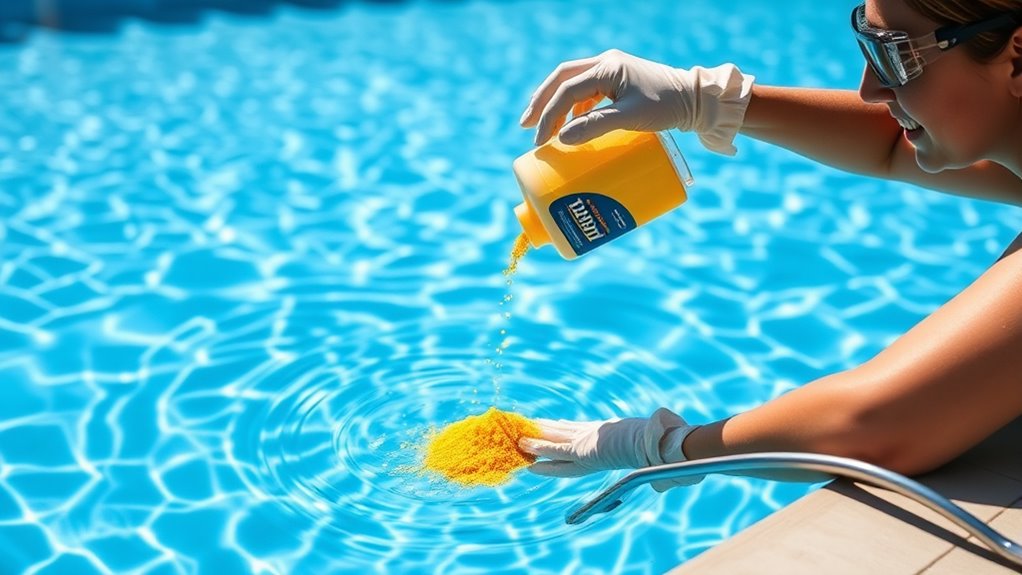
Timing your shock treatment is just as important as doing it correctly. It’s best to perform shock at night or during low sun exposure because sunlight can break down chlorine, reducing the treatment’s effectiveness. After adding shock, keep the pool off-limits for at least 8 to 12 hours, or as recommended on the product label, to allow the chemicals to circulate thoroughly and disinfect the water. Before swimming again, test the chlorine levels to confirm they’ve returned to safe ranges, and wait until the chlorine has dissipated to avoid skin or eye irritation. Remember, safety precautions extend beyond chemical handling—keep children and pets away from the pool during and after shocking until the chemicals have settled. Regularly shocking your pool, especially after heavy use or storms, helps maintain water clarity and prevents bacteria growth, ensuring a safe and inviting swimming environment.

HTH 52037R Pool Care Shock Advanced, Swimming Pool Chemical – Cal Hypo Formula, Prevents Bacteria & Algae, Restores Crystal Clear Water – Shock Treatment, 1lb (12 Pack)
BENEFITS: Stay all clear for cannonballs; This fast-dissolving, convenient 4-in-1 formula kills bacteria and algae, reduces chlorine odor…
As an affiliate, we earn on qualifying purchases.
As an affiliate, we earn on qualifying purchases.
Frequently Asked Questions
Can Pool Shock Be Used in Saltwater Pools?
Yes, you can use pool shock in saltwater pools. Just make certain you check the saltwater maintenance guidelines and choose a shock that’s compatible with saltwater systems. Most granular or non-chlorine shocks work well, but avoid shocks with added stabilizers or algaecides unless specified. Always follow the manufacturer’s instructions, wear protective gear, and shock your pool at night to prevent sunlight from breaking down the chlorine.
How Often Should I Shock My Pool During Peak Season?
During peak season, you should shock your pool about once every 1 to 2 weeks to maintain proper pool maintenance and chemical balance. If you notice cloudy water, algae growth, or high swimmer loads, shock more frequently. Always test your water regularly, ensuring chlorine levels stay balanced. Properly shocking your pool helps kill bacteria and algae, keeping your water clean, safe, and sparkling all season long.
Is It Safe to Swim Immediately After Shocking?
It’s not safe to swim immediately after shocking your pool because your pool safety depends on proper chemical balance. You should wait at least 24 hours or until chlorine levels drop to recommended levels before swimming. This ensures harmful chemicals have dissipated, protecting your skin and eyes. Always test your pool water to confirm chemical levels are secure, and follow safety guidelines to enjoy a clean, healthy swimming environment.
What Are the Signs of Over-Shocking a Pool?
Did you know that over-shocking can increase chlorine levels by over 10 parts per million? If your pool becomes cloudy or has a strong chlorine smell, you’re likely over-shocking it. Signs include irritation of eyes or skin and diminished pool clarity. Always test your chlorine levels after shocking, and avoid swimming until levels return to safe range. Over-shocking can harm your pool and your health, so monitor carefully.
Can Pool Shock Damage Pool Equipment or Surfaces?
Pool shock can potentially damage your pool equipment or surfaces if used improperly. Over-shocking may cause surface damage, like etching or discoloration, and lead to equipment corrosion over time. To prevent this, always follow the manufacturer’s instructions, avoid adding shock directly onto surfaces, and confirm proper chemical balance before shocking. Regular maintenance and careful application help protect your pool’s integrity and extend its lifespan.
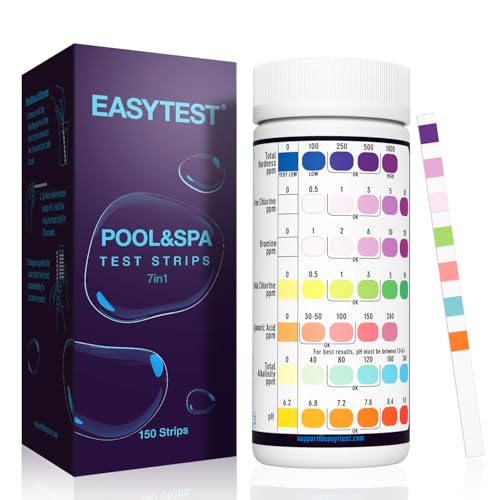
EASYTEST 7-Way Pool Test Strips, 150 Strips Water Chemical Testing for Hot tub and Spa, Accurate Test Bromine, Total Alkalinity, pH, Free Chlorine, Total Hardness, Cyanuric Acid, and Total Chlorine
AFFORDABLE 150 STRIPS: This water chemical testing kit contains 150 test strips. Enough balanced for your swimming pool,…
As an affiliate, we earn on qualifying purchases.
As an affiliate, we earn on qualifying purchases.
Conclusion
Now that you know when and how to safely shock your pool, you’re the captain steering a clean, clear watership. Remember, pool shock is like a superhero cape — saving your pool from bacteria and algae, but only if used properly. Handle it with care, follow the instructions, and keep your pool sparkling like a jewel. With these tips, you’ll guarantee a safe, inviting oasis for everyone to enjoy — a true splash of perfection!

In The Swim pH Reducer for Swimming Pools, Spas, and Hot Tubs – Lowers Alkalinity – Prevents Cloudy Water – Balances Water – 90% Sodium Bisulfate – 30 Pounds
pH Reducer lowers Total Alkalinity and pH for a safer swimming experience in pools, spas, and hot tubs.
As an affiliate, we earn on qualifying purchases.
As an affiliate, we earn on qualifying purchases.
EASYTEST 7-Way Pool Test Strips, 150 Strips Water Chemical Testing for Hot tub and Spa, Accurate Test Bromine, Total Alkalinity, pH, Free Chlorine, Total Hardness, Cyanuric Acid, and Total Chlorine
AFFORDABLE 150 STRIPS: This water chemical testing kit contains 150 test strips. Enough balanced for your swimming pool,…
As an affiliate, we earn on qualifying purchases.
As an affiliate, we earn on qualifying purchases.