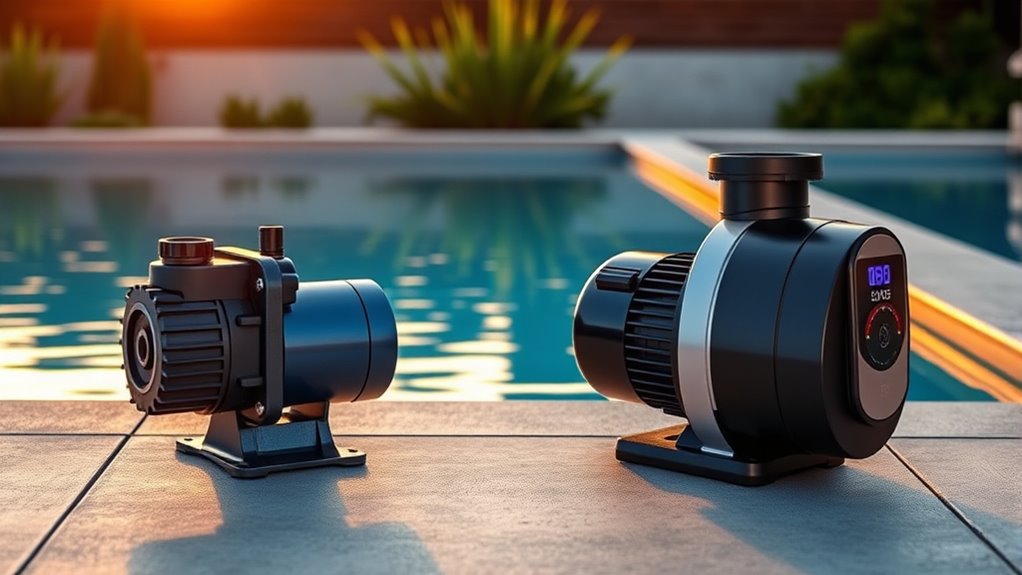

Choosing between single and variable-speed pool pumps depends on your priorities. Single-speed models are cheaper upfront but consume more energy and are noisier, which can increase long-term costs. Variable-speed pumps cost more initially but save you money through lower energy bills and offer quieter operation. If you’re aiming for efficiency and comfort, a variable-speed pump is often worth the investment. To explore how each option can fit your needs, keep exploring the details below.
Key Takeaways
- Variable-speed pumps consume less energy by adjusting speeds, leading to significant long-term savings.
- Single-speed pumps are cheaper initially but have higher ongoing energy costs due to constant operation.
- Variable-speed models operate more quietly, enhancing backyard tranquility and user comfort.
- Over time, energy savings from variable-speed pumps can offset their higher upfront purchase price.
- Choosing the right pump depends on budget, energy efficiency goals, and noise preferences.

When choosing a pool pump, understanding the differences between single-speed and variable-speed models is essential. This knowledge can help you make an informed decision that impacts your energy bills and the overall tranquility of your backyard oasis. Single-speed pumps operate at a fixed speed, meaning they run at full power whenever they’re on. They’re typically less expensive upfront and are simple to install. However, their high energy consumption can add up over time, leading to higher operational costs. You’ll also notice that these pumps tend to be noisier, generating a consistent, loud hum during operation. If your priority is a low initial cost and straightforward operation, a single-speed pump might seem appealing. But keep in mind, the ongoing energy expenses and noise levels could outweigh the initial savings.
On the other hand, variable-speed pumps are designed to run at different speeds depending on your pool’s needs. This flexibility allows you to operate at lower speeds for regular filtration and higher speeds when needed for cleaning or other tasks. The real advantage here is their potential for significant cost savings on electricity. Because they don’t operate at full power constantly, they consume less energy, which can substantially reduce your monthly utility bills. Over time, the savings can offset the higher purchase price of a variable-speed pump. Additionally, these pumps tend to be quieter since they can operate at lower speeds during routine filtration, creating a more peaceful backyard environment. If reducing noise and lowering energy bills are priorities for you, a variable-speed pump offers a compelling solution.
Choosing between these two types boils down to your budget and your long-term goals. While a single-speed pump might seem like the easier choice initially, the ongoing energy costs and noise levels could make it more expensive and disruptive in the long run. Conversely, investing in a variable-speed pump might require a higher upfront investment, but the energy efficiency and quieter operation make it worthwhile over time. Think about how much you’re willing to spend initially versus the savings you want to see month after month. Also, consider how important noise levels are for your comfort and peace of mind. It’s worth noting that energy-efficient pool pumps can significantly reduce your overall electricity consumption, making them a smart long-term investment. Ultimately, the right choice depends on balancing your budget, energy-saving goals, and desire for a quieter pool environment.
Frequently Asked Questions
How Do Pool Pump Sizes Affect Energy Efficiency?
Choosing the right pool pump size directly impacts your energy efficiency. A pump that’s too large wastes energy and creates more pump noise, while a smaller, properly sized pump operates more efficiently. When you select the right size, you’ll notice better energy savings and quieter operation. Proper sizing ensures ideal flow, reduces strain on the system, and helps you save money on energy bills over time.
Are Variable Speed Pumps More Durable Than Single Speed?
You might think that variable speed pumps are more durable, and they often are, especially since they tend to have longer pump lifespans due to gentler operation. Plus, they run quieter, making your pool area more pleasant. While single-speed pumps might wear out faster with constant use, variable speed models are built to last longer and handle varying demands, so they’re worth the investment if you want durability and peace and quiet.
What Maintenance Is Required for Different Pump Types?
You need to regularly inspect and lubricate your pump’s bearings to guarantee smooth operation, especially for single-speed models. For variable speed pumps, check the electronic components and ensure filter compatibility to prevent clogging. Keep the pump clean and monitor for leaks. Proper maintenance like replacing worn seals and ensuring pump lubrication will extend your pump’s lifespan, regardless of the type. Always follow manufacturer guidelines for specific maintenance routines.
Can Pool Pumps Be Integrated With Smart Home Systems?
You can absolutely integrate your pool pump with smart home systems, making it as easy as flipping a switch—your pool becomes a tech playground! Smart home integration allows you to control your pump remotely and monitor energy usage effortlessly. With energy monitoring features, you’ll optimize efficiency and save money. Just guarantee your pump is compatible with your system, and you’ll enjoy seamless, smart control over your pool’s operation.
How Do Initial Costs Compare for Single Vs Variable Speed Pumps?
You’ll find that the upfront investment for single-speed pumps is generally lower, making them more budget-friendly initially. However, the cost comparison shifts with variable speed pumps, which cost more upfront but save you money over time through lower energy bills. While the initial investment is higher, the long-term savings on energy consumption often make variable speed pumps a smarter financial decision in the long run.
Conclusion
Choosing between a single and a variable speed pool pump ultimately depends on your priorities—cost savings, energy efficiency, or convenience. Single speed pumps are simple and affordable but less efficient, while variable speed pumps offer flexibility, lower energy bills, and longer lifespan. Consider your pool size, usage habits, and budget. Make an informed decision that balances your needs, saves you money, and reduces your environmental impact—because smart choices today lead to a cleaner, greener tomorrow.