

To design for quiet, position pumps away from work or living areas and use vibration-isolating pads to cut down noise transmission. Enclose pumps in soundproof housings lined with absorbing materials like acoustic panels or foam insulation. Incorporate sound barriers or baffles to break up sound waves and reduce vibrations. Thoughtful placement combined with effective sound screens helps create a more peaceful environment, and exploring these strategies further will give you even better results.
Key Takeaways
- Position pumps away from occupied areas and near sound-absorbing barriers or enclosures.
- Use vibration-isolating pads and flexible couplings to minimize vibration transmission.
- Install soundproof screens or barriers around pumps to block noise escape.
- Incorporate acoustic panels or foam insulation in pump enclosures to absorb sound energy.
- Design mechanical rooms with soundproofing and strategic placement to reduce overall noise impact.
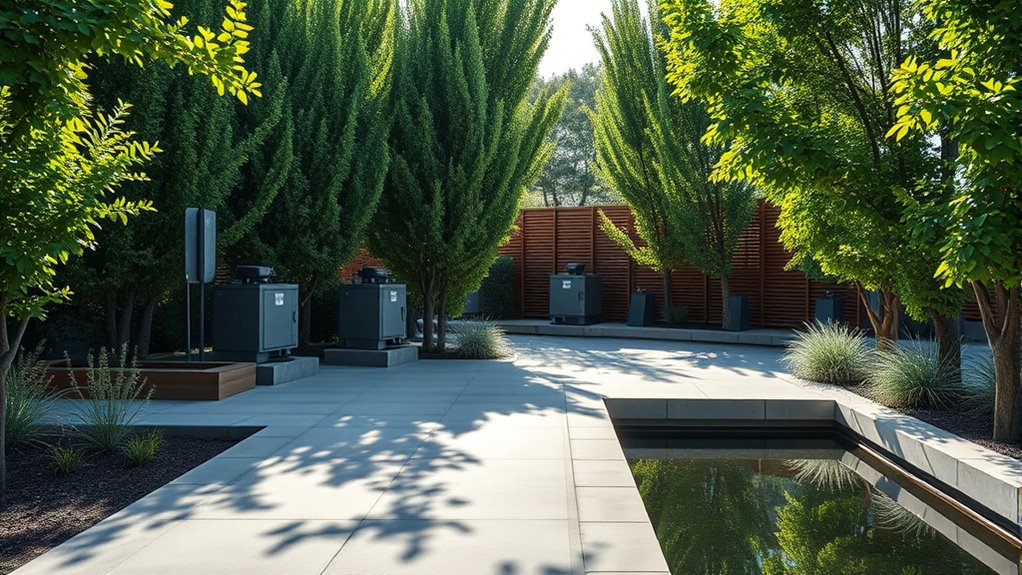
In a world filled with constant noise, designing for quiet isn’t just a luxury—it’s a necessity. If you’re managing equipment like pumps, you know how disruptive pump noise can be. It doesn’t just create an annoying background hum; it can interfere with concentration, communication, and overall comfort. The key to minimizing this disturbance lies in strategic pump placement and effective sound absorption techniques. When you position pumps carefully, you reduce the direct transmission of noise to surrounding areas. Placing pumps away from workspaces or living zones, or installing them on vibration-isolating pads, can considerably cut down the noise that reaches your ears. You want to avoid placing pumps near windows or thin partitions where sound travels easily. Instead, consider locating them in dedicated mechanical rooms or enclosed spaces designed with soundproofing in mind.
Strategic pump placement reduces noise transmission, creating quieter, more comfortable environments.
Sound absorption becomes your best tool when it comes to managing pump noise. You can incorporate sound-absorbing materials around the pump area to dampen the noise before it escapes into the environment. Acoustic panels, foam insulation, or specially designed soundproof curtains can absorb the vibrations and airborne sound waves generated by the pump. These materials work by converting sound energy into heat, reducing the intensity of the noise that travels beyond the equipment zone. You should also think about the surfaces surrounding the pump—smooth, hard surfaces reflect sound, amplifying it, while porous or textured surfaces absorb it. Installing sound-absorbing barriers or baffles around the pump can help break up sound waves and prevent them from bouncing around.
Another effective strategy involves controlling the vibration itself. Pumps often produce vibrations that cause structural noise, which then radiates into the environment. Using vibration mounts, isolators, or flexible couplings can dampen these vibrations at the source. When vibrations are minimized, there’s less energy to be transmitted as sound, making your environment much quieter. You might also consider enclosing the pump in a soundproof housing lined with sound-absorbing materials. This enclosure acts as a barrier, preventing noise from escaping and reducing overall sound levels.
Ultimately, your goal is to create a balance—placing pumps where they’re functional while implementing sound absorption measures that keep noise to a minimum. Every step you take in positioning pumps thoughtfully and adding sound-absorbing features makes your space more peaceful. When you address pump noise directly through strategic placement and sound absorption, you craft an environment that’s conducive to focus, relaxation, or productivity, even amidst busy mechanical operations.

TroyStudio Portable Sound Proof Box, 16" x 12" x 16.2" Noise Reduction Enclosure, Light Blocking Quiet Cover, Soundproof Barrier for Ultrasonic Cleaner, Air Pump, Rock Tumbler & Generator
- Dimensions and Components: 16x12x16.2 inch enclosure with foam panels
- Foldable and Lightweight: Collapsible design, weighs 3.1 pounds
- Noise Reduction Capability: Blocks noise above 400Hz, reduces 21.5dB
As an affiliate, we earn on qualifying purchases.
As an affiliate, we earn on qualifying purchases.
Frequently Asked Questions
How Can I Measure Acceptable Noise Levels for My Project?
You can measure acceptable noise levels by comparing them to noise level standards relevant to your project, such as those set by OSHA or local regulations. Use measurement techniques like sound level meters to take accurate readings at different locations and times. Be sure to document your results, and adjust your pump placement or sound screens if readings exceed acceptable limits, ensuring a quieter environment.
What Maintenance Practices Best Reduce Pump Noise Over Time?
You should prioritize vibration isolation and conduct regular inspections to reduce pump noise over time. Make certain that vibration isolators are properly maintained and replaced if worn. Regularly check for loose fittings, worn bearings, and misalignments that can increase noise levels. By consistently maintaining these aspects, you’ll keep the pump running smoothly and quietly, preventing noise escalation and extending equipment lifespan.
Are There Specific Materials That Absorb Sound More Effectively?
Did you know that acoustic barriers can reduce noise levels by up to 50%? When selecting materials, you should consider soundproof coatings and specialized acoustic barriers, which absorb and block sound waves effectively. These materials are designed to minimize pump noise, making your environment quieter. Using soundproof coatings on surfaces and installing acoustic barriers around pumps will markedly improve noise reduction, creating a more peaceful space.
How Does Surrounding Landscape Impact Noise Mitigation?
Surrounding landscape plays a crucial role in noise mitigation through landscape integration and natural barriers. You can reduce sound transmission by incorporating trees, shrubs, and earth mounds that absorb and block noise. Natural barriers, like dense vegetation or terrain features, blend seamlessly into your environment, enhancing aesthetic appeal while effectively dampening pump noise. Strategically designing these elements around your pump site ensures a quieter, more harmonious setting.
Can Smart Technology Help Monitor and Control Pump Noise?
Sure, smart technology can help you tame that cacophonous pump. With smart sensors and noise monitoring, you’ll get real-time alerts when noise levels spike—because who wants a surprise symphony of machinery at dawn? These tools let you fine-tune pump operations, reducing noise pollution effortlessly. So, embrace the future, and let technology keep your environment peaceful, all while giving you the power to control that noisy beast.
Conclusion
So, after all your efforts to hide pumps behind sound screens and carefully place them away from quiet spaces, it turns out the biggest noise might still come from your own assumptions. Ironically, in trying to silence the machines, you might overlook the subtle hum of overlooked details or the noise of neglect. Sometimes, the quietest environments are just a well-placed pump—proof that even silence has its loud surprises.