


Infinity pools create a sleek, seamless look by making water appear to merge with the horizon, offering a modern, minimalist aesthetic. Perimeter overflow pools feature a structured border with a gutter system, giving a more geometric, luxurious appearance. Infinity pools usually demand higher maintenance and operational costs due to their advanced filtration and spillover edges, while perimeter overflow pools are easier to care for. Understanding these differences helps you choose the right style for your space and lifestyle—more details ahead.
Key Takeaways
- Infinity pools create a seamless visual merging with the landscape, while perimeter overflow pools have defined, structured edges.
- Infinity pools require complex filtration and higher operational costs due to water spillover, unlike perimeter overflow pools.
- Perimeter overflow pools are easier to maintain and clean, thanks to their structured gutter system.
- Infinity pools emphasize modern aesthetics and dramatic impact; perimeter overflow pools focus on geometric design and luxury.
- Both enhance outdoor spaces but differ in maintenance demands, cost, and visual style preferences.
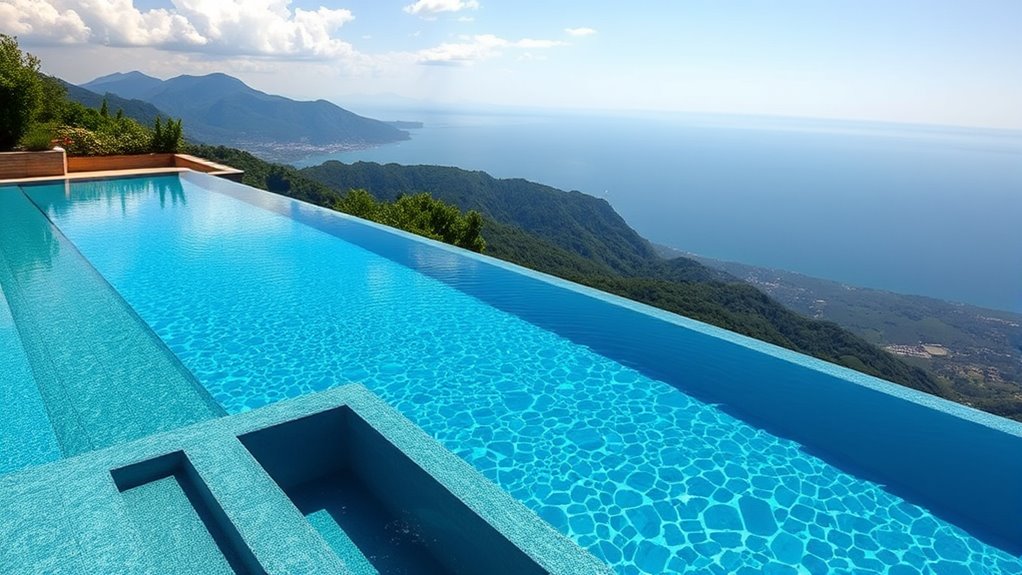
Have you ever wondered how infinity pools differ from perimeter overflow pools? Both offer stunning water features, but their design aesthetics and maintenance challenges set them apart. When you’re considering these luxurious options, understanding these differences helps you make the best choice for your space. Infinity pools are celebrated for their sleek, seamless appearance, where the water appears to extend endlessly over the edge. This design creates a dramatic visual effect, often making the pool seem like it’s merging into the horizon. The clean lines and unobstructed views appeal to those seeking a modern, minimalist aesthetic. However, achieving this look requires precise craftsmanship and high-quality materials to ensure the edge is perfectly level and the water flows smoothly over it. The design aesthetics of an infinity pool emphasize elegance and a sense of infinity, but this focus on visual impact comes with maintenance challenges. Because water constantly spills over the edge, it necessitates a sophisticated filtration system to keep the water clear and free of debris. The overflow edge must be meticulously maintained to prevent buildup of dirt or algae that can mar the seamless appearance. Additionally, the continual water flow means the pumps and filtration system work more intensively, leading to higher operational costs and more frequent inspections. Proper water circulation is essential to ensure the pool remains clean and balanced, especially in infinity pools. On the other hand, perimeter overflow pools feature a similar overflow mechanism but with a slightly different approach. Their design typically involves a perimeter gutter system that captures excess water, creating a clean, uniform water level around the pool’s edge. This setup still provides a luxurious look but often with a more structured, geometric appeal. The design aesthetics tend to be somewhat less minimalist than infinity pools but still offer a sophisticated ambiance. Maintenance challenges for perimeter overflow pools are generally less demanding than infinity pools. While they still require regular cleaning of the gutters and filtration systems, the water doesn’t spill directly over the edge into a void—making it somewhat easier to manage. You’ll find that perimeter overflow pools tend to be more forgiving when it comes to debris accumulation and water quality issues. Overall, if you prioritize a seamless, borderless visual with a touch of modern elegance, infinity pools are hard to beat—though they demand meticulous upkeep. If you prefer a luxurious look with somewhat easier maintenance and a more structured edge, perimeter overflow pools might suit your needs better. Both options elevate your outdoor space, but understanding their design aesthetics and maintenance challenges helps you choose the one that aligns perfectly with your lifestyle and vision.
![Infinity Pool [Blu-ray] [2022] [Region Free]](https://m.media-amazon.com/images/I/41tbgWvXt0L._SL500_.jpg)
Infinity Pool [Blu-ray] [2022] [Region Free]
- Title: Infinity Pool
As an affiliate, we earn on qualifying purchases.
As an affiliate, we earn on qualifying purchases.
Frequently Asked Questions
Which Pool Type Is More Cost-Effective to Install and Maintain?
You’ll find that perimeter overflow pools are generally more cost-effective to install and maintain. Their simpler design leads to lower initial costs and reduced maintenance expenses, since they use standard filtration systems. Infinity pools, with their complex setup and unique features, tend to be pricier upfront and incur higher ongoing expenses. If budget is your priority, a perimeter overflow pool offers a more affordable and manageable option overall.
How Do Climate Conditions Affect the Performance of Each Pool Type?
Think of your pool as a delicate dancer responding to the climate impact around it. Both infinity pools and perimeter overflows face weather resilience challenges; heavy rains can cause overflow or spillover issues, while freezing temperatures may damage the structure. Infinity pools often require extra protection against temperature swings, whereas perimeter overflows handle weather fluctuations more gracefully. Your choice depends on how well you can shield your pool from the unpredictable dance of weather.
Are There Specific Safety Considerations Unique to Infinity Pools?
You should be aware that infinity pools pose unique safety concerns, especially related to slip hazards and edge safety. Because the edge appears to seamlessly blend with the surroundings, you might accidentally slip or fall if you’re not cautious. Always guarantee proper barriers, non-slip surfaces, and clear signage are in place. Regular maintenance and attentive supervision can also help prevent accidents, making your infinity pool experience safer.
Can Existing Pools Be Retrofitted Into Infinity or Perimeter Overflow Designs?
You can retrofit existing pools into infinity or perimeter overflow designs, but expect significant challenges. Retrofitting challenges include structural modifications to handle increased water volume and specialized overflow systems. Design modifications are essential to ensure proper water flow and safety features. You’ll need to work with experienced professionals to evaluate your current pool’s structure, costs, and feasibility, making sure the transformation maintains durability and aesthetic appeal.
What Are the Long-Term Durability Differences Between the Two Pool Types?
You’ll find that infinity pools generally have similar material longevity and structural resilience as perimeter overflow pools, but their long-term durability hinges on construction quality and maintenance. Infinity edges can be more vulnerable to wear due to constant water flow, while perimeter overflow pools often experience less stress on the edge. Regular upkeep, high-quality materials, and proper design ensure both types maintain durability over time.
Conclusion
Now, imagine yourself stepping into either pool—feeling the thrill of that seamless edge or the mesmerizing flow over the perimeter. Each offers a unique experience, but only one holds the secret to endless horizons or a captivating visual spectacle. Which will you choose to elevate your outdoor sanctuary? The decision lingers just beyond reach, leaving you curious about the true magic waiting beneath the surface. The choice is yours—are you ready to plunge in?