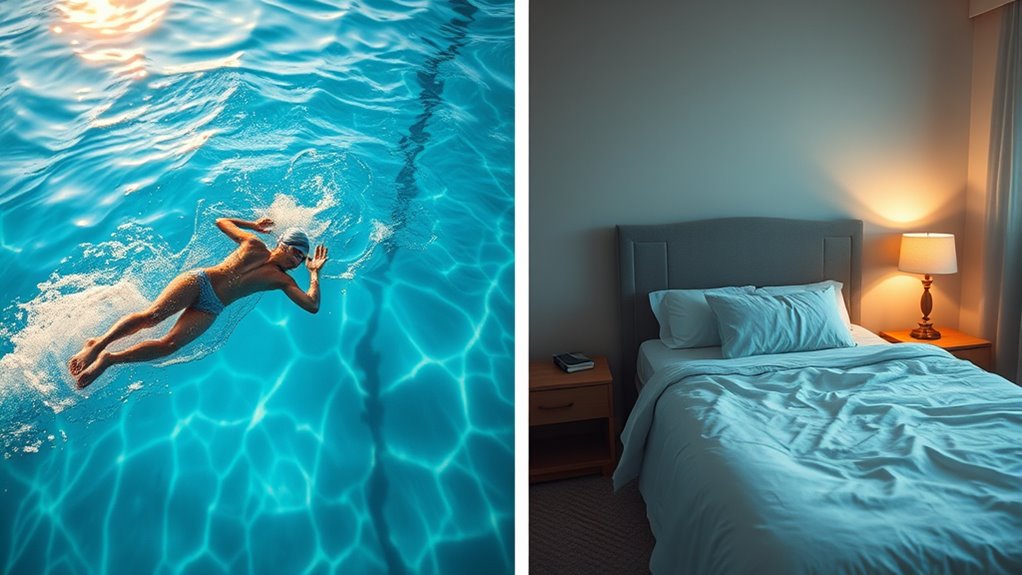

Studies show that getting quality sleep is essential for swimmers. When you don’t sleep well, your focus, reaction time, and muscle recovery suffer, which can hurt your performance. Sleep deprivation also increases fatigue and injury risk, slowing progress in training. REM sleep helps your brain process techniques and strategies, making you more alert and coordinated in the water. To improve your results, understanding how sleep influences performance can make all the difference—you’ll find out more if you keep exploring.

Get pool and patio gear delivered free with Prime
- Fast, free delivery on millions of items
- Prime Video, Amazon Music and more included
- Member-only deals all year
Key Takeaways
- Sleep deprivation impairs focus, reaction time, and muscle recovery, negatively affecting swim performance.
- Adequate REM sleep enhances memory consolidation of techniques and strategies vital for swimmers.
- Poor sleep increases fatigue and injury risk, reducing overall training effectiveness.
- Good sleep hygiene and dream recall are linked to better neural recovery and athletic outcomes.
- Studies suggest prioritizing quality sleep improves stamina, mental alertness, and competitive performance.

Have you ever wondered how your sleep habits impact your swim performance? It’s a question many athletes overlook, but research shows sleep plays a crucial role in how well you perform in the pool. When you don’t get enough quality sleep, you experience sleep deprivation, which can seriously hinder your athletic abilities. Sleep deprivation affects your focus, reaction time, and muscle recovery—all critical components for a swimmer. Missing out on restful sleep means your body isn’t fully replenished, leading to decreased stamina and increased fatigue during training and competitions. More importantly, poor sleep can impair your cognitive functions, making it harder to stay alert and make split-second decisions in the water. Additionally, maintaining proper sleep hygiene is essential for ensuring your sleep quality supports your athletic goals. Dream recall, although often overlooked, is another aspect linked to sleep quality that can influence your swim performance. When you remember your dreams, it generally indicates that you’re experiencing sufficient REM sleep, the stage associated with mental restoration and learning. REM sleep helps consolidate memories, including those related to technique and strategy you might work on during practice. If you notice you rarely recall dreams, it could be a sign that your sleep cycles are disrupted or insufficient, which might be impairing your ability to process and retain new skills or improve existing ones. Better dream recall often correlates with more restorative sleep, meaning your brain is actively working to strengthen neural pathways necessary for motor skills and coordination essential in swimming. Understanding the effects of sleep deprivation emphasizes the importance of prioritizing sleep in your training regimen. When you’re sleep-deprived, your body produces higher levels of stress hormones like cortisol, which can lead to inflammation and slower muscle recovery. This makes it harder to bounce back after intense sessions, increasing your risk of injury. Consistent sleep deprivation also hampers your immune system, leaving you vulnerable to illnesses that could sideline your training. Conversely, good sleep hygiene and ensuring you get enough REM sleep can boost your overall performance. It enhances your focus, sharpens your reaction times, and helps you learn new techniques more efficiently.
As an affiliate, we earn on qualifying purchases.
Frequently Asked Questions
How Does Sleep Quality Affect Sprint Versus Endurance Swimming?
Poor sleep quality, especially sleep deprivation, can hinder both sprint and endurance swimming. You may notice decreased power and stamina, making quick sprints harder and endurance laps more tiring. Melatonin supplementation might help improve your sleep, boosting recovery and performance. Prioritizing quality sleep allows your body to recover faster, optimize energy, and perform at your best, whether you’re pushing for a quick finish or maintaining stamina over longer distances.
What Are the Best Sleep Practices for Competitive Swimmers?
You should prioritize good sleep hygiene by maintaining a consistent sleep schedule, creating a relaxing bedtime routine, and avoiding screens before bed. Incorporate dream analysis to understand your sleep patterns and identify disruptions. Guarantee your sleep environment is cool, dark, and quiet. These practices help improve sleep quality, allowing you to recover better and perform at their best in the pool. Proper sleep is essential for peak competitive performance.
Does Napping Improve Swim Performance During Competitions?
Napping can improve your swim performance during competitions by promoting rest and recovery, especially if you’re experiencing sleep deprivation. Short naps help reduce fatigue, sharpen focus, and boost energy levels, making you more alert in the pool. However, avoid long naps that might interfere with your nighttime sleep schedule. Incorporate brief, strategic naps into your routine to maximize performance benefits and guarantee you’re well-rested for your races.
How Do Travel and Jet Lag Impact Swimmers’ Sleep and Performance?
Like a sailor caught in turbulent seas, travel and jet lag disrupt your sleep environment and shorten sleep duration, throwing off your rhythm. You might find it hard to fall asleep or stay rested, which can impair your performance in the pool. To counteract this, you should aim to adjust your schedule gradually and create a sleep-friendly environment, ensuring you get enough restorative sleep despite the travel chaos.
Are There Specific Sleep Supplements Recommended for Swimmers?
You can consider sleep aids like melatonin or herbal supplements such as valerian root to improve your sleep quality. These options may help you fall asleep faster and stay asleep longer, especially during travel or stressful periods. However, always check with your healthcare provider before trying new supplements, as they can advise on appropriate dosages and make sure they won’t interfere with your training or health.
Conclusion
As you drift into restful sleep tonight, imagine your muscles recharging beneath a calm, star-lit sky. Each night’s deep sleep is like a gentle wave washing over you, strengthening your body for tomorrow’s swim. With restful nights, you’ll feel more energized, confident, and ready to carve through the water with grace. Embrace the power of sleep, and watch your swim performance rise like the sun over a tranquil horizon—bright, bold, and unstoppable.
Halloween Picks
halloween
As an affiliate, we earn on qualifying purchases.