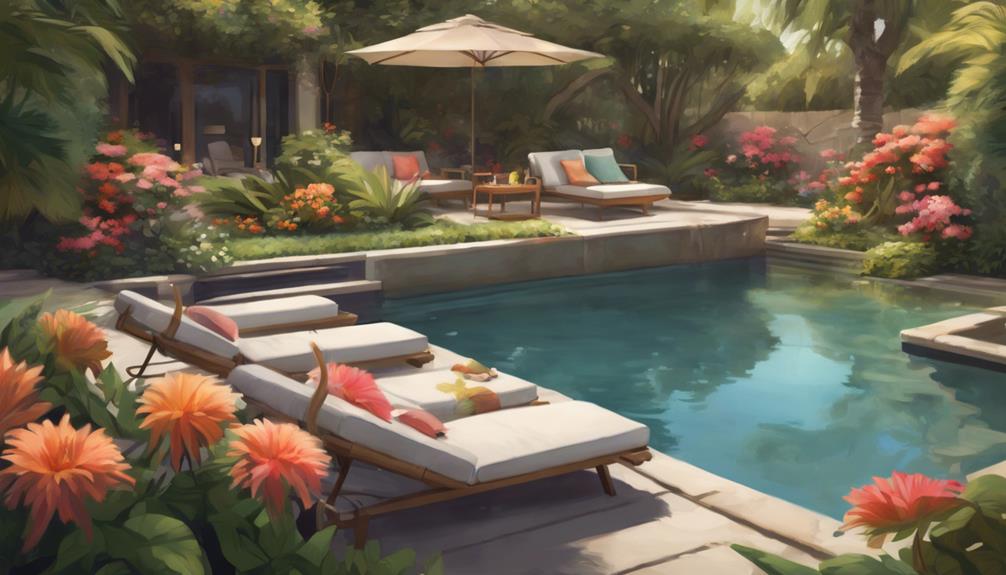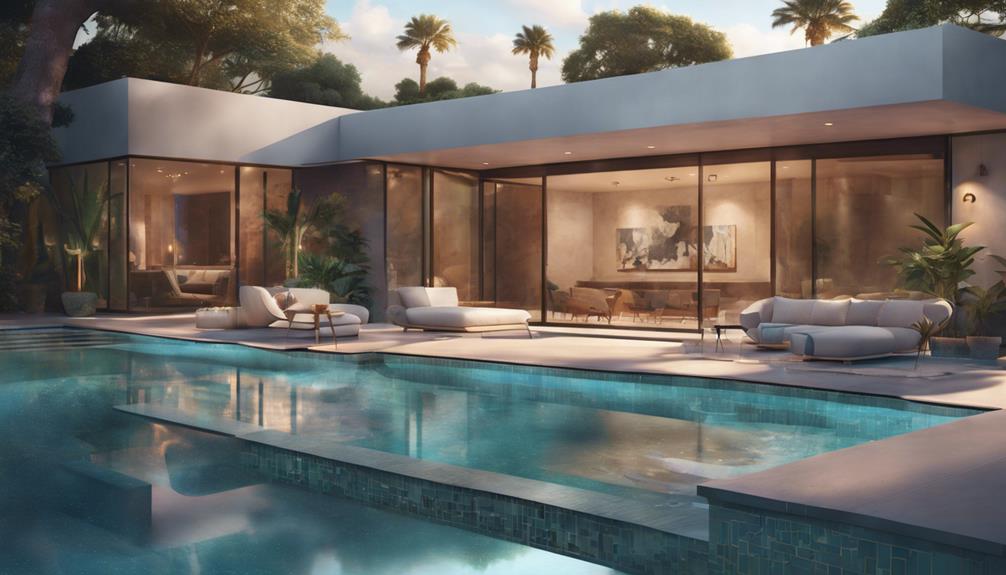
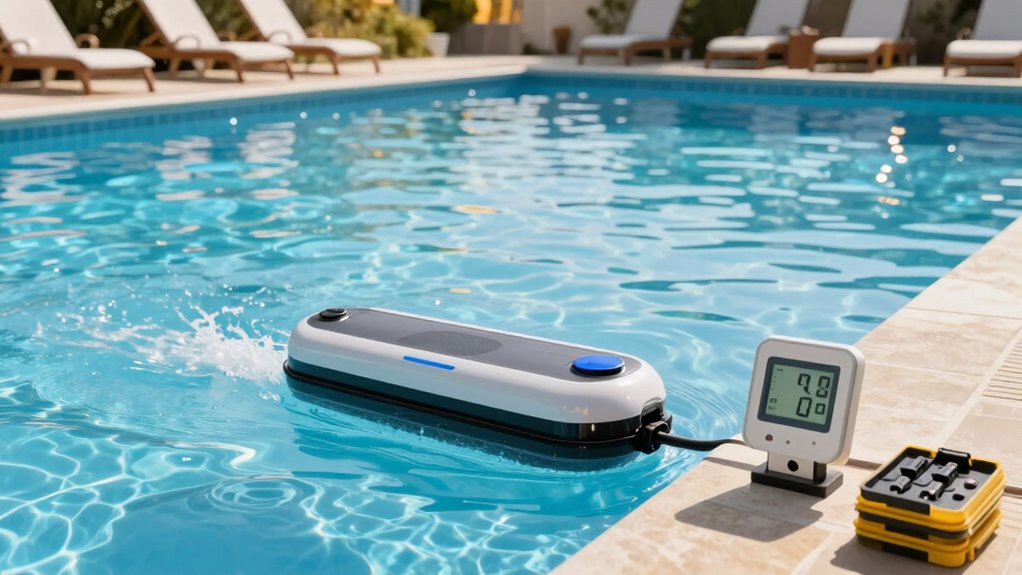

The size of your pool impacts maintenance, heating, and daily use considerably. Larger pools collect more debris, needing frequent cleaning and robust equipment, which drives up energy costs. Smaller pools, on the other hand, are easier to maintain with simpler tools and offer more stable water chemistry. You’ll enjoy less hassle and lower expenses with a well-sized pool that fits your lifestyle. Stick around to explore how these factors can enhance your backyard experience.

Get pool and patio gear delivered free with Prime
- Fast, free delivery on millions of items
- Prime Video, Amazon Music and more included
- Member-only deals all year
Key Takeaways
- Larger pools require more frequent cleaning and robust filtration systems, increasing maintenance efforts compared to smaller pools.
- Smaller pools offer easier water chemistry management, reducing the risk of algae growth and balancing chemical levels effectively.
- Heating costs are typically higher for larger pools due to the need for more energy to maintain temperature.
- Energy consumption is greater in larger pools, leading to higher ongoing costs for pumps and filtration systems.
- Choosing the right pool size aligns with lifestyle preferences, enhancing enjoyment while managing maintenance and heating costs efficiently.
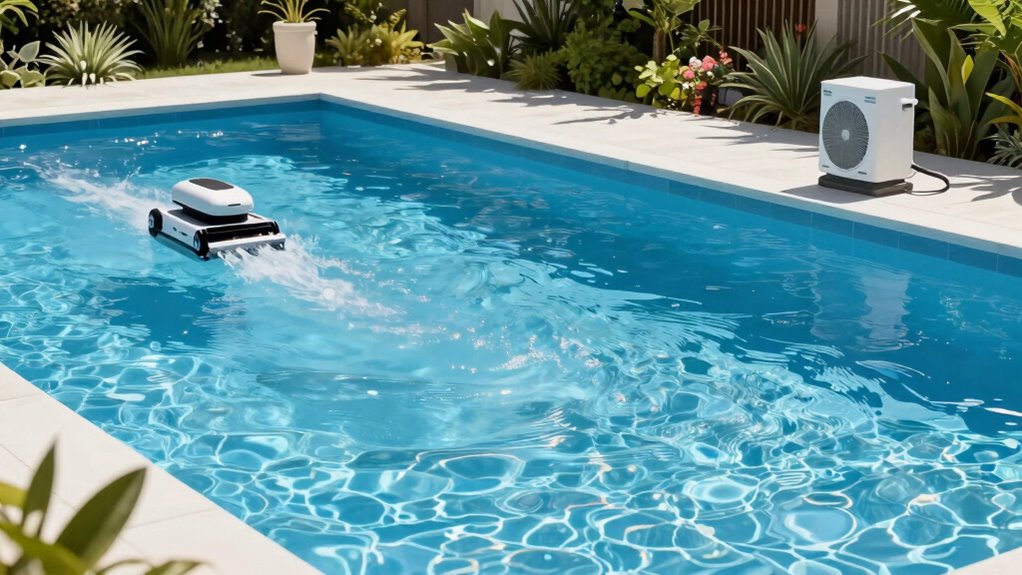
When you choose the right pool size, you not only enhance your backyard’s appeal but also simplify maintenance tasks. A well-sized pool can greatly reduce the maintenance frequency and effort required to keep it in top shape. If your pool is too large, you may find yourself spending excessive time and money on upkeep, while a smaller pool can make maintenance a breeze.
The maintenance frequency largely hinges on the pool size. Larger pools tend to accumulate more debris and require more frequent cleaning. You’ll need to invest in effective cleaning methods, which may include using robotic cleaners or automatic skimmers. With a smaller pool, you can usually get by with manual cleaning tools and less frequent maintenance. This can save you both time and effort, allowing you to enjoy your pool rather than spend your time maintaining it.
Water chemistry is another critical factor affected by pool size. Smaller pools generally have a more stable water chemistry, making it easier to balance pH and chlorine levels. With a larger pool, the volume of water can dilute chemical imbalances, but it also means it can take longer to correct them. If you’re not careful, you might end up with algae growth or other issues that require more intensive treatments. So, when you select a pool size, consider how often you’re willing to test and adjust your water chemistry. Proper circulation and filtration systems are also essential to maintain water quality, especially in larger pools to prevent stagnation. Understanding water circulation and proper filtration can significantly impact maintenance ease and water clarity. Additionally, understanding microplastics in dust can be important for overall water quality and health considerations around pools, especially if debris and dust settle into the water. Regular maintenance routines, including monitoring for debris buildup, can help prevent issues before they become costly repairs.
Equipment efficiency also plays a pivotal role in maintenance. A larger pool often necessitates more powerful pumps and filters, leading to higher energy consumption. In contrast, a smaller pool can typically use less robust equipment, which can lead to cost savings over time. You’ll want to factor in these cost implications when deciding on the pool size that fits your lifestyle and budget.
Additionally, pool size and energy costs can be interconnected, emphasizing the importance of choosing a size that aligns with your energy efficiency goals.
As an affiliate, we earn on qualifying purchases.
Frequently Asked Questions
How Does Pool Size Impact Water Chemistry Balance?
Pool size greatly impacts water chemistry balance. In a larger pool, you’ll find it easier to maintain stable water balance due to the greater volume diluting contaminants. However, it also requires more chemical adjustments to keep the balance right. Smaller pools can experience rapid changes, making it essential for you to monitor and adjust chemicals more frequently. Overall, understanding your pool size helps you manage water chemistry effectively and efficiently.
What Are the Costs Associated With Larger Pools?
When it comes to larger pools, you’re diving into deeper waters with costs. Installation expenses can skyrocket due to the increased materials and labor needed. Plus, you’ll find yourself cleaning more frequently, which adds up in maintenance costs. Don’t forget about higher utility bills for heating and chemical balance. Overall, while larger pools offer more fun, they also demand a bigger budget, making it essential to plan wisely.
Can Smaller Pools Increase Energy Efficiency?
Yes, smaller pools can increase energy efficiency. With less water to heat, you’ll notice lower energy consumption, making your heating costs more manageable. Smaller pools often retain heat better, so you won’t need to run your heater as much, especially during cooler evenings. This not only saves you money but also reduces your environmental impact. Overall, opting for a smaller pool can be a smart choice for energy-conscious homeowners like you.
How Does Pool Size Affect Safety Measures?
When it comes to safety measures, pool size plays a vital role. Smaller pools often require fewer safety protocols, making it easier for you to monitor activities and implement drowning prevention strategies. However, don’t underestimate their potential hazards. You may find that even a small body of water can pose risks if proper measures aren’t in place. Always stay vigilant, ensuring that barriers, alarms, and supervision are part of your safety routine.
What Is the Lifespan Difference Between Small and Large Pools?
Small pools typically have a longer lifespan due to lower maintenance frequency and less wear and tear. You’ll find it easier to manage chemicals and repairs, which contributes to overall pool longevity. Larger pools, while offering more space, often require more frequent maintenance and can face issues like structural stress. If you’re considering a pool, keep in mind that size directly influences how long your investment will last.
Conclusion
In choosing a pool, remember the balance between size and upkeep. A smaller pool demands less maintenance and heats up quickly, allowing for spontaneous dips on hot days. In contrast, a larger pool offers more space for fun and gatherings but requires more time and energy to manage. Ultimately, it’s about what suits your lifestyle—effortless relaxation or expansive enjoyment. Weigh your priorities, and you’ll find the perfect fit for your backyard oasis.
Columbus Day / Indigenous Peoples' Day Picks
long weekend sales
As an affiliate, we earn on qualifying purchases.