
TL;DR
Research indicates that rooftops across Barcelona could generate 31% of the city’s tomato consumption. This highlights urban farming’s role in local food resilience, though some details remain unconfirmed.
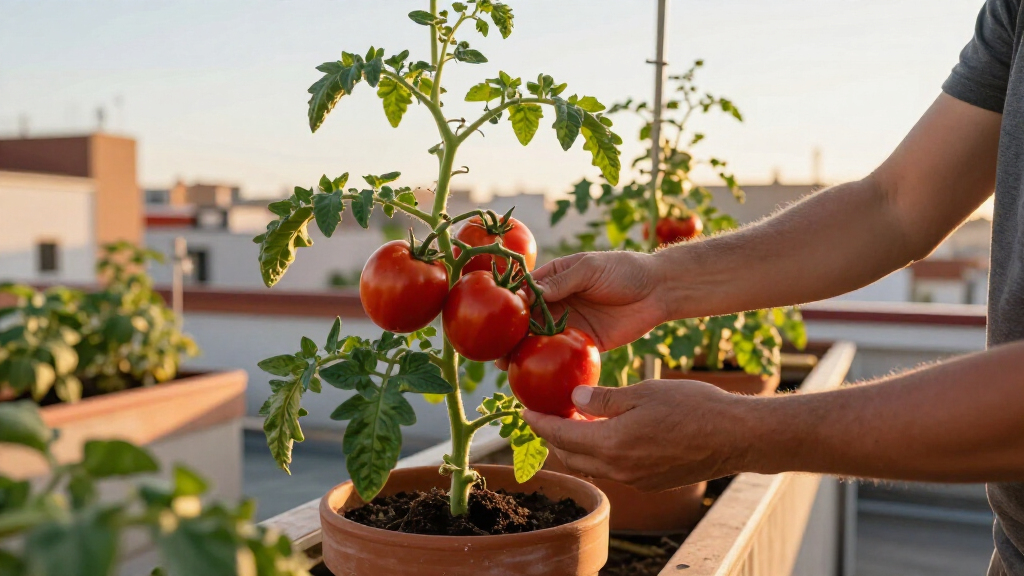
A recent study by the Autonomous University of Barcelona estimates that municipal rooftops in Barcelona could produce up to 31% of the tomatoes consumed within the city. This finding underscores the potential of urban agriculture to contribute significantly to local food supply chains, especially amid growing concerns over food security and sustainability.
The study, conducted by researchers at the Autonomous University of Barcelona, analyzed the available rooftop space across the city and assessed its potential for tomato cultivation. According to the report, if rooftop gardens were fully utilized, they could produce approximately 31% of the tomatoes needed for local consumption. This figure is based on current consumption data and estimates of available rooftop area suitable for cultivation.
City officials and urban agriculture advocates see this as a promising development for sustainable food production. The research highlights that many rooftops, previously underused or inaccessible, could be transformed into productive green spaces with appropriate infrastructure and support. The report also discusses the benefits of urban farming, including reducing food miles, lowering urban heat, and enhancing biodiversity.
However, the study emphasizes that these projections are based on theoretical models. Actual implementation would require overcoming logistical challenges such as structural safety, water access, and ongoing maintenance. It is not yet clear how much of this potential can be realized in practice or what specific policies would facilitate rooftop farming at this scale.
Implications for Urban Food Security in Barcelona
This development is significant because it demonstrates urban rooftops as a viable source of local food production, which could reduce dependence on external supply chains. As cities face increasing pressure from climate change, supply disruptions, and rising food costs, urban agriculture offers a pathway toward greater resilience. The potential to produce nearly one-third of the city’s tomatoes locally also aligns with broader sustainability goals, including reducing carbon emissions associated with food transport.
Moreover, this initiative could serve as a model for other metropolitan areas seeking to optimize underused spaces for food cultivation. It also raises awareness about the importance of integrating green infrastructure into urban planning, which can deliver environmental, social, and economic benefits.
As an affiliate, we earn on qualifying purchases.
Urban Agriculture Trends and Barcelona’s Green Initiatives
Barcelona has been increasingly active in promoting urban agriculture and green infrastructure over the past decade. The city has launched several programs encouraging residents and organizations to develop community gardens and green rooftops. These efforts aim to improve air quality, promote biodiversity, and foster local food systems.
The idea of utilizing rooftops for food production is not new, but recent technological advances and growing interest in sustainability have renewed focus on its potential. The current study builds on this trend, providing a quantitative estimate of the possible contribution of rooftop farming specifically for tomatoes, a staple in the local diet.
While the concept has gained momentum, actual implementation remains limited by structural, financial, and regulatory barriers. The recent interest in this topic has been partly driven by broader discussions about urban resilience and climate adaptation strategies.
Unconfirmed Aspects of Rooftop Farming Feasibility
While the study presents promising estimates, it is not yet clear how much of this potential can be practically realized. Challenges such as structural safety of rooftops, water access, ongoing maintenance, and regulatory approvals remain unresolved. The actual scale of implementation will depend on future investments and policy adjustments, which are still under discussion.
Additionally, the study’s projections are based on models and assumptions that may not fully account for real-world constraints, such as tenant cooperation, building regulations, and climate factors.
Next Steps for Urban Agriculture Policy and Pilot Projects
Researchers and city officials are expected to collaborate on pilot projects to test rooftop farming feasibility at a larger scale. These initiatives will likely focus on overcoming logistical barriers and establishing best practices for urban tomato cultivation.
Further studies are anticipated to refine the estimates, assess economic viability, and develop regulatory frameworks. Public and private sector partnerships may also emerge to finance and promote rooftop gardens, with the goal of integrating them into broader urban sustainability plans.
Monitoring and evaluation of early pilot projects will determine whether the 31% figure remains achievable and how best to expand rooftop farming across the city.
Key Questions
How much of Barcelona’s rooftops are suitable for tomato cultivation?
The study estimates that a significant portion of the available rooftops could be used, but specific percentages depend on structural safety and accessibility. Exact figures are still under review.
What are the main challenges to implementing rooftop gardens at this scale?
Challenges include structural safety assessments, water supply logistics, ongoing maintenance, regulatory approvals, and tenant cooperation. Addressing these will be crucial for scaling up.
Could this project impact food prices or availability in Barcelona?
If successfully implemented, rooftop farming could contribute to local food supply, potentially stabilizing prices and reducing dependence on imported produce. However, the scale remains to be proven in practice.
Are other crops besides tomatoes being considered for rooftop farming?
While tomatoes are a focus due to their popularity and growth suitability, other vegetables and herbs are also being explored for urban cultivation projects.
Source: local