

To improve your swims, start with 10-15 minutes of gentle aerobic activity, like light swimming or drills, and gradually increase effort. Incorporate dynamic stretches and swim-specific movements such as kick sets and pull drills to activate key muscles. Focus on controlled breathing and visualization to boost confidence. A proper warm-up prepares your body and mind, helping you perform better and reduce injury risk. Keep going to discover more tips for perfecting your warm-up.
Key Takeaways
- Start with 5-10 minutes of light aerobic swimming to gradually increase blood flow and warm muscles.
- Incorporate dynamic stretches and swim-specific drills like kick sets and pull buoy exercises.
- Gradually increase swim intensity to near-race pace, ensuring muscles are prepared for main efforts.
- Use mental visualization and breathing exercises to boost confidence and focus before main sets.
- Keep warm-up relaxed and tailored to your body signals to prevent early fatigue and injury.
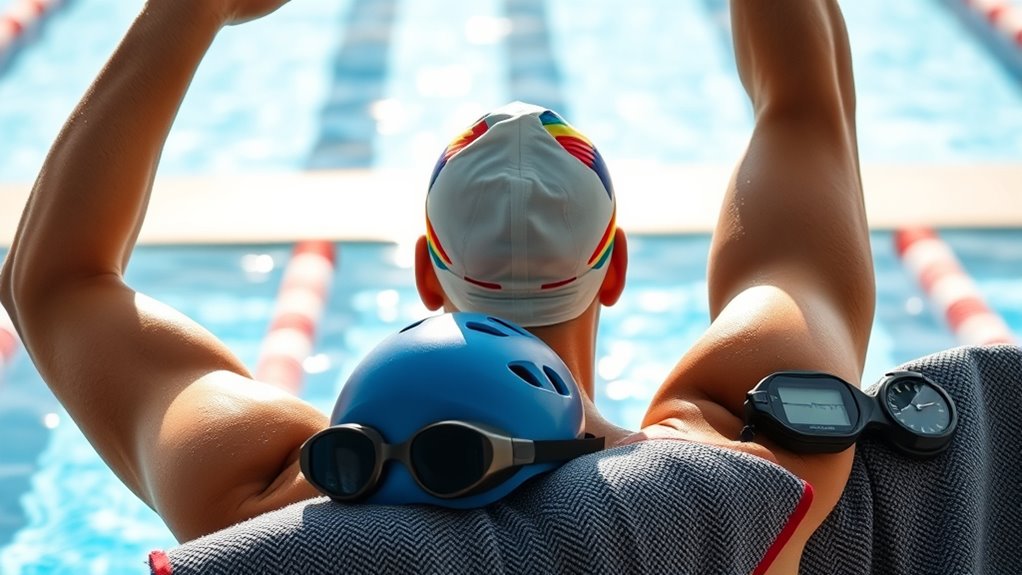
Warming up properly before your swim can make a significant difference in your performance and reduce the risk of injury. A well-structured warm-up primes your muscles, increases blood flow, and prepares your mind for the physical demands ahead. To maximize the benefits, focus on techniques for reducing fatigue, which means gradually ramping up your effort rather than diving straight into intense swimming. Start with light aerobic activity, like easy freestyle or backstroke, to get your heart rate up and loosen your joints. This helps prevent early fatigue and ensures your muscles are ready for more demanding sets. Incorporate dynamic stretches that mimic swimming motions—arm circles, shoulder rolls, and leg swings—to enhance flexibility and activate key muscle groups. These techniques not only reduce the risk of strain but also improve your range of motion, leading to more efficient strokes during your main sets.
Alongside physical preparations, mental preparation strategies are vital for a successful warm-up. Visualization is a powerful tool; take a few moments to imagine yourself executing perfect strokes, feeling strong and confident. This mental rehearsal can boost your focus and reduce pre-race nerves, helping you maintain composure during your swim. Breathing exercises are also effective—they calm your nervous system and establish a steady rhythm before hitting the water. Deep, diaphragmatic breaths can lower anxiety and increase oxygen delivery to your muscles, setting a stable mental tone for the session ahead. As you warm up, remind yourself of your goals and focus on staying relaxed and present. This mental approach can help you conserve energy and avoid unnecessary tension, which often leads to fatigue. Additionally, understanding training techniques can help you structure your warm-up more effectively for optimal results. A good warm-up should last around 10 to 15 minutes, gradually increasing in intensity. As you progress, include some drills that target your technique and efficiency—such as kick sets or pull buoy drills—while maintaining a relaxed pace. This not only prepares your body but also sharpens your mental focus on form and rhythm. Remember, the key is to stay mindful of your body’s signals; if you start feeling overly fatigued, slow down and adjust your effort. The combination of effective techniques for reducing fatigue and solid mental preparation strategies sets the stage for a stronger, more confident swim. When you approach your warm-up thoughtfully, you’re more likely to perform at your best, enjoy your swim, and minimize the chances of injury or burnout.
swimming warm-up exercises equipment
As an affiliate, we earn on qualifying purchases.
As an affiliate, we earn on qualifying purchases.
Frequently Asked Questions
How Long Should Each Warm-Up Set Last?
You should aim for each warm-up set to last about 5 to 10 minutes, focusing on gradually increasing intensity. During this time, incorporate stretching routines to loosen muscles and improve flexibility. Don’t forget hydration strategies—drink water before and after warm-up to stay hydrated. This approach helps prevent injuries and prepares you physically and mentally for your swim, ensuring you perform at your best from the start.
What Equipment Is Best for Warm-Up Sets?
Imagine smooth swimming strokes gliding through a warm pool; the right equipment makes this effortless. You’ll want a trusty pair of fins for kicking drills, a pull buoy to isolate arm movements, and a snorkel for breathing practice. A wetsuit can assist if the pool’s temperature drops, keeping your muscles warm. These tools prepare your body, enhance technique, and guarantee effective warm-up sets, setting you up for a better swim.
Should Warm-Up Sets Vary by Swimmer Experience?
Yes, warm-up sets should vary by swimmer experience. If you’re a beginner, focus on simple, low-intensity warm-up variations to build familiarity and prevent injury. More experienced swimmers can incorporate dynamic movements and higher-intensity warm-ups to prepare their muscles for peak performance. Tailoring warm-up routines guarantees you get the right preparation without overexerting, helping you perform your best regardless of your skill level.
How Do I Prevent Injury During Warm-Up?
To prevent injury during warm-up, focus on dynamic stretching to loosen muscles and improve flexibility. Incorporate mental preparation by visualizing your swim and staying calm, which helps prevent rushed movements. Gradually increase intensity, listen to your body, and avoid pushing through pain. Properly warming up both physically and mentally prepares you for the swim, reducing the risk of strains or injuries.
When Is the Optimal Time to Finish Warm-Up?
Think of your warm-up as the prelude to a symphony—timing is everything. Finish your warm-up when you feel physically ready and mentally prepared, usually 10-15 minutes before your swim. Incorporate pre-swim stretching to loosen muscles and boost blood flow, and focus on mental preparation to sharpen your focus. Don’t linger too long, or you risk cooling down—strike the right chord for peak performance.
kick set swim training aids
As an affiliate, we earn on qualifying purchases.
As an affiliate, we earn on qualifying purchases.
Conclusion
By incorporating warm-up sets into your routine, you’re setting the stage for a smooth, powerful swim—like priming a well-tuned engine. They loosen your muscles, sharpen your focus, and build confidence before diving in. Remember, a good warm-up is the gentle rain before the storm of your best performance. So, don’t skip it; let those warm-up sets be the spark that ignites your swim and carries you to new depths.
pull buoy for swimming training
As an affiliate, we earn on qualifying purchases.
As an affiliate, we earn on qualifying purchases.
dynamic stretching for swimmers
As an affiliate, we earn on qualifying purchases.
As an affiliate, we earn on qualifying purchases.