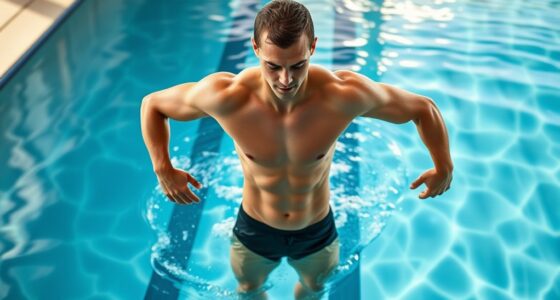

To use water workouts on your recovery days, start with aqua jogging to simulate running without stress on your joints. Incorporate resistance training with water weights for gentle muscle engagement. Focus on flexibility and stretching to enhance your range of motion while the water supports your movements. This safe environment helps prevent injury and encourages consistency in your routine. If you’re curious about specific exercises and techniques, there’s more to explore that can elevate your recovery sessions.

Get pool and patio gear delivered free with Prime
- Fast, free delivery on millions of items
- Prime Video, Amazon Music and more included
- Member-only deals all year
Key Takeaways
- Incorporate aqua jogging to maintain cardiovascular fitness while minimizing impact on joints during recovery days.
- Use water weights or resistance bands for gentle muscle engagement without excessive fatigue.
- Focus on flexibility and stretching exercises in water to enhance range of motion and reduce stiffness.
- Utilize the buoyancy of water to support deeper stretches and promote muscle relaxation.
- Create a safe and controlled environment in the water to encourage consistent recovery practices.
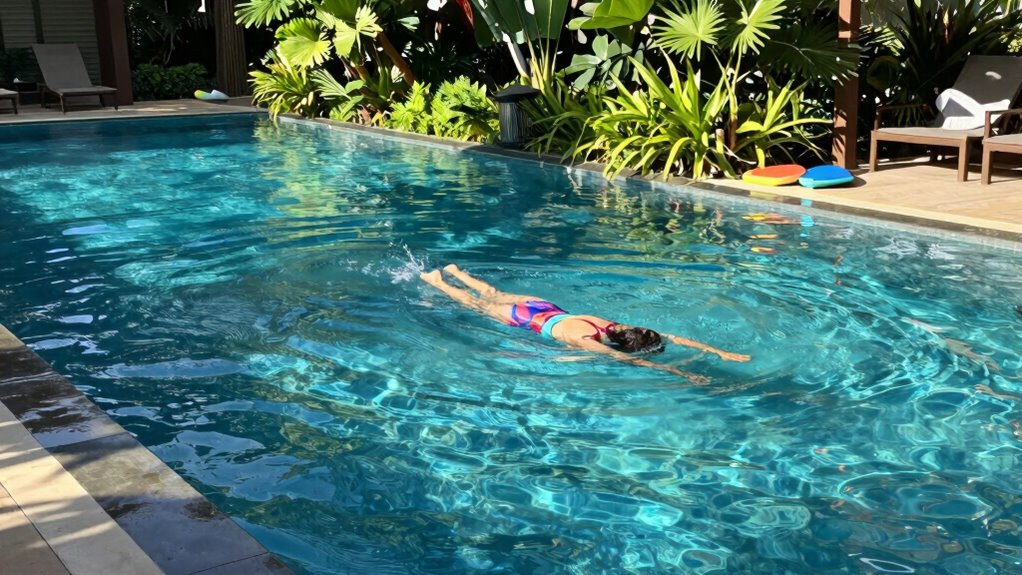
When you’re looking to recover from intense workouts, water workouts can be your best friend. They offer a unique environment that’s both invigorating and beneficial for your body. Engaging in activities like aqua jogging allows you to maintain your cardiovascular health without the strain that comes from high-impact exercises. The water’s buoyancy benefits help reduce stress on your joints, making it an ideal choice for active recovery.
Imagine slipping into a pool after a tough week of training. The cool water wraps around you, easing muscle tension and promoting relaxation. Aqua jogging simulates running but without the harsh impact on your knees and ankles. You can work on your form and speed while feeling weightless, giving your body a chance to recover while still getting a solid workout. This low-impact routine allows you to maintain your fitness level without risking injury.
Imagine immersing yourself in cool water, easing muscle tension and enjoying a weightless workout that revitalizes your body while protecting your joints.
Incorporating resistance training in water can also amplify your recovery. Using water weights or resistance bands, you can engage your muscles without the stress of lifting heavy. The resistance of the water challenges you while also providing support, allowing for a balanced workout that promotes muscle relaxation. You’ll feel the burn without the fatigue of traditional weight training, enabling you to recover effectively. Additionally, the hydrostatic pressure from the water can help improve circulation and reduce swelling, which is beneficial during recovery. Incorporating proper hydration is also essential to support the benefits of water-based recovery exercises. Understanding training concepts and how they apply to water workouts can help optimize your recovery sessions and prevent overtraining.
Flexibility exercises are another essential component of water workouts. Stretching in the pool can enhance your range of motion while being gentle on your body. The water provides support as you stretch, making it easier to reach those deeper muscles that might be tight from your previous workouts. Plus, the temperature regulation offered by the water helps prevent overheating, keeping you comfortable as you work through your routine. Incorporating mobility and flexibility exercises in water can further improve your recovery by promoting proper movement patterns and reducing muscle stiffness.
A safe environment ensures that your recovery sessions are not only effective but also free from the risk of injury, which is crucial for a consistent fitness routine.
water resistance weights for exercise
As an affiliate, we earn on qualifying purchases.
As an affiliate, we earn on qualifying purchases.
Frequently Asked Questions
Can I Use Water Workouts if I Have Joint Pain?
Yes, you can definitely use water workouts if you have joint pain. Water therapy offers a low-impact environment that reduces stress on your joints while providing resistance for muscle strengthening. Aquatic exercises like swimming, water jogging, or gentle stretching can promote pain relief and improve mobility. Just remember to listen to your body, and don’t push through pain. It’s a great way to stay active while being kind to your joints!
What Equipment Do I Need for Water Workouts?
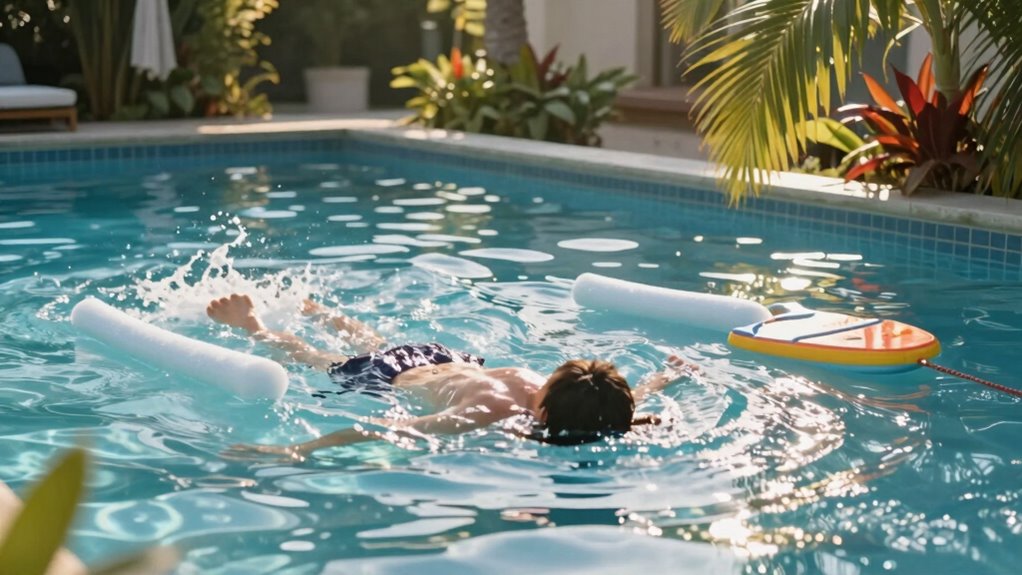
For water workouts, you’ll need some basic aquatic fitness gear. Kickboards, pool noodles, and resistance gloves enhance your routine while providing water resistance benefits. Consider adding water dumbbells or ankle weights to increase intensity and build strength. A flotation belt can help with buoyancy during more challenging exercises. With these tools, you’ll maximize your workout’s effectiveness and enjoy a fun, low-impact way to stay fit in the water!
How Long Should Each Water Workout Session Last?
Each water workout session should last between 30 to 60 minutes, depending on your workout intensity and goals. Warmer water can help relax your muscles and enhance flexibility, making longer sessions more enjoyable. If you’re focusing on lighter activities, stick to the lower end of that range. Always listen to your body; if you feel fatigued, it’s okay to cut the session short. Keep it balanced for effective recovery!
Are There Specific Water Exercises for Different Muscle Groups?
Yes, there are specific water exercises targeting different muscle groups. You can use water resistance benefits to strengthen arms with water push-ups or target legs with water squats. Incorporating aquatic flexibility exercises, like leg swings or arm circles, enhances your range of motion too. By mixing strength and flexibility workouts, you’ll engage various muscle groups effectively while enjoying the buoyancy and resistance of the water. It’s a great way to diversify your routine!
Can Swimming Laps Be Considered a Recovery Workout?
Yes, swimming laps can definitely be considered a recovery workout. The lap swimming benefits include low-impact movement, which helps reduce muscle soreness while keeping you active. Using this recovery technique, you can enhance blood flow, promote flexibility, and ease tension in your muscles. Just be sure to maintain a relaxed pace, allowing your body to recover while still getting the benefits of a workout. Enjoy the soothing effects of the water as you swim!
Conclusion
Incorporating water workouts into your recovery days can greatly enhance your overall fitness journey. Did you know that exercising in water reduces impact by about 90% compared to land workouts? This means you can recover while still staying active, promoting circulation and flexibility without the strain. By making water workouts a staple, you’re not just resting; you’re actively aiding your body’s recovery process. Immerse yourself and enjoy the benefits of low-impact movement!
Halloween Picks
halloween
As an affiliate, we earn on qualifying purchases.