
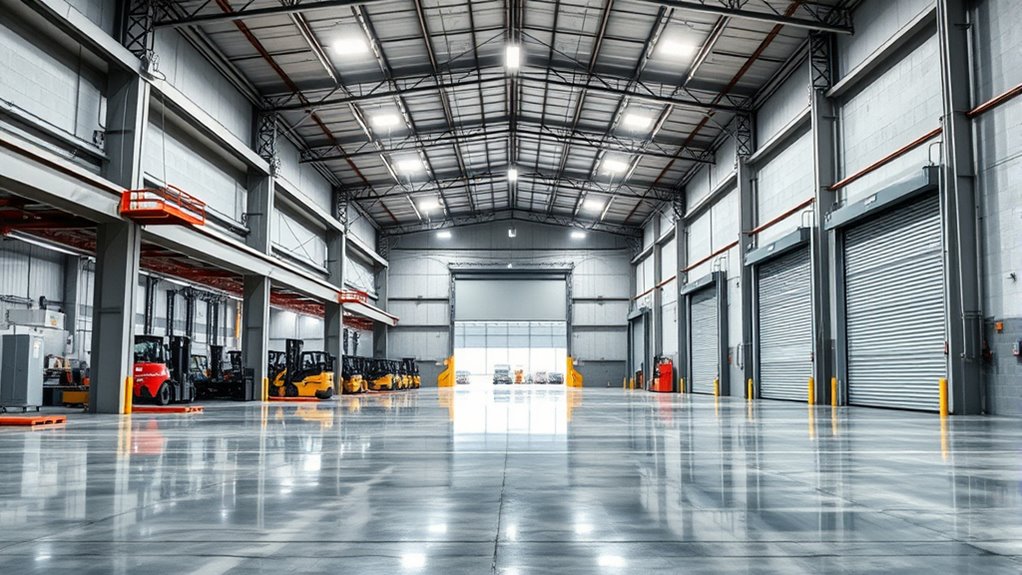

When planning an installation, you need to evaluate the floor load capacity and guarantee access routes are sufficient. Check if your floors can support the weight of equipment or structures and reinforce them if necessary. Verify doorways, hallways, and lifts are wide enough for delivery and assembly. Proper weight distribution and support help prevent damage and safety hazards. Continuing through these considerations will give you practical tips to streamline your setup and maintain structural integrity.
Key Takeaways
- Assess existing floor load capacity and reinforce as needed to support equipment safely.
- Ensure access routes like doorways and hallways are wide enough for large or heavy components.
- Use support beams or additional reinforcements to distribute weight evenly and prevent structural stress.
- Plan for temporary or permanent supports during installation to maintain floor integrity.
- Design maintenance pathways that accommodate future access and ongoing load management.
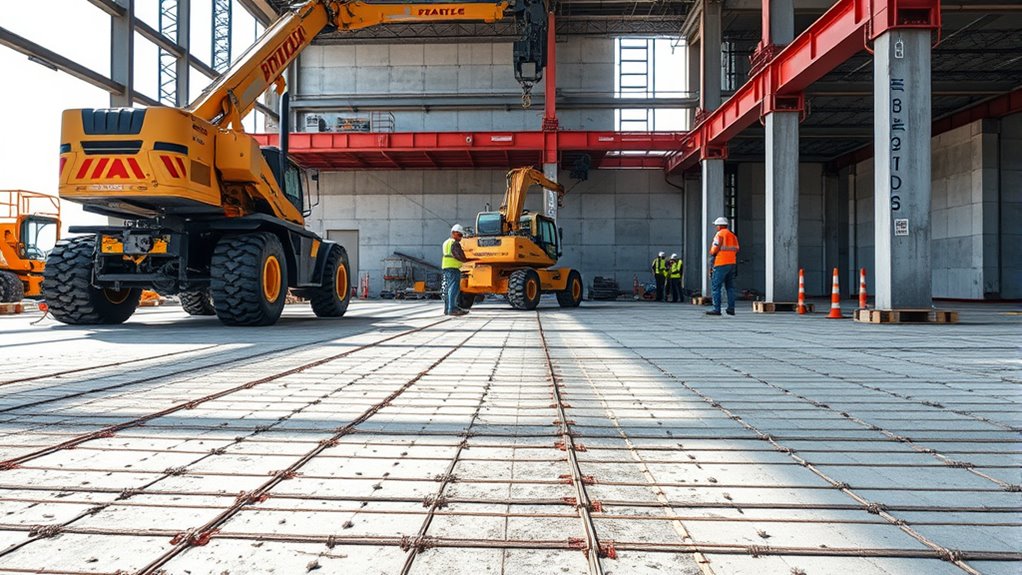
When planning for installation, your first priority should be evaluating the site conditions to ensure compatibility and safety. One of the most critical factors is understanding the existing floor loads. You need to assess whether the floor can support the weight of the equipment or structure you’re installing. Proper weight distribution is essential; uneven loads can cause damage to the building or compromise safety. If the load isn’t evenly spread, it might lead to stress points that weaken the floor over time. To prevent this, consider using support beams or reinforcement where necessary. Doing so ensures the weight is distributed across a broader area, reducing the risk of structural failure.
Assess floor load capacity and ensure proper weight distribution for safe, effective installation.
Another key aspect is ensuring there’s adequate structural access. You need clear pathways for bringing in large or heavy components without risking damage to the building or the equipment. Check that doorways, hallways, elevators, or stairwells are wide enough to accommodate the items you plan to install. If access points are narrow or obstructed, you might need to arrange for disassembly or temporary modifications to facilitate smooth entry. Structural access also involves verifying the site’s capacity to handle the logistics of installation, including the placement of cranes or lifting devices. Planning for this upfront helps avoid delays and unexpected complications on the installation day.
It’s equally important to consider how the weight will be supported once the equipment is in place. If the existing floor isn’t designed for heavy loads, you might need to add temporary or permanent supports. Consulting with structural engineers can help you determine whether reinforcement is necessary. They can advise on how to distribute the load more effectively and ensure the stability of both the structure and the installed equipment. Remember, overlooking these details can lead to costly repairs or safety hazards down the line.
Furthermore, you should evaluate the accessibility for ongoing maintenance or future upgrades. If the installed equipment requires regular servicing, making sure there’s enough space and proper access points is vital. This includes planning routes for technicians and ensuring that structural components are not obstructed or compromised by the installation. By addressing these concerns early, you’ll streamline maintenance efforts and prolong the lifespan of your investment. Additionally, understanding floor loads and their impact is crucial for ensuring long-term safety and durability of the installation.

House Floor Jacks,Telescoping Screw Jacks 12"-16" Height Adjustable Basement Floor Jacks Post Pole for Leveling,Foundation Jack for Basement, Floor Joist,Beam,Temporary Support
Floor Jack Feature: Adjustment Range: 12in – 16in; Height Capacity (per unit): 6,600 lbs to 11,000 lbs (3-5…
As an affiliate, we earn on qualifying purchases.
As an affiliate, we earn on qualifying purchases.
Frequently Asked Questions
How Do I Determine the Maximum Floor Load Capacity?
To determine the maximum floor load capacity, you should consult a structural engineer who can assess load distribution and recommend necessary floor reinforcement. They’ll evaluate your building’s design, materials, and existing support structures to ensure safety. You’ll need to take into account both live loads (people, furniture) and dead loads (permanent fixtures), and possibly reinforce the floor if the load exceeds current capacity. Always prioritize professional guidance to prevent overloading.
What Safety Precautions Are Necessary During Installation?
Think of safety during installation as playing it by the book. You should always wear personal protective equipment like gloves, goggles, and helmets, and follow proper lifting techniques to avoid injuries. Keep your workspace clear of hazards and guarantee good communication with your team. By staying alert and cautious, you’ll prevent accidents and make the installation smooth and safe for everyone involved.
Can Existing Floors Support Heavy Equipment or Machinery?
Your existing floors may support heavy equipment if you assess their load capacity thoroughly. You should consider floor reinforcement and proper load distribution to prevent structural issues. It’s essential to consult a structural engineer who can evaluate whether your floors can handle the weight or if reinforcement is necessary. By ensuring adequate support, you avoid potential damage or safety hazards, making sure your equipment sits securely and functions safely.
How Do Access Points Affect Installation Planning?
Access points critically influence your installation planning; studies show that poor access can delay setup by up to 40%. You need to carefully consider access point placement to guarantee smooth movement of equipment. Plan your installation pathway requirements early, so you can optimize entry points and avoid obstacles, reducing risks of damage and delays. Proper access planning makes the process more efficient and safer for everyone involved.
Are There Special Considerations for Uneven or Sloped Floors?
Yes, uneven or sloped floors require special attention during installation. You should prioritize floor leveling to guarantee stability and proper support for equipment. Assess slope stability to prevent shifting or damage over time. Use shims or leveling compounds as needed, and consider reinforced supports if necessary. Properly addressing these issues ensures safety and longevity, helping your installation remain secure and functional despite the uneven terrain.

Rockwood 555.26D Lever Extension Flush Bolt for Fire-Rated Swinging Hollow Metal Doors, 1" Width x 6-3/4" Height, Brass Satin Chrome Plated Finish
Lever extension flush bolt with a brass satin chrome plated finish for securing a pair of swinging metal…
As an affiliate, we earn on qualifying purchases.
As an affiliate, we earn on qualifying purchases.
Conclusion
In conclusion, paying close attention to floor loads and access during installation guarantees safety and longevity of your project. Did you know that improper support can lead to structural failures, costing up to 25% more in repairs? By planning ahead and considering these factors, you avoid costly delays and ensure a smooth process. Remember, a well-prepared foundation not only supports your current needs but also future upgrades, making your investment worthwhile.

WISEUP Nail Puller, 7-inch Black Finish Chrome Vanadium Steel Carpenter's Pliers,End Cutting Pliers, for Staple Remover Tool or Flooring Installation Tools (7 inch)
High-Quality Materials: made of high-quality chrome vanadium steel, jaws twice high-frequency quenching, good toughness, sharp jaws. And add…
As an affiliate, we earn on qualifying purchases.
As an affiliate, we earn on qualifying purchases.

Goovilla Shelf Bracket, Heavy Duty Floating Shelf Brackets 10 inch Long, 4 Pack Brackets for Shelves, Black Coated Metal Wall Shelf Support Brackets with 1/5 Inch Thick and 160 lb. Load Capacity
【Standard 90° bending】In order to ensure that each shelf bracket can be at 90° to the maximum extent…
As an affiliate, we earn on qualifying purchases.
As an affiliate, we earn on qualifying purchases.