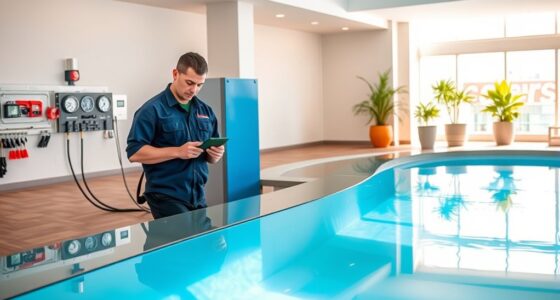
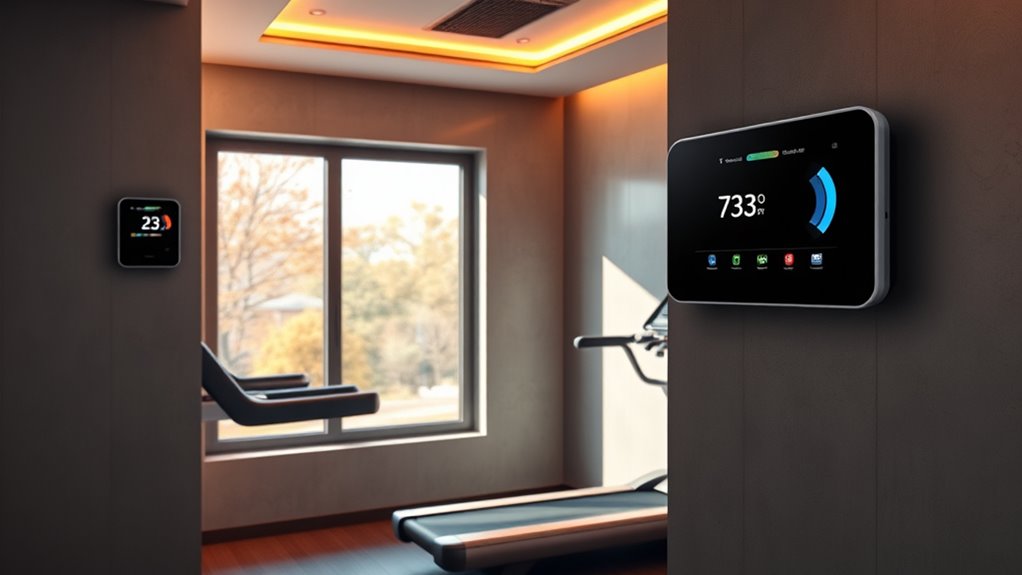

To optimize temperature settings for training and recovery, aim for a comfortable, moderate environment that minimizes thermal stress. During training, gradually expose yourself to warmer conditions to promote heat acclimation, improving sweat response and endurance. After workouts, cooler environments help reset core temperature, aiding muscle repair and reducing inflammation. Staying hydrated and wearing appropriate clothing are essential throughout. Keep your environment well-controlled for better performance and faster recovery—continue exploring ways to fine-tune your temperature management for ideal results.
Key Takeaways
- Maintain training environments at moderate temperatures, ideally between 18°C to 22°C (64°F to 72°F), to optimize performance.
- Gradually increase heat exposure during training for heat acclimation, ensuring proper hydration and appropriate clothing.
- Use cooler environments or cooling techniques during recovery to effectively reset core temperature and promote muscle repair.
- Incorporate tools like heat pumps or climate control systems to create stable, optimal temperature settings for training and recovery.
- Adjust temperature settings based on individual needs, activity intensity, and environmental conditions to prevent thermal stress and enhance progress.
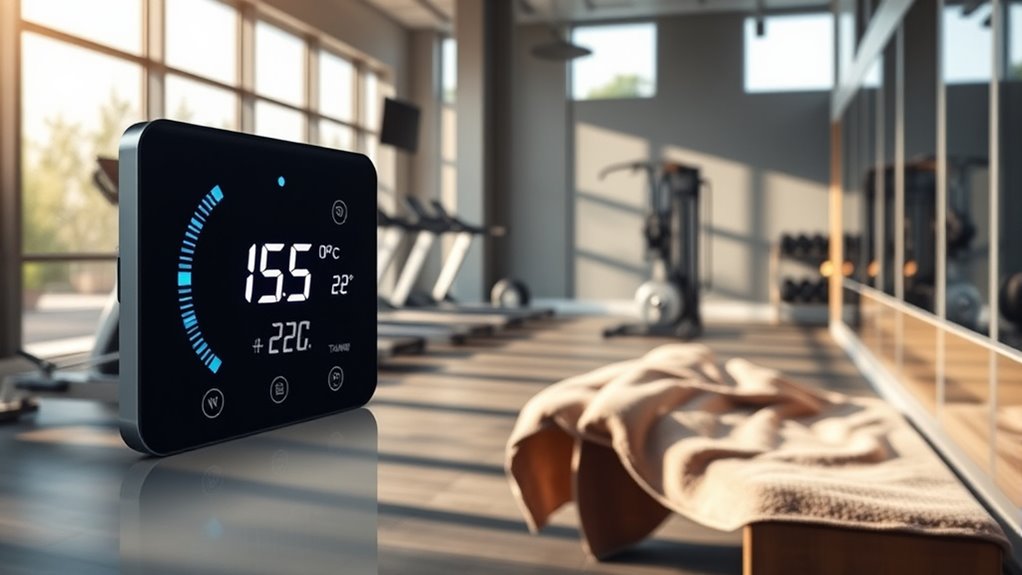
Maintaining the right temperature during training and recovery can substantially impact your performance and progress. When you optimize your environment, you help your body function more efficiently, which can boost your metabolic rate and enhance overall results. Temperature affects how your body produces and expends energy, influencing both endurance and recovery speed. If you train in conditions that are too hot or cold, your body has to work harder to regulate its core temperature, which can slow down your progress. Conversely, creating an ideal environment allows your body to focus on performance rather than temperature regulation, making every effort more effective.
Optimizing your environment enhances performance, boosts metabolic rate, and speeds recovery by reducing thermal stress during training.
One of the key strategies to improve heat management is heat acclimation. If you regularly train in warmer environments, your body adapts over time, becoming more efficient at dissipating heat. This process involves physiological changes such as increased plasma volume, improved sweat response, and better cardiovascular stability. As a result, you’ll notice that you can perform longer and more intensely in hot conditions without overheating. Heat acclimation not only enhances your physical resilience but also helps maintain or even elevate your metabolic rate during exercise. When your body is accustomed to heat, it conserves energy better and reduces fatigue caused by thermal stress, ultimately boosting your training efficiency.
To leverage heat acclimation effectively, start gradually. Increase your exposure to warmer temperatures over several days or weeks, allowing your body to adapt without risking heat-related illnesses. During this process, focus on maintaining hydration and wearing appropriate clothing to support temperature regulation. As your heat tolerance improves, you’ll find that your body becomes better at sweating more efficiently, which helps cool you down faster and keeps your core temperature stable. This stability is essential because it reduces the metabolic strain associated with overheating, allowing you to sustain higher intensities for longer durations. Additionally, understanding best heat pump features can help you create a controlled environment that supports optimal training and recovery conditions.
It’s also important to consider recovery settings. Returning to cooler environments after training helps your body reset its core temperature quickly, preventing prolonged thermal stress that can hamper recovery. Proper temperature management during recovery supports muscle repair and reduces inflammation, both of which are critical for continuous progress. Incorporating active recovery in a cool setting can further facilitate heat dissipation, keeping your metabolic rate balanced and preventing unnecessary fatigue.
Frequently Asked Questions
How Do Temperature Settings Affect Muscle Soreness?
Temperature settings directly impact muscle soreness by promoting muscle relaxation and reducing pain. Applying heat helps increase blood flow, easing tension and speeding recovery, while cold reduces inflammation and numbs pain. You should use heat for muscle relaxation post-exercise and cold for pain reduction right after intense activity. Proper temperature management enhances recovery, minimizes soreness, and keeps your muscles in better shape for future training sessions.
Can Temperature Control Prevent Overtraining?
Yes, proper temperature control can help prevent overtraining. Studies show athletes using thermoregulation techniques, like cooling or warming, recover faster and reduce fatigue. By optimizing ambient temperature, you maintain better core temperature regulation, avoiding excessive strain. This balance helps you avoid overtraining, supporting consistent progress and recovery. Adjusting your environment with ambient temperature optimization is a simple yet effective way to keep your training sustainable and safe.
What Are the Risks of Extreme Temperature Settings?
Extreme temperature settings can pose risks like thermal stress, which strains your body and impairs recovery. You might experience dehydration if you don’t manage hydration properly, leading to fatigue or heatstroke. High heat increases cardiovascular strain, while cold can cause hypothermia or muscle stiffness. To stay safe, monitor your body’s responses, adjust temperature settings accordingly, and prioritize hydration management to prevent overexertion and avoid serious health issues.
How Does Humidity Interact With Temperature During Recovery?
Humidity impact plays a significant role in your recovery, as high humidity hampers thermoregulation challenges. When humidity is high, your body struggles to cool itself through sweat evaporation, leading to increased core temperature and slower recovery. Conversely, low humidity allows better heat dissipation. As a result, monitoring humidity levels and adjusting temperature settings can optimize recovery, helping you avoid overheating and promoting efficient healing after training.
Are There Specific Temperature Guidelines for Different Sports?
Think of your sport as a unique climate zone, each needing tailored temperature settings. For endurance sports, keep it cool to prevent overheating, while strength training benefits from warmer environments to boost performance. Different sports demand climate adaptation, considering environmental factors like humidity and temperature. Adjust your training environment accordingly, ensuring ideal conditions that support your goals and reduce injury risk, just as a gardener adjusts to seasonal changes for healthy growth.
Conclusion
Maintaining ideal temperature settings can considerably boost your training and recovery. Did you know that athletes who train in temperature-controlled environments improve their performance by up to 15% compared to those in inconsistent conditions? By paying attention to temperature, you can enhance your results and reduce injury risk. Remember, small adjustments make a big difference—so keep your environment comfortable and tailored to your needs for the best gains.