
TL;DR

Get pool and patio gear delivered free with Prime
- Fast, free delivery on millions of items
- Prime Video, Amazon Music and more included
- Member-only deals all year
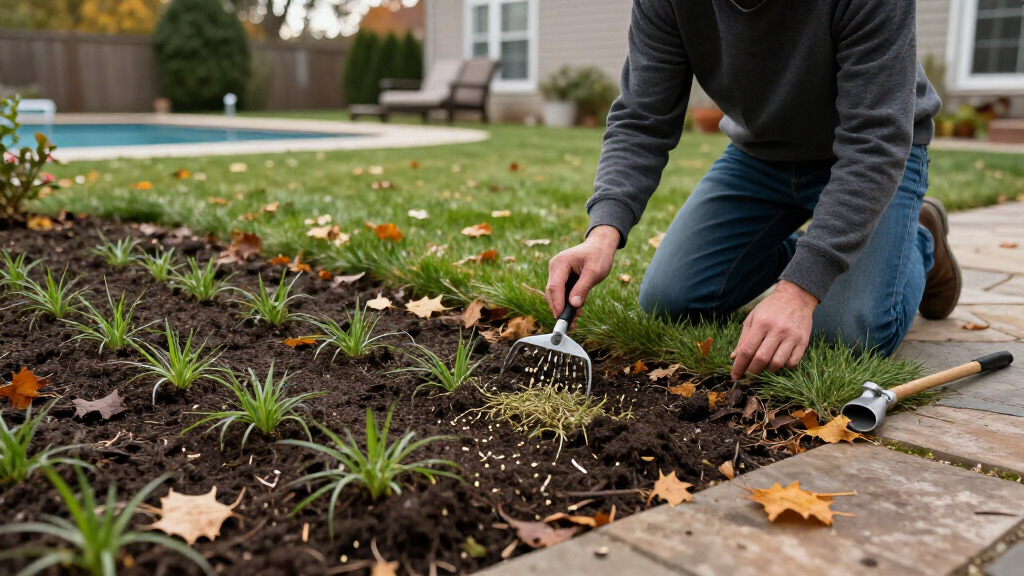
An October lawn overseeding guide from Homes and Gardens says it can still be possible to repair bare spots, depending on local conditions and grass type. The report advises checking soil temperature and the expected frost window; it says cool-season grasses may suit fall sowing, while warm-season varieties generally do not.
October is not automatically too late to sow grass seed in bare lawn spots, but success depends on local soil temperatures, the grass variety and how soon a hard frost is expected, according to a Homes and Gardens report. The advice matters to homeowners hoping to thicken a lawn before winter: the remaining planting window may be short, especially in colder regions.
The report says seed for cool-season grasses can germinate in October where soil remains warm enough. It gives a minimum soil temperature of 50°F as a threshold to check, while noting that grass seed commonly needs temperatures of 50°F to 60°F to germinate. The report recommends allowing roughly four to six weeks before a hard frost for seedlings to develop roots before winter dormancy.
That timing is not the same everywhere, and the calendar alone is not a reliable guide. Gardeners are advised to check local forecasts and measure the soil, rather than relying only on air temperature. If soil has cooled below 50°F, the report says, seed may remain ungerminated; seedlings that sprout just before a hard freeze may also be vulnerable because they have little time to establish roots.
For October sowing, the report names Kentucky bluegrass, ryegrass and fescues as cool-season options. It says warm-season grasses, including Bermuda, St. Augustine and zoysia, are generally better seeded in warmer conditions in late spring or early summer. If conditions are dry, newly sown patches may need light, frequent watering to keep the soil surface moist; in many areas, fall rain may reduce the need.
A Narrow Window for Lawn Repairs
For homeowners with bare or thin patches, an October sowing can offer a chance to improve lawn coverage before spring rather than leaving repairs until the next growing season. But the opportunity is conditional: planting too late may leave seed unable to germinate or young grass without enough time to form roots before freezing weather.
The practical consequence is that local conditions matter more than a fixed date. A gardener in a mild region with warm soil and several frost-free weeks may still have time, while someone facing an early freeze may be better served by waiting. Choosing a grass suited to the region is also important; the report’s advice applies to cool-season lawn types, not all grass varieties.
cool season grass seed for overseeding
As an affiliate, we earn on qualifying purchases.
As an affiliate, we earn on qualifying purchases.
Soil Temperature Sets the Timing
The Homes and Gardens report draws on comments from lawn and seed specialists. Johnsons Lawn Seed consumer manager Guy Jenkins said October can provide higher natural moisture and soil that retains summer warmth. Lawnsmith expert Jonathan Davis described overseeding as a priority for October lawn care, while warning that seed should be down before temperatures become too cool.
Yardener’s Sourav Das emphasized that soil temperature, rather than air temperature, determines whether seed can germinate. The report also describes dormant seeding as an option when soil is too cold for germination but not frozen: seed remains dormant through winter and may sprout in spring. It does not present that approach as a guarantee of establishment.
“Soil temperature decides it, not the air.”
— Sourav Das of Yardener, as quoted by Homes and Gardens
Local Frost Dates Still Matter
The report does not establish a single last date for sowing across the country. Regional frost timing, soil temperature and forecast conditions can vary substantially, so a general October recommendation cannot confirm that seed will take in any particular yard. It also does not specify a single seed mix or application rate for every lawn.
Whether dormant seeding will succeed in a given location is likewise uncertain. The report says seed can wait for spring when soil is too cold to germinate, but the outcome depends on conditions at the site. Gardeners should check local extension or lawn-care guidance for region-specific recommendations.
Check Conditions Before Sowing
Before repairing a patch, check the coming weeks’ forecast for hard-freeze risk and use a soil thermometer to see whether the ground is at least 50°F. Confirm that the seed is suitable for the lawn’s climate, then sow promptly if there is enough time for establishment. Keep the upper soil layer lightly moist during dry weather, without leaving it waterlogged.
If the soil is already too cold for germination, the report’s alternatives are to consider dormant seeding where locally appropriate or wait until spring. The next useful milestone is a local assessment of soil conditions and frost timing; the source does not give a universal cutoff date.
Key Questions
Can you plant grass seed in October?
Sometimes. Homes and Gardens says October sowing can work for cool-season grass if soil is warm enough and a hard frost is not imminent. Conditions vary by region.
What soil temperature does grass seed need?
The report gives 50°F as a minimum threshold for sowing and says many grass seeds germinate around 50°F to 60°F. Check the soil itself, not just the air temperature.
Which grass seed is suitable for October?
The report lists Kentucky bluegrass, ryegrass and fescues as cool-season choices. It says Bermuda, St. Augustine and zoysia are warm-season grasses generally better seeded in warmer months.
How long before frost should I sow?
The report recommends allowing about four to six weeks before a hard frost for seedlings to establish roots. The actual window depends on local weather and soil conditions.
Should I water October grass seed?
Fall rainfall may be sufficient in many places, according to the report. If weather is dry, keep the soil surface lightly moist with short, gentle watering; avoid waterlogging the area.
Source: rss
Halloween Picks
halloween
As an affiliate, we earn on qualifying purchases.