

To improve your lap swimming as a new swimmer, focus on drills that develop breathing, stroke efficiency, and body rotation. Try rhythmic breathing and bilateral breathing to stay relaxed and conserve energy. Incorporate drills like the catch-up and fingertip drag to refine your technique and promote smooth motions. Consistent practice of these drills helps build confidence and endurance. Keep working on these fundamentals, and you’ll see your skills grow steadily as you explore more techniques.
Key Takeaways
- Incorporate catch-up drills to promote smooth, elongated strokes and better water engagement.
- Practice fingertip drag drills to develop high elbow recovery and relaxed arm movement.
- Focus on rhythmic breathing to build comfort and consistency in inhaling and exhaling during strokes.
- Use body rotation drills like the 3-3-3 to enhance propulsion and maintain proper stroke mechanics.
- Gradually increase drill repetitions to develop endurance, technique, and confidence for longer lap swimming.
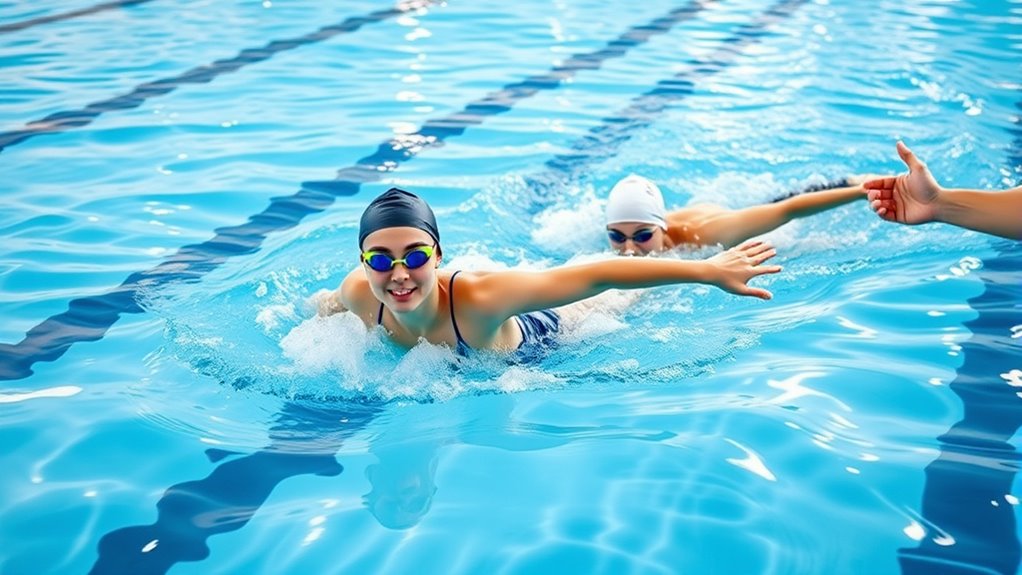
Are you looking to improve your lap swimming performance? If so, focusing on fundamental drills can make a significant difference. One of the most essential aspects to work on is your breathing techniques. Proper breathing ensures you stay relaxed and maintain your stamina during longer swims. To develop this, practice rhythmic breathing—inhale deeply through your mouth or nose as you turn your head to the side, then exhale steadily underwater. This helps you synchronize your breath with your stroke, preventing gasping or uneven breathing that can disrupt your rhythm. As you become more comfortable, experiment with bilateral breathing, which involves inhaling alternately from both sides. It promotes better stroke balance and reduces fatigue, especially when swimming in open water or competing.
Alongside breathing, enhancing your stroke efficiency is fundamental. Efficient strokes mean you use less energy to cover the same distance, which boosts your endurance. To achieve this, focus on streamlined body position—keep your head aligned with your spine, and avoid unnecessary movements that create drag. Incorporate drills like the catch-up drill, where one arm stays extended in front while the other pulls, then switch. This encourages a smooth, elongated stroke and helps you develop a better feel for your water engagement. Another helpful drill is the fingertip drag, where you drag your fingertips along the water’s surface during recovery. This promotes high elbow recovery and a relaxed arm movement. These drills reinforce proper technique, making each stroke more efficient.
You should also pay close attention to your body rotation during each stroke. Controlled rotation allows your arms to reach further with less effort, enhancing your propulsion. Practice drills such as the 3-3-3 drill, where you focus on rotating your body with each stroke, maintaining consistency and rhythm. As you improve your stroke efficiency, you’ll notice that you tire less quickly and can swim longer distances comfortably.
Consistency is key when working on these areas. Dedicate regular sessions to specific drills, gradually increasing the number of repetitions or duration. Incorporate breathing and efficiency drills into your warm-up and main sets to reinforce good habits. Over time, you’ll find that your breathing becomes more natural and your strokes more economical. This combination of focused breathing techniques and stroke efficiency drills will elevate your lap swimming, making each session more productive and enjoyable.
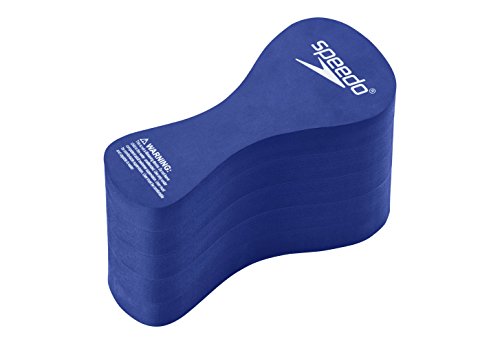
Speedo Unisex-Adult Swim Training Pull Buoy, Blue, One Size
Elevates hips and legs to promote proper positioning
As an affiliate, we earn on qualifying purchases.
As an affiliate, we earn on qualifying purchases.
Frequently Asked Questions
How Often Should Beginners Practice Lap Swimming Drills?
You should practice lap swimming drills about 3 to 4 times a week to support steady training frequency. This allows you to focus on skill progression without overexerting yourself. Consistent practice helps you build technique, endurance, and confidence. Make sure to include rest days to recover and avoid injury. Remember, gradual improvement is key, so listen to your body and adjust your training schedule as needed.
What Equipment Is Essential for New Swimmers?
Think of your swim gear as your trusty sidekick in the pool. For new swimmers, essential equipment includes goggles to see clearly underwater, a swim cap to reduce drag, and a kickboard or pull buoy as training aids to build strength and technique. These tools help you stay comfortable, confident, and focused on improving your skills. Investing in quality gear makes your practice more effective and enjoyable, turning challenges into smoother strokes.
How Can I Improve My Breathing Technique?
To improve your breathing technique, focus on maintaining steady breathing patterns and practicing proper exhalation techniques. Inhale deeply through your mouth or nose as you turn your head to the side, then exhale fully underwater. Try to keep your exhalations long and controlled, reducing breath-holding. Consistent practice will help you breathe more efficiently, making your strokes smoother and conserving energy during your swim.
What Common Mistakes Do Beginners Make in Drills?
A stitch in time saves nine, so pay attention to common mistakes. As a beginner, you might forget to maintain breathing awareness, causing irregular breath cycles. You may also struggle with stroke consistency, leading to uneven pacing. Focus on steady, rhythmic breathing and smooth, consistent strokes. Avoid rushing through drills, and instead, practice deliberately to build confidence and proper technique, which will improve your overall swimming skills.
How Long Should a Typical Beginner’s Training Session Last?
A typical beginner’s training session should last about 20 to 30 minutes. You want to focus on maintaining good form and building endurance without overexerting yourself. Start with a warm-up, then include a few drills, and finish with a cool-down. Keep your session length manageable so you stay motivated, avoid injury, and gradually improve your skills. As you get stronger, you can extend your training duration.

Ubekezele Snorkeling Gear for Adults Men Women,4 in 1 Snorkel Set with Panoramic View Diving Mask Anti-Fog Anti-Leak,Dry Top Snorkel,Fins and Travel Bag for Swimming,Snorkeling and Travel Diving
【Mask Fins Snorkel Set for Adults】4 In 1 snorkel set with adjustable fins,tempered glass lens mask, dry top…
As an affiliate, we earn on qualifying purchases.
As an affiliate, we earn on qualifying purchases.
Conclusion
Practicing these lap swimming drills can considerably improve your technique and endurance. Did you know that swimmers who incorporate drills regularly see a 20% faster improvement in their speed compared to those who only swim laps? Consistency is key, so stick with it, and you’ll notice progress faster than you think. Keep pushing yourself, stay patient, and enjoy the journey to becoming a stronger, more confident swimmer. Your best swim is just around the corner!
Speedo Unisex-Adult Swim Training Pull Buoy, Blue, One Size
Elevates hips and legs to promote proper positioning
As an affiliate, we earn on qualifying purchases.
As an affiliate, we earn on qualifying purchases.
Speedo Unisex-Adult Swim Training Pull Buoy, Blue, One Size
Elevates hips and legs to promote proper positioning
As an affiliate, we earn on qualifying purchases.
As an affiliate, we earn on qualifying purchases.