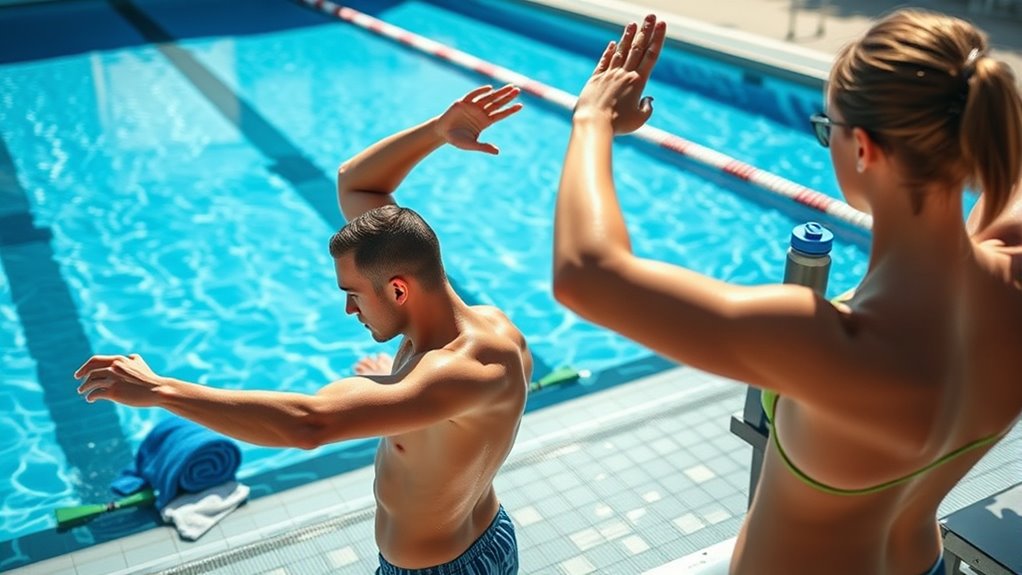

Start your swim day with a light warm-up outside the pool, like brisk walking or jogging for 5-10 minutes, then do gentle water exercises such as arm circles and leg kicks. After swimming, take 5-10 minutes for a cool-down by doing easy stretches and some slow swimming to help your muscles recover. Maintaining good hygiene during both routines guarantees a healthier experience. Keep going to discover essential tips that make your swim sessions safer and more effective.
Key Takeaways
- Begin with 5-10 minutes of light cardio outside the pool to increase core temperature and blood flow.
- Incorporate gentle water exercises like arm circles and leg kicks to gradually activate muscles.
- Follow the swim with a 5-10 minute cool-down including easy swimming and stretching to prevent stiffness.
- Rinse off before entering and shower after swimming to maintain pool hygiene and reduce infection risk.
- Use low-intensity activities during warm-up and cool-down to optimize performance and aid recovery.
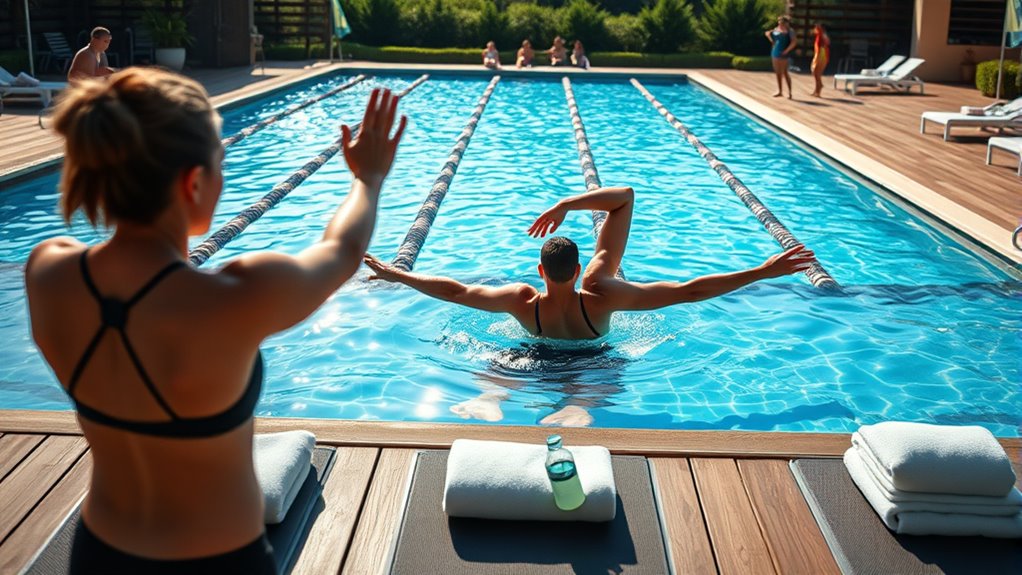
Preparing your body before and after swimming is essential for optimizing performance and preventing injuries. A proper warm-up prepares your muscles, increases your heart rate, and gets your mind focused, all of which contribute to a safer and more effective swim. When it comes to swimming safety, warming up helps reduce the risk of strains or sprains, especially since cold muscles are more prone to injury. Additionally, paying attention to pool hygiene during your routine guarantees a healthier environment for everyone. Cleanliness helps prevent skin infections, ear issues, and respiratory problems that can arise from contaminated water, so incorporating good hygiene practices into your warm-up and cool-down routines is indispensable.
Start your warm-up with light cardio activities outside the pool, like brisk walking or jogging for five to ten minutes. This increases blood flow and elevates your core temperature, making your muscles more flexible and responsive. Once you’re in the pool, begin with gentle swimming or water exercises such as arm circles or leg kicks. These low-intensity movements gradually prepare your muscles for the more vigorous activity ahead. As you warm up, focus on maintaining proper swimming safety techniques—be aware of your surroundings, avoid pushing beyond your limits, and listen to your body. Guaranteeing the pool’s hygiene is maintained during your warm-up includes rinsing off beforehand and not sharing equipment without proper sanitation, which helps keep the water safe for everyone.
Begin warm-up with light cardio outside the pool, then gentle water exercises, and always prioritize safety and hygiene.
Cooling down after your swim is just as indispensable as warming up. It helps your body transition from active exertion to rest, reducing muscle stiffness and soreness. Spend about five to ten minutes performing easy swimming or water-based stretches, such as shoulder rolls, arm stretches, and gentle kicks. These activities promote blood flow, aiding in the removal of metabolic waste from your muscles and supporting recovery. During your cool-down, stay mindful of pool hygiene—shower after swimming to wash away chlorine or other chemicals and avoid contaminating the pool if you’re feeling unwell. This practice not only protects your health but also helps maintain a hygienic environment for others.
Incorporating these routines ensures you make the most of your swim days, keeping you safe and healthy while enjoying the water. Proper warm-up and cool-down strategies, combined with a strong focus on swimming safety and pool hygiene, allow you to maximize performance, prevent injuries, and foster a responsible swimming environment. Remember, taking these small but significant steps shows respect for your body and the communal space, making every swim session both enjoyable and safe.
Frequently Asked Questions
How Long Should Warm-Up and Cool-Down Sessions Ideally Last?
You should aim for about 5-10 minutes for your warm-up and cool-down sessions. These duration guidelines help prepare your body for exercise and aid recovery afterward. A proper warm-up increases blood flow and loosens muscles, while a cool-down diminishes soreness and helps your body return to resting state. Following these routine benefits ensures you’re ready for your swim and recover effectively, minimizing injury risk.
Can Warm-Up and Cool-Down Routines Prevent Injuries?
Sure, warm-up and cool-down routines can totally prevent injuries—if you believe in magic! In reality, they play a vital role in injury prevention by boosting muscle flexibility and preparing your body for activity. They reduce strain and soreness, making you less prone to strains and pulls. So, skipping them might be tempting, but in truth, these routines are your best bet for staying injury-free and feeling great after every swim.
What Are the Best Stretches for Swimmers Before and After Swimming?
You should focus on stretching routines that enhance flexibility and prepare your muscles for swimming. Before swimming, do dynamic stretches like arm circles, leg swings, and trunk rotations to warm up your body. After swimming, perform static flexibility exercises such as hamstring stretches, shoulder stretches, and triceps stretches to cool down and improve your range of motion. These routines help prevent injuries and boost your overall performance in the pool.
How Do I Modify Routines for Different Swimming Skill Levels?
If you’re a beginner, focus on basic stretches and slow technique adjustments, like simple arm circles and floating. For advanced swimmers, incorporate skill-specific drills such as flip turns or speed sets, gradually increasing intensity. Adjust your routine by tailoring warm-up and cool-down exercises to match your skill level, ensuring you’re practicing proper technique while avoiding injury. This approach helps you progress safely and effectively in your swimming journey.
Are There Specific Techniques to Improve Recovery During Cool-Down?
To improve recovery during cool-down, focus on breathing techniques like deep, slow breaths to enhance oxygen flow and relax your muscles. Incorporate muscle relaxation by gently stretching and releasing tension in key muscle groups, especially those used during swimming. This combination helps lower your heart rate gradually, reduces soreness, and promotes faster recovery, ensuring you’re ready for your next swim session.
Conclusion
Remember, a proper warm-up and cool-down can significantly boost your swim session’s benefits and prevent injuries. By blending brisk body movements with calming stretches, you’ll build better balance and boost your buoyancy. So, stay consistent, stay committed, and enjoy each splash, stroke, and stretch. Making time for mindful movements makes your swim days more satisfying, safe, and superb. Immerse yourself in dedication and discover the difference a diligent routine can make!