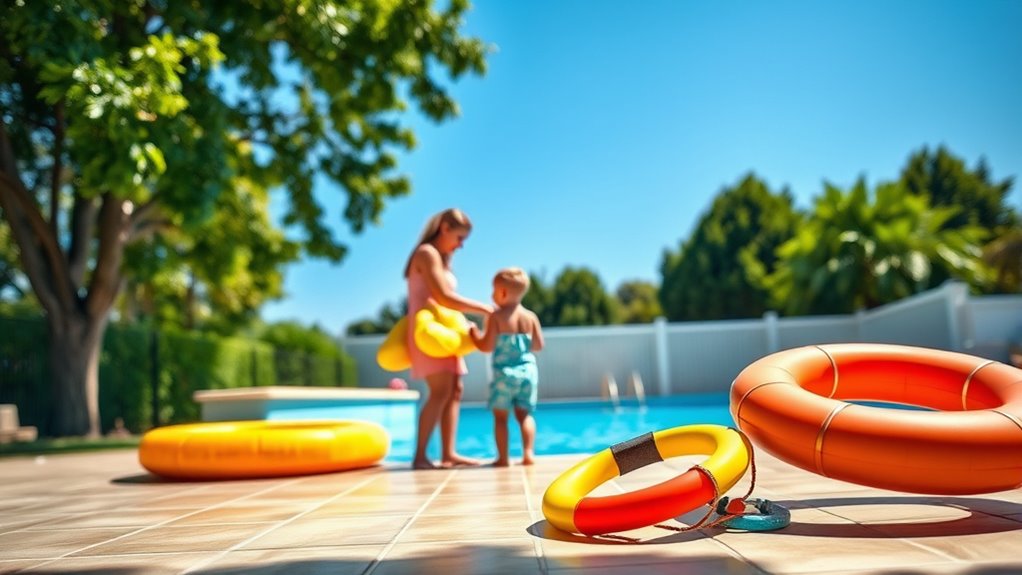

To keep children safe around pools, install a sturdy, self-closing, self-latching fence at least four feet high with no gaps or footholds to prevent climbing. Always supervise kids actively—never leave them unattended near water. Make certain responsible adults have lifeguard or water safety training for quick emergency response. Combining fencing, vigilant supervision, and trained response builds a safer environment. Keep these safety essentials in mind, and you’ll discover even more ways to protect your children effectively.
Key Takeaways
- Install a self-closing, self-latching pool fence at least four feet high with no gaps or footholds.
- Always supervise children actively around pools, avoiding distractions and never leaving them unattended.
- Ensure responsible adults supervising the pool are certified in lifeguard training, CPR, and water safety.
- Conduct regular inspections of fencing, latches, and pool safety equipment for damage or malfunctions.
- Combine physical barriers with vigilant supervision and proper skills training to create a comprehensive child safety strategy.
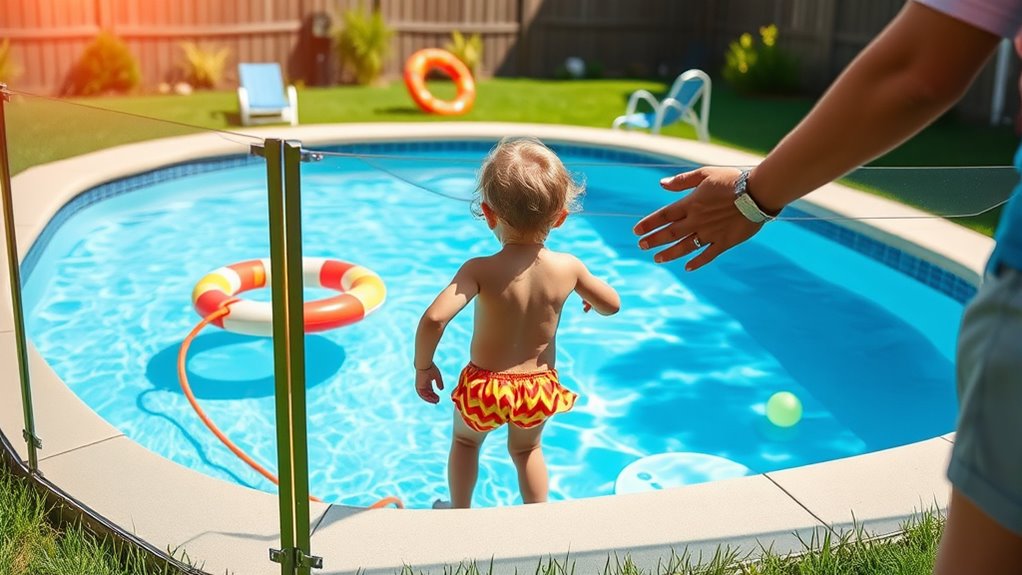
Did you know that drowning is one of the leading causes of injury-related death among children? If you have a pool at home, it’s crucial to prioritize safety to prevent tragedies. One of the most effective safety measures you can take is installing pool fencing. A sturdy, self-closing, and self-latching pool fence creates a physical barrier that keeps children out of the water when you’re not actively supervising. It’s imperative to ensure the fence surrounds the entire pool area and is at least four feet high, with no gaps or footholds that kids can climb. Regularly inspect the fencing for damage or loose latches to maintain its integrity. Remember, even a small gap can be enough for a curious child to slip through, so vigilance is key.
Alongside physical barriers, investing in proper supervision is equally important. While a pool fence markedly reduces the risk, it shouldn’t replace constant adult oversight. Children can be quick and unpredictable, so never leave them unattended near water, even if the fence is in place. Whenever kids are swimming or playing around the pool, stay within arm’s reach and keep a watchful eye on their activities. If you’re hosting a pool party or large gathering, designate a responsible adult to supervise at all times.
Never leave children unattended near water, even with fencing in place. Supervision is essential for safety.
Another critical safety aspect is ensuring that anyone responsible for supervising or overseeing pool activities has lifeguard certification. This certification demonstrates that they understand water safety, rescue techniques, and CPR. Having a trained individual who can respond quickly in case of an emergency can be the difference between life and death. It’s a prudent investment, especially if you often have guests with children or plan to host pool parties frequently. Lifeguard-certified adults are better prepared to recognize distress signals and react effectively, giving you peace of mind that your children are in safe hands.
Combining these safety measures creates an all-encompassing approach to child safety around pools. Pool fencing acts as a physical barrier, but it’s equally important to have responsible, trained supervision on site. Remember, safety isn’t just about installing barriers; it’s about maintaining constant vigilance, ensuring proper supervision, and equipping yourself with the right skills through lifeguard certification. This way, you minimize risks and foster a safe environment where children can enjoy the water responsibly. Prioritizing safety not only protects your children but also provides peace of mind for you and your family, so you can relax and enjoy pool time together.
You should also be aware that water safety awareness is crucial for all supervising adults to respond effectively in emergencies.
self-closing pool fence
As an affiliate, we earn on qualifying purchases.
As an affiliate, we earn on qualifying purchases.
Frequently Asked Questions
What Are the Latest Pool Safety Technology Innovations?
You should consider the latest pool safety tech, like automated pool covers that instantly seal off the water when not in use, preventing accidents. Pool alarm systems have advanced with smarter sensors that detect even small movements or children near the pool, alerting you immediately. These innovations give you peace of mind, ensuring your pool area stays secure and reducing the risk of drowning or injuries.
How Can I Teach My Child Water Safety Skills Effectively?
You can teach your child water safety skills effectively by practicing constant child supervision and emphasizing the importance of never swimming alone. Use safety equipment like life jackets and floatation devices during lessons to boost confidence. Engage your child with fun, hands-on activities such as swimming lessons and safety drills, ensuring they understand pool rules. Reinforce these lessons regularly to build their awareness and encourage safe behavior around water.
Are There Specific Safety Regulations for Residential Pools?
Think of safety regulations for residential pools as a fortress guarding your little ones. You must install pool fencing that’s at least four feet high, with self-closing, self-latching gates to keep kids out when unsupervised. Safety covers should also be in place to prevent accidental falls. Local laws may specify additional requirements, so check your municipality’s regulations to guarantee your pool complies and keeps your child safe.
What Should I Do in Case of a Pool Emergency?
In a pool emergency, stay calm and quickly assess the situation. Use rescue techniques like reaching with a pole or tossing a flotation device to help the person without risking your safety. Call emergency services immediately. Practice emergency preparedness regularly, including CPR training, so you’re ready to act confidently. Always supervise children closely and keep emergency contact information accessible to ensure swift response in any crisis.
How Can I Ensure Pool Safety During Nighttime Swimming?
Imagine your child’s friend swimming at night, unaware of the pool’s edge. To guarantee safety during nighttime swimming, improve visibility with proper pool lighting options like LED or underwater lights. Keep the area well-lit, so hazards are visible. Regularly check lighting functionality, and consider installing motion-activated lights for added security. These steps help prevent accidents by maintaining clear nighttime visibility around your pool.
child safety pool fence
As an affiliate, we earn on qualifying purchases.
As an affiliate, we earn on qualifying purchases.
Conclusion
By staying vigilant and following these safety tips, you can keep children safe around pools. Remember, prevention is better than cure, so always supervise kids and secure the area. With a little effort, you’ll prevent accidents before they happen. Think of it as locking the barn door after the horse has bolted—you’ll be glad you took action beforehand. Keep safety your top priority, and enjoy worry-free pool days with your little ones.
pool fence latch
As an affiliate, we earn on qualifying purchases.
As an affiliate, we earn on qualifying purchases.
water safety training certification
As an affiliate, we earn on qualifying purchases.
As an affiliate, we earn on qualifying purchases.