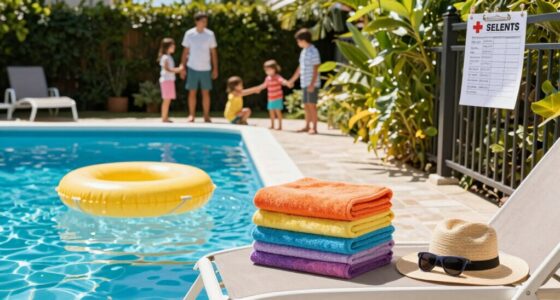
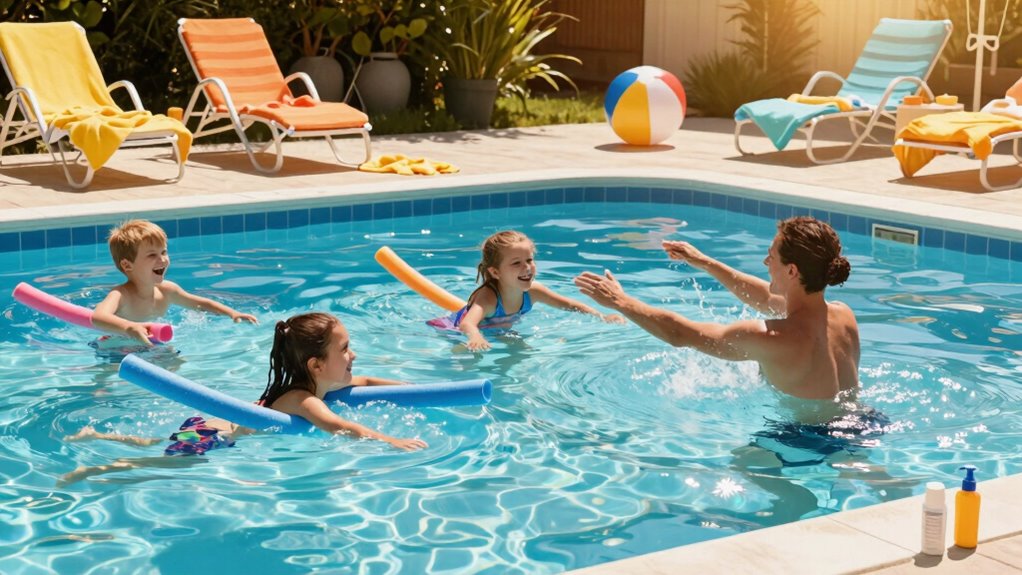

Before pool season starts, teach your kids essential water safety, like never swimming alone and recognizing pool hazards. Emphasize pool etiquette, such as waiting their turn and not splashing others. Prepare them for emergencies by role-playing scenarios and knowing where safety equipment is located. Don’t forget to stress sun protection with sunscreen and hats. Finally, help them gain buoyancy confidence through fun games and basic strokes. You’ll discover even more valuable tips for a safe swimming season ahead.
Open a free Amazon Business account
Business pricing, bulk buying and tax-exempt orders.
As an affiliate, we earn on qualifying purchases.
Key Takeaways
- Teach kids about the importance of never swimming alone and staying close to an adult for safety.
- Familiarize them with pool rules, including etiquette and the dangers of running or splashing.
- Practice emergency scenarios, ensuring they know how to call for help and where safety equipment is located.
- Emphasize the need for sun protection by applying and reapplying sunscreen and wearing hats or sunglasses.
- Encourage buoyancy skills through floating exercises and fun games to build water confidence.
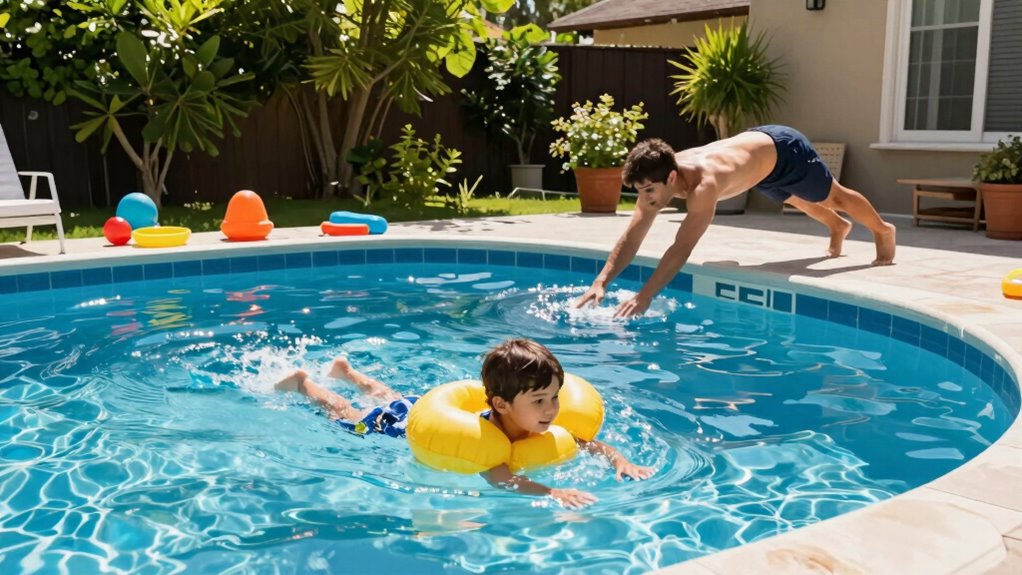
As pool season approaches, it’s essential to equip your kids with the skills they need to stay safe and have fun in the water. Start by teaching them the fundamentals of water safety. Explain that they should never swim alone and always stay within arm’s reach of an adult, especially if they’re still learning the swimming basics. Emphasize the importance of being aware of their surroundings, including knowing where the shallow and deep ends are, and recognizing any potential hazards. Teaching them about pool safety rules can help reinforce proper behavior and prevent accidents.
Next, make sure they understand pool etiquette. Teach them to wait until it’s their turn to jump in and to avoid running around the pool deck. It’s also vital for them to respect others by not splashing or diving too close to other swimmers. These simple rules not only enhance their enjoyment but help maintain a safe environment for everyone.
Understanding pool etiquette is crucial; waiting for turns and respecting others ensures everyone enjoys a safe, fun experience.
When it comes to emergency readiness, consider role-playing various scenarios. Discuss what they should do if someone in the pool needs help. Teach them to shout for help and not to attempt a rescue unless they’re trained to do so. Encourage them to familiarize themselves with the location of safety equipment, like life rings and first aid kits, so they know where to go in case of an emergency.
Sun protection is another key lesson. Remind your kids to apply sunscreen before heading to the pool and to reapply it every couple of hours, especially if they’re in and out of the water. Explain the importance of wearing hats and sunglasses, along with seeking shade during peak sun hours. This not only prevents sunburn but also keeps them comfortable and safe throughout the day.
Buoyancy awareness is a vital skill that helps kids build confidence in the water. Teach them how to float and practice basic strokes, encouraging them to feel the water’s support. This understanding makes them less anxious and more capable when they’re swimming. You could even incorporate fun games to reinforce these skills while keeping the mood light and enjoyable.
kids' pool safety floatation devices
As an affiliate, we earn on qualifying purchases.
As an affiliate, we earn on qualifying purchases.
Frequently Asked Questions
How Can I Make Swimming Lessons Fun for Kids?
To make swimming lessons fun for kids, incorporate swimming games that keep them engaged. Use toys and floats to create challenges, like races or obstacle courses. Teach water safety in a playful way by turning lessons into a game—like practicing reaching techniques with a ball. Celebrate their progress with small rewards, and always encourage teamwork. The more excitement you bring, the more they’ll enjoy learning to swim while staying safe!
What Age Should Children Start Swimming Lessons?
Kids can start swimming lessons as early as age 1, with studies showing that early exposure can reduce drowning risks by 88%. When considering swimming readiness, look for signs like comfort in water and basic motor skills. Teaching them water safety concepts early on is essential. You want them to build confidence and learn important skills, ensuring they enjoy the water safely as they grow. So, jump in and get started!
Are Floatation Devices Safe for Young Swimmers?
Floatation devices can enhance safety for young swimmers, but you need to choose wisely. Some device types, like life jackets, offer better support than pool noodles or arm floaties. Always check for floatation safety standards and guarantee the device fits snugly. Remember, these devices shouldn’t replace adult supervision. They can help kids feel more confident in the water, but you should still teach them essential swimming skills alongside using any floatation aid.
How Can I Teach Kids About Pool Etiquette?
Did you know that 70% of pool injuries stem from rough play? To teach kids about pool etiquette, start with clear pool rules. Explain the importance of respectful behavior, like waiting their turn on the diving board and not splashing others. Role-play scenarios to practice sharing space and being mindful of others. Reinforce good habits by rewarding polite behavior, making the pool a safer and more enjoyable place for everyone.
What Should I Pack for a Day at the Pool?
When you pack for a day at the pool, include a quick-dry towel and a larger beach towel for lounging. Don’t forget sunscreen; apply it generously before heading out and reapply every two hours. A swimsuit, flip-flops, and a hat will keep you comfortable. Snacks and water are essential to stay hydrated. Finally, consider bringing a waterproof bag for wet items. Enjoy your day in the sun!
Conclusion
As pool season approaches, equipping your kids with essential water safety skills is like giving them a life preserver in a sea of fun. Teach them the basics of swimming, the importance of never going alone, and how to recognize safe areas. With these lessons under their belts, you’ll not only help them enjoy their time in the water but also guarantee their safety. Immerse yourself in summer with confidence, knowing your kids are ready for splashes and smiles!
Fall Picks
fall essentials
As an affiliate, we earn on qualifying purchases.