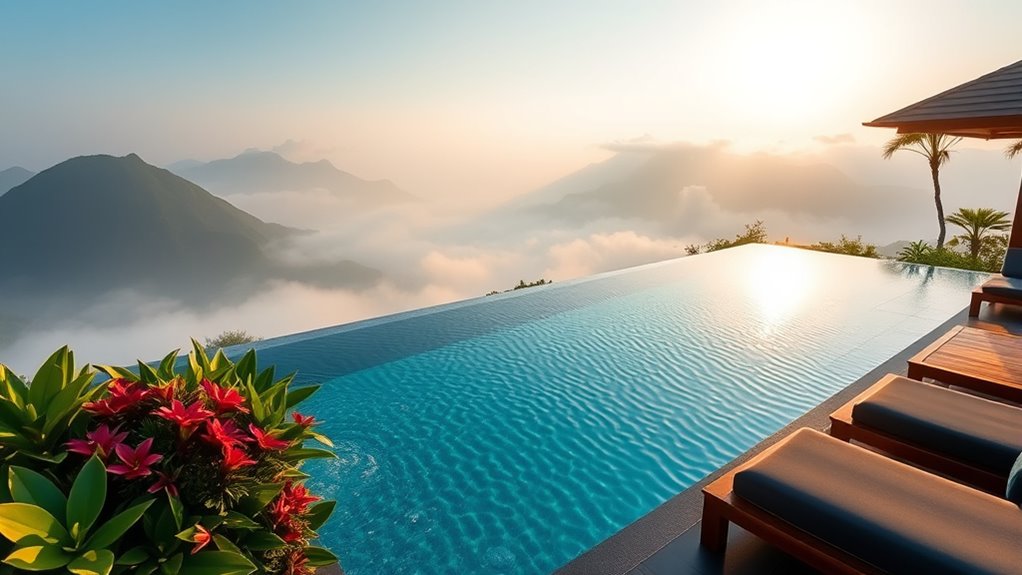

If an infinity pool isn’t practical for your yard, consider natural, integrated pool designs that mimic the look of ponds or streams. You might opt for plunge pools or lap pools, which are smaller, easier to install, and less costly. Using natural materials like stone or wood can enhance your space’s harmony with nature. These alternatives provide stunning, relaxing environments and may suit your budget and yard size better. Keep exploring to find ideas perfect for your outdoor retreat.
Key Takeaways
- Infinity pools require extensive space, complex engineering, and high maintenance, making them unsuitable for smaller or budget-conscious homeowners.
- Natural, pond-like pools with organic shapes blend seamlessly into landscapes, offering a tranquil alternative without the need for infinity edge design.
- Using natural materials such as stone, pebble, or wood creates durable, eco-friendly pools that integrate well with garden environments.
- Practical options like plunge and lap pools are compact, easier to install, and cost-effective, ideal for limited yard space and simpler setups.
- Alternative pool designs provide aesthetic appeal, customization, and easier maintenance, making them suitable substitutes when infinity pools aren’t feasible.
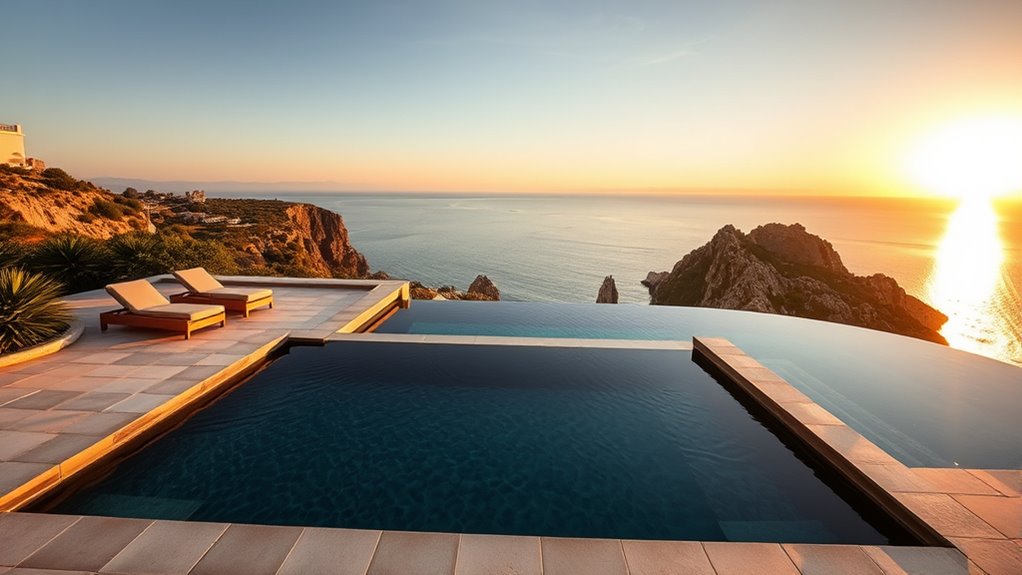
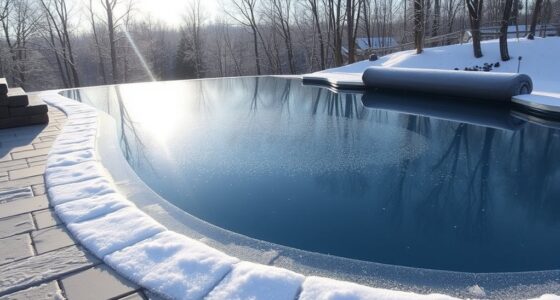
While infinity pools offer a stunning visual effect, they’re not always practical or affordable for every homeowner. These luxurious features often require complex engineering, high maintenance costs, and significant space. If you’re looking for a beautiful yet more feasible option, exploring other pool designs might be the way to go. One of the best ways to achieve a natural, integrated look is by choosing pool shapes that complement your landscape and style. Freeform pools, for example, mimic the organic flow of natural bodies of water. They blend seamlessly with gardens, rocks, and trees, creating a tranquil retreat that feels more like a natural pond than a traditional pool. These shapes offer flexibility in design, allowing you to customize the size and depth to suit your preferences and yard layout.
Opt for freeform pools with natural materials for a beautiful, sustainable backyard retreat.
Natural materials also play a crucial role in crafting an appealing alternative to infinity pools. Instead of sleek, modern finishes, consider using stone, pebble, or wood accents that evoke the natural environment. A stone border or pebble finish not only enhances the aesthetic but also reduces the perceived formality of the space, making it feel more inviting and harmonious with the surroundings. Using natural materials can also improve durability and reduce maintenance over time, especially when paired with eco-friendly landscaping. Additionally, privacy and safety considerations are important factors when selecting pool designs to ensure your outdoor space remains comfortable and secure.
You might also consider a plunge pool or a lap pool as practical alternatives. These options are generally more compact, require less construction work, and can be tailored to fit smaller yards. A plunge pool provides an invigorating spot to cool off and relax without dominating your entire outdoor space. Meanwhile, a lap pool emphasizes exercise and efficiency, offering a long, narrow shape that fits along a side yard or narrow space. Both options can be designed with natural materials to integrate seamlessly into your landscape.
Ultimately, you don’t need an infinity pool to enjoy a stunning, functional backyard oasis. By choosing the right pool shape—like freeform, plunge, or lap—and incorporating natural materials such as stone or pebble finishes, you can create a beautiful, relaxing environment that suits your lifestyle and budget. These alternatives not only offer aesthetic appeal but also tend to be easier to maintain and more adaptable to various yard sizes and budgets. So, while infinity pools are impressive, exploring these options allows you to craft a personalized and sustainable outdoor space that’s just as enchanting.
Top picks for "infinity pool right"
Open Amazon search results for this keyword.
As an affiliate, we earn on qualifying purchases.
Frequently Asked Questions
What Are the Long-Term Maintenance Costs of Alternative Pools?
The long-term maintenance costs of alternative pools vary but generally tend to be lower than infinity pools. You’ll find a favorable cost comparison with options like above-ground or plunge pools, which require less upkeep. While they might not have the same aesthetic appeal as infinity pools, they still offer attractive designs and durability. You’ll save on cleaning, chemicals, and repairs, making them a practical, budget-friendly choice over time.
How Do Safety Features Differ Among Various Pool Options?
Picture safety as a sturdy shield guarding your family’s joy. Pool options differ in safety features: above-ground pools often include pool cover safety, which acts like a protective blanket, while in-ground pools require fencing regulations that serve as a reliable barrier. Think of these features as your personal guardians, ensuring peace of mind. You choose the shield that best fits your space, lifestyle, and safety needs, creating a secure oasis for all.
Which Pool Types Are Most Eco-Friendly and Energy-Efficient?
You should consider natural pools or solar-heated pools for eco-friendliness and energy efficiency. Natural pools use biological filtration, reducing chemical use, while solar heating harnesses renewable energy to warm your water, cutting electricity costs. Both options minimize environmental impact, conserve resources, and lower ongoing expenses. By choosing these types, you’re making a sustainable choice that benefits your wallet and the planet simultaneously.
Are There Any Design Restrictions for Non-Infinity Pools?
You’re painting a picture with your pool, and design restrictions are like the brushstrokes that shape it. Non-infinity pools often require careful planning to make certain of good water circulation and appealing pool aesthetics. You’ll want to take into account space, safety, and maintenance needs, as these influence the shape and features you can include. Think of it as balancing art and function, creating a harmonious oasis that fits perfectly into your landscape.
How Do Installation Timelines Compare for Different Pool Alternatives?
You’ll find that installation timelines vary depending on pool shapes and material durability. For example, custom-shaped pools take longer to install, especially with durable materials like concrete or stone. Prefabricated or fiberglass pools usually have quicker setups, often within a few days. If you choose a pool with complex shapes or high-durability materials, anticipate a longer timeline, but it ensures longevity and aesthetic appeal.
Conclusion
When an infinity pool isn’t the perfect fit, think of alternatives as stepping stones across a flowing river. Each option offers its own unique charm and tranquility, guiding you toward your ideal oasis. Whether you choose a traditional pool, a natural pond, or a hot tub, you’re crafting your personal sanctuary—an island of calm amidst life’s currents. Embrace these choices, and let your backyard become the bridge to relaxation you’ve always imagined.