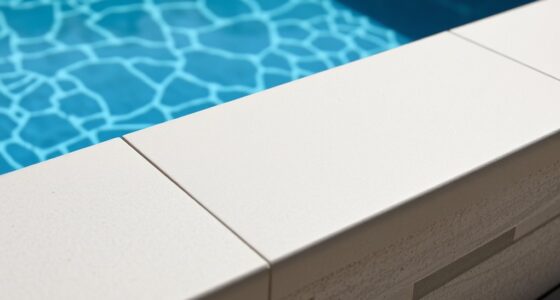


When choosing between safety glass and acrylic panels for your pool, consider safety, durability, and maintenance. Safety glass, especially tempered, shatters into blunt pieces, making it very safe and long-lasting but heavier and more expensive. Acrylic is lightweight, easier to install, and costs less upfront, but it’s prone to scratching and clouding over time, increasing maintenance needs. If you want to make a confident choice, keep exploring details that suit your priorities.
Key Takeaways
- Tempered glass offers higher impact resistance and long-term clarity, reducing replacement needs in pool barriers.
- Acrylic panels are lightweight and easier to install but are more prone to scratching and clouding over time.
- Safety glass shatters into blunt pieces, enhancing safety, while acrylic is less likely to break but can scratch easily.
- Tempered glass requires careful handling during installation due to its weight, unlike lightweight acrylic panels.
- Initial costs favor acrylic, but durability and low maintenance of safety glass may provide better long-term value.
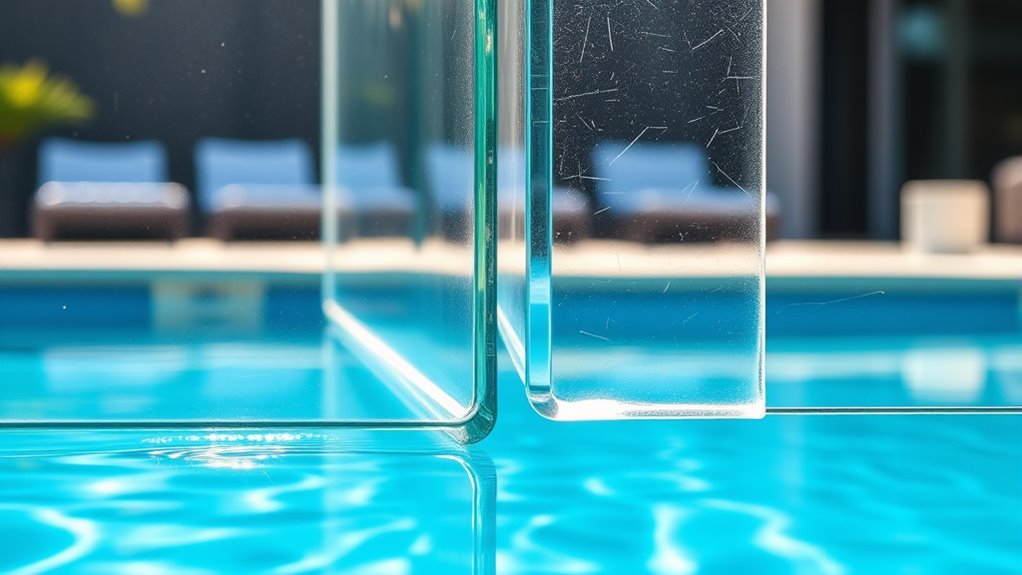
When choosing transparent barriers for safety or display purposes, understanding the differences between safety glass and acrylic panels is essential. In pool design, this decision impacts safety, maintenance, and overall aesthetics. Safety glass, particularly tempered glass, is made by rapidly heating and cooling standard glass, which increases its strength and makes it much more durable under impact. When it breaks, tempered glass shatters into small, blunt pieces, reducing the risk of injury. This enhanced tempered glass durability makes it a popular choice for pool enclosures and barriers where safety is a top priority. Its ability to withstand harsh weather conditions and accidental impacts without cracking or breaking gives you peace of mind over time. On the other hand, acrylic panels are a type of plastic, which means they’re lighter and easier to handle during installation. However, their maintenance requires more attention since acrylic is prone to scratching and clouding over time. You’ll need to be cautious about cleaning methods—using soft cloths and non-abrasive cleaners—to preserve clarity and prevent surface damage. While acrylic panels are less likely to shatter, they might scratch more easily, which can diminish their transparency and aesthetic appeal in your pool area.
Durability is a primary factor when choosing between safety glass and acrylic panels for pool barriers. Tempered glass offers superior strength and long-term resilience, especially when exposed to the elements or accidental impacts. It’s less likely to scratch and maintains its clear appearance over years of use, making it a low-maintenance option compared to acrylic. Acrylic, being more flexible and lightweight, is easier to install and replace if damaged. Still, you should be prepared for ongoing maintenance—regular cleaning and careful handling—to keep it looking pristine. While acrylic panels may initially be more affordable, their susceptibility to scratches and clouding can lead to higher long-term maintenance costs.
Ultimately, your choice depends on your priorities. If durability, safety, and minimal maintenance are your main concerns, safety glass—particularly tempered glass—is the better option. If ease of installation and a lightweight barrier are more important, then acrylic panels could suit your needs, provided you’re willing to invest time in regular maintenance. Both options can create stunning, functional pool enclosures, but understanding their differences helps you make the right decision for your space.

EATAKWARD Stainless Steel 304 Glass Bracket Clip, Marine Grade Railing Wall to Glass Clamp for Balustrade, Balcony Deck, Staircase (F Shape)
[Material]: Our glass clamps are made of 304 stainless steel, which ensures superb resistance to salt water and…
As an affiliate, we earn on qualifying purchases.
As an affiliate, we earn on qualifying purchases.
Frequently Asked Questions
How Do Safety Glass and Acrylic Panels Perform in Extreme Weather?
Safety glass and acrylic panels handle extreme weather differently. Safety glass offers high impact durability and thermal resilience, making it resistant to cracking or shattering in harsh conditions like hail or storms. Acrylic panels are lightweight and flexible, providing decent impact resistance but may warp or discolor under intense heat or cold. Overall, safety glass tends to perform better in extreme weather, ensuring your pool area stays safe and intact.
Are Safety Glass or Acrylic Panels More Environmentally Friendly?
You’ll find safety glass is generally more environmentally friendly because it’s easier to recycle and has lower manufacturing emissions. Acrylic panels, while lightweight and durable, often involve more energy-intensive production processes and fewer recycling options. By choosing safety glass, you reduce your environmental footprint, supporting sustainability efforts. Overall, safety glass offers a greener choice, especially if you prioritize recycling options and minimizing manufacturing emissions in your pool design.
What Are the Long-Term Maintenance Costs for Each Material?
You’ll find that acrylic panels typically have lower long-term maintenance costs, with cleaning requirements that are easier and quicker to manage. On average, acrylic needs replacement every 10-15 years, while safety glass can last 20-25 years with proper care. This means you’ll spend less time and money on upkeep with acrylic, but safety glass offers longer durability, reducing replacement frequency and associated costs over time.
Can Safety Glass or Acrylic Panels Be Customized in Design?
Yes, safety glass and acrylic panels can be customized in design to suit your preferences. You have flexibility in design options, allowing you to choose specific shapes, sizes, and even decorative patterns. Material customization is also available, enabling you to select finishes or tinting that match your pool’s aesthetic. This design flexibility makes it easier for you to create a unique, visually appealing pool environment tailored to your style.
How Do Safety Glass and Acrylic Panels Impact Pool Lighting and Visibility?
Like a clear window into your backyard, safety glass and acrylic panels enhance your pool’s visibility and lighting. Safety glass offers better clarity, but acrylic panels let more light through, creating a brighter ambiance. Keep in mind your privacy concerns and cost considerations—safety glass tends to be more expensive but more durable, while acrylic is lighter and more affordable. Both choices improve your view and lighting but require balancing visibility with privacy needs.

Clear Acrylic Splash Guard Panel Barrier 23.5" x 4.5" x 18" with Feet Freestanding No Assembly with Cutaway for Healthcare Dental Facilities Chemical Biological Laboratories by Marketing Holders
23.5"W x 18"H Splash Guard with Feet Acrylic Sink Barrier
As an affiliate, we earn on qualifying purchases.
As an affiliate, we earn on qualifying purchases.
Conclusion
Choosing between safety glass and acrylic panels is like picking the right lens for your pool’s centerpiece—each offers a different view and experience. Safety glass provides a crystal-clear, sturdy barrier that stands the test of time, while acrylic offers a lightweight, versatile alternative with a modern touch. Think of it as selecting the perfect window to your backyard oasis. Whichever you choose, make sure it enhances your view and keeps your family safe to enjoy those endless summer days.

WIN.MAX Polarized Swimming Goggles Swim Pool Goggles Anti Fog Anti UV No Leakage Clear Vision for Men Women Adults Teenagers
🌈【Special Polarized Lenses & UV Protection Coatings】: filter out irregular lights to avoid glare, protect your eyes from…
As an affiliate, we earn on qualifying purchases.
As an affiliate, we earn on qualifying purchases.
lightweight acrylic pool fencing
As an affiliate, we earn on qualifying purchases.
As an affiliate, we earn on qualifying purchases.