
Choosing between gas and electric pool heaters depends on your needs and budget. Gas heaters heat pools quickly but cost more to install and fuel over time. Electric heaters are energy-efficient, easy to install, and better for maintaining a steady temperature, especially if you use your pool regularly. Climate and how often you swim also matter. To make the best choice, consider your priorities—fast heating or energy savings—as you’ll discover more ways to decide as you explore further.

Get pool and patio gear delivered free with Prime
- Fast, free delivery on millions of items
- Prime Video, Amazon Music and more included
- Member-only deals all year
Key Takeaways
- Electric heaters are more energy-efficient and easier to install, often plugging into standard outlets.
- Gas heaters heat pools faster but involve higher installation and ongoing fuel costs.
- Electric heaters are ideal for continuous, moderate heating, while gas heaters suit quick, on-demand warming.
- Climate and usage frequency influence whether gas or electric options are more cost-effective.
- Long-term savings depend on energy efficiency, with electric heaters generally offering lower operational costs.
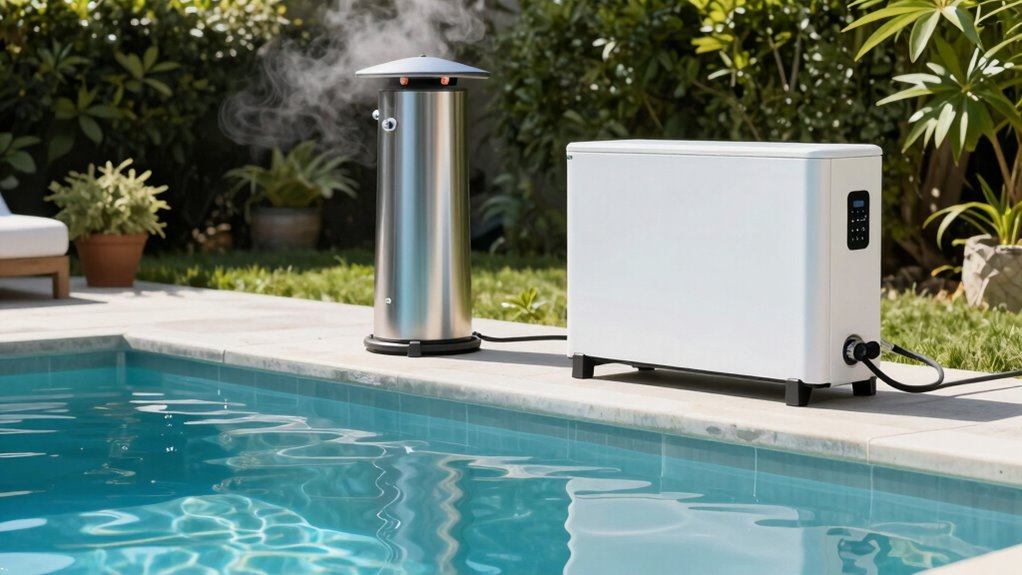
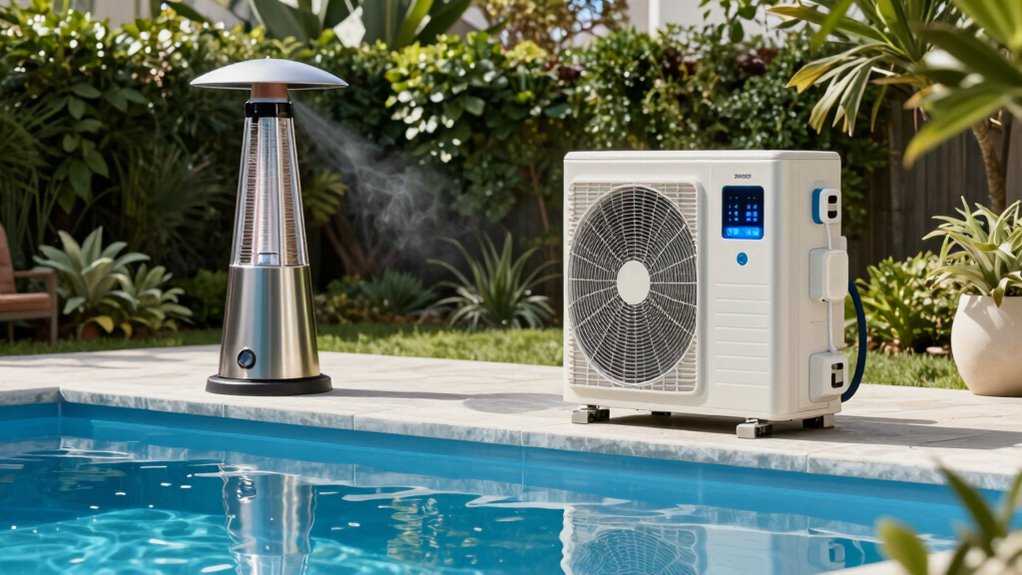
When it comes to heating your pool, choosing between gas and electric options can be a tough decision. Both have their advantages, but understanding their differences helps you make an informed choice. One of the most important factors to consider is energy efficiency. Gas heaters typically heat pools faster, which means you can enjoy warm water quickly, especially if you don’t need to keep the pool heated constantly. However, they tend to be less efficient overall because they consume more fuel to produce the same amount of heat that an electric heater might generate more efficiently. Electric heaters, on the other hand, are generally more energy-efficient, converting almost all the electricity they use into heat. This efficiency can lead to lower operating costs over time, particularly if you heat your pool regularly or for extended periods.
Installation costs are another significant concern. Gas pool heaters usually require a more complex setup because they need a natural gas line or propane supply, along with proper ventilation and exhaust systems. This can make the initial installation more expensive and time-consuming. Electric heaters are usually simpler to install, often plugging directly into standard electrical outlets, which can reduce installation costs and time. If your home already has the necessary electrical infrastructure, opting for an electric heater can be a more budget-friendly choice upfront. However, if you’re installing a gas line or upgrading your existing setup, those costs can add up quickly. Additionally, energy efficiency plays a crucial role in determining the long-term savings for your pool heating system.
In terms of ongoing expenses, gas heaters tend to have higher fuel costs, especially if natural gas prices rise. Electric heaters, while potentially cheaper to operate depending on electricity rates in your area, can become more costly if you’re running them frequently or for long periods. The decision might also depend on your climate and how often you want to keep your pool heated. Gas heaters are better for quick, occasional heating, whereas electric heaters are suited for steady, continuous use.
Ultimately, your choice hinges on your specific needs and budget. If you prioritize quick heating and don’t mind higher installation costs, a gas heater might be the way to go. But if energy efficiency and lower long-term operating costs appeal to you, an electric heater could be the better option. Keep in mind that both types can serve your pool well; it just depends on what fits your lifestyle and financial situation best.
As an affiliate, we earn on qualifying purchases.
Frequently Asked Questions
Which Heater Is More Environmentally Friendly?
Electric pool heaters are generally more environmentally friendly because they tend to be more energy-efficient and produce a smaller carbon footprint compared to gas heaters. You’ll use less energy for the same heating output, which means fewer emissions if your electricity comes from renewable sources. Gas heaters emit more greenhouse gases directly, making electric options a better choice if you’re aiming to reduce your environmental impact.
How Long Does Installation Typically Take?
Installation usually takes a few hours to a day, depending on your chosen heater type. Gas heaters often involve more installation complexity, requiring venting and gas line setup, which can extend the process. Electric heaters are simpler and quicker to install, typically needing only electrical connections. When considering the cost comparison, electric heaters tend to be less expensive upfront and easier to install, making them a convenient choice if you want faster setup.
Are There Size Restrictions for Different Pools?
Did you know that the average residential pool heater capacity ranges from 4 to 400 BTUs? When choosing between gas and electric heaters, your pool size is key. Larger pools require higher capacity heaters, but size restrictions depend on the heater’s capacity and your pool’s dimensions. Always check manufacturer guidelines to confirm the heater matches your pool size, preventing inefficiency and guaranteeing ideal heating performance.
What Are the Ongoing Maintenance Requirements?
You’ll need to regularly check and balance your pool’s chemical levels to prevent corrosion and maintain efficiency. Electric heaters generally require less maintenance, while gas heaters need periodic inspection of burners and ventilation. Both types benefit from energy-efficient operation; however, electric models often have lower ongoing costs. Keep filters clean, monitor for leaks, and schedule professional tune-ups annually to guarantee your heater runs smoothly and efficiently.
Can These Heaters Be Used for Spas Too?
Yes, both gas and electric heaters can be used for spas, but their spa compatibility varies. Gas heaters are often more versatile for larger or hotter spas, providing quick heating. Electric heaters work well for smaller or temperature-controlled spas, offering precise heating. When choosing, consider heater versatility and spa compatibility to guarantee efficient, consistent warmth tailored to your spa’s size and usage needs.
Conclusion
So, whether you prefer the quick heat of gas or the eco-friendly vibe of electric, it seems your dream pool might just turn into a heated debate. Ironically, the choice often boils down to your budget and values—who knew heating a pool could be so divisive? Either way, you’ll be splashing in warm water, happily ignoring the irony that both options are just a decision away from turning your pool into a cozy oasis or a costly affair.
Columbus Day / Indigenous Peoples' Day Picks
long weekend sales
As an affiliate, we earn on qualifying purchases.