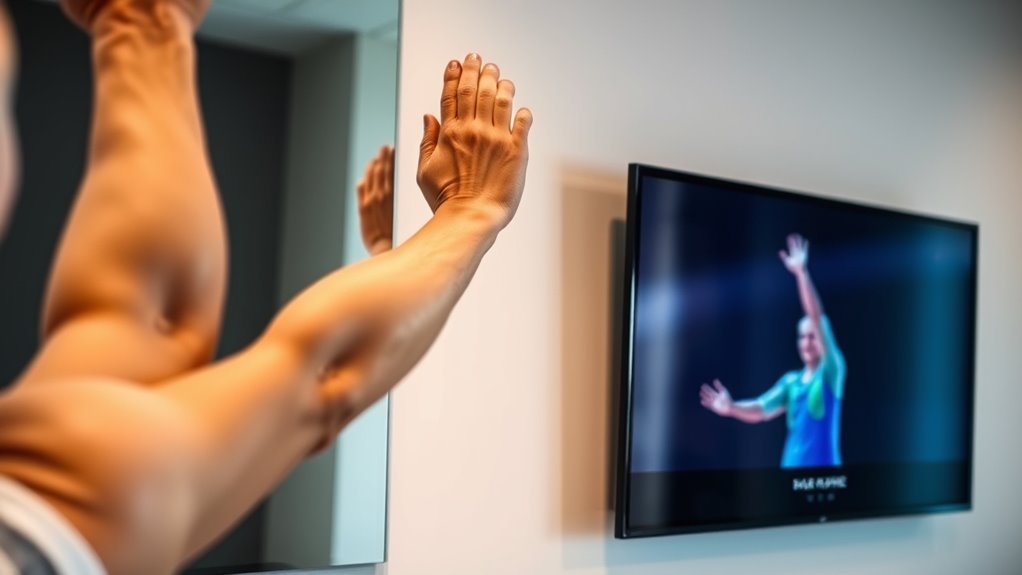

Using mirrors and video in stroke feedback helps you see your movements clearly, boosting motivation and awareness. Mirrors create an illusion of normal movement in your affected limb, encouraging brain reorganization through visual tricks. Video feedback lets you review and refine your actions, improving coordination and confidence. These tools tap into your brain’s ability to adapt and recover, making your therapy more engaging. Keep exploring to discover more ways these techniques can accelerate your progress.

Get pool and patio gear delivered free — and shop member deals
- Fast, free delivery on millions of items
- Access to Prime Big Deal Days deals on October 6–7
- Prime Video, Amazon Music and more included
Key Takeaways
- Mirrors create visual illusions that stimulate neural pathways, enhancing motor recovery through mirror therapy techniques.
- Video feedback allows patients to observe their movements, improving coordination and self-awareness during rehabilitation.
- Both methods leverage neuroplasticity, encouraging brain reorganization and functional improvement post-stroke.
- Visual feedback boosts motivation by providing tangible evidence of progress and fostering engagement in therapy.
- Combining mirrors and video tools offers personalized, dynamic therapy to optimize stroke recovery outcomes.

Have you ever wondered how visual feedback can enhance stroke rehabilitation? It’s a fascinating area that leverages your brain’s ability to adapt and recover by providing real-time visual cues. Two effective methods in this domain are mirror therapy and video feedback, both of which harness the power of visual stimuli to promote motor recovery. These techniques are designed to make you more aware of your movements, helping you regain control and strength in affected limbs.
Mirror therapy involves positioning a mirror in a way that reflects your unaffected limb, creating the illusion that your damaged limb is moving normally. When you look into the mirror, you see a mirror image of your healthy arm or leg, which tricks your brain into perceiving movement in the affected limb. This visual feedback can stimulate neural pathways that may have become dormant after a stroke, encouraging reorganization in the brain. It’s simple yet powerful because it taps into your brain’s neuroplasticity. As you perform movements with your unaffected limb, the mirror provides immediate visual confirmation, reinforcing the connection between intention and action. This method not only boosts motivation but also helps reduce feelings of neglect or frustration by making you more aware of your efforts.
Mirror therapy uses a mirror to create the illusion of movement in your affected limb, promoting brain reorganization and recovery.
Video feedback takes this concept further by allowing you to record your movements and watch them afterward, or even view live footage during therapy sessions. When you see yourself executing movements, it enhances your understanding of how your body moves and reacts, which can be critical for correcting form and improving coordination. Video feedback also enables your therapist to provide precise guidance based on visual analysis, helping you identify areas for improvement that might be difficult to notice otherwise. The visual input from videos can be especially motivating, as you witness tangible progress over time. This feedback loop reinforces your efforts and builds confidence, ultimately encouraging more frequent and dedicated practice.
Both mirror therapy and video feedback create a dynamic environment where visual stimuli directly influence motor learning. They make therapy sessions more engaging and personalized, allowing you to see your progress and stay motivated. The beauty of these methods lies in their ability to tap into your brain’s natural capacity to adapt through visual cues, accelerating recovery. Whether through the illusion of movement in mirror therapy or the detailed insights gained from video recordings, visual feedback becomes a powerful tool that transforms your rehabilitation journey, helping you regain lost function with greater clarity and confidence.
mirror therapy for stroke recovery
As an affiliate, we earn on qualifying purchases.
As an affiliate, we earn on qualifying purchases.
Frequently Asked Questions
Can Mirror Therapy Help Improve Speech After a Stroke?
Yes, mirror therapy can help improve your speech after a stroke by providing visual feedback that encourages motor imitation. When you use a mirror, you see your unaffected side moving, which can stimulate your brain to rewire and recover speech functions. This technique helps you practice and reinforce correct movements, making it easier to regain control over speech muscles and improve communication skills through focused, visual engagement.
What Types of Videos Are Most Effective for Stroke Feedback?
You should focus on videos with clear, simple content that matches your therapy goals. Look for videos that include demonstrations of speech exercises or daily activities to boost engagement. Effective videos incorporate visual cues and real-life scenarios, helping you stay motivated. Engagement strategies like interactive prompts or progress tracking can enhance your feedback experience. Choose videos that keep you interested and reinforce your practice, making your recovery more effective.
How Soon After a Stroke Should Mirror and Video Therapy Begin?
You should start mirror and video therapy as soon as possible after your stroke—think of it as catching a wave right at sunrise. Early intervention is essential, as the sooner you begin, the better your chances for recovery. Timing considerations are critical; starting within days rather than weeks can make a world of difference. Don’t wait—your brain is enthusiastic to relearn, and these tools are your best allies.
Are There Any Risks Associated With Mirror or Video Feedback Techniques?
There are minimal risks with mirror and video feedback techniques, but you might face emotional impacts like frustration or discouragement if progress feels slow. Technological barriers, such as difficulty using devices or limited access, can also pose challenges. It’s important to work with your therapist to address these issues, ensuring you stay motivated and comfortable throughout your rehabilitation. Proper guidance helps minimize risks and enhances your recovery experience.
How Do I Measure Progress Using Mirrors and Video for Stroke Recovery?
Measuring progress with mirrors and video is like watching a plant grow—you see small changes over time. You can track improvements in movement, symmetry, and coordination by regularly recording sessions and comparing them. Focus on how your technique improves and customize your exercises accordingly. Keep a journal or log of your sessions to note milestones, ensuring you stay motivated and adjust your rehab plan as needed to maximize recovery.
Conclusion
Using mirrors and video gives you clear, immediate feedback. It helps you see your progress, correct your movements, and stay motivated. It builds awareness, boosts confidence, and encourages consistency. With each glance, you visualize improvement, reinforce effort, and embrace recovery. Mirrors and video become your tools, your guides, your partners in progress. Together, they create a cycle of reflection, correction, and achievement—empowering you to move forward, regain strength, and reclaim independence.
Fall Picks
fall essentials
As an affiliate, we earn on qualifying purchases.